Japan’s ispace partners with SpaceX Starship for moon ride-share missions
Ispace used SpaceX’s Falcon 9 rockets for missions that resulted in failed descents in 2023 and 2025
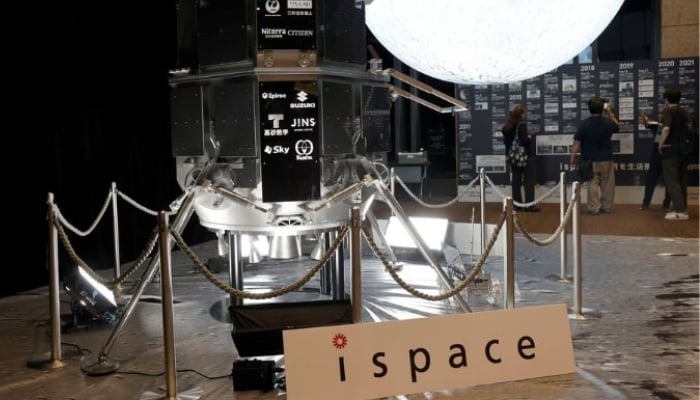
On Wednesday, Japanese moon transport company ispace announced plans to launch a new and lower-cost lunar cargo business using the Starship and the moon lander developed by SpaceX.
The current revelation further implies that Tokyo-based ispace has purchased a massive 500kg payload capacity for $50 million on a Starship scheduled to land on the moon by 2030.
The company plans to build a lunar surface vehicle that can host payloads from clients globally, sharing their ride on Starship to the moon.
In this connection, ispace Executive Vice President Hideari Kamiya said that the new lunar integrator will provide transportation vehicles designed to complement the long-term deployment of dedicated lunar landers-acting essentially as taxis to the moon’s surface.
Previously it was observed that ispace used SpaceX’s Falcon 9 rockets for unsuccessful lunar touchdown attempts in 2023 and 2025. The Tokyo-based company now specifically aims to soft-land three of its new landers called Ultra, onto the moon by 2030-a mission that is part of NASA’s Commercial Lunar Payload Services program.
SpaceX endorsed the broadening of its alliance with ispace to fly missions on Starship, a reusable transportation system. The Starship vehicle is the spacecraft that Musk’s company plans to send to the moon and eventually to Mars.
“Their integration services provide a valuable pathway for smaller payloads to secure a ride to the Moon today, and we look forward to supporting ispace and their customers as they help expand access to the lunar surface,” Stephanie Bednarek, SpaceX's vice president of commercial sales, asserted in a statement.
Nonetheless, the terms of the current agreement are not confirmed but NASA plans to use Starship’s first landing in 2028 as part of its Artemis crew program to send astronauts back to the moon.





-
 US finally confirms weapons in orbit: What it means for space warfare
 -
 How China's FAST telescope is mapping the cosmic gas behind star birth
 -
 Did Sun eat super-Earth? New study says maybe
 -
 Did Sun swallow a super-Earth? Scientists search for its ‘fingerprints’
 -
 Blue Origin sets sights on Mars with new NASA network
 -
 NASA, IBM launch open-source lunar foundation AI model to help map ice, craters on moon
 -
 Bacteria can remember without brain, new study finds
 -
 Fast radio bursts may unlock secrets of dark matter, energy and neutrinos