New drone imaging detects hidden underwater bombs with remarkable accuracy
The new airborne system combines advanced hyperspectral imaging with artificial intelligence to detect shallow-water unexploded ordnance
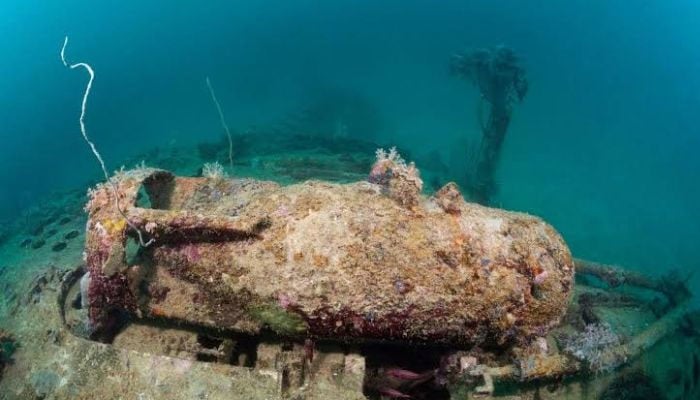
In a recent breakthrough, researchers at the University of Miami Rosenstiel School have revealed a new airborne imaging technique that accurately detects underwater weapons.
The new airborne imaging system combines hyperspectral imaging with artificial intelligence to detect shallow-water unexploded ordnance. These findings could advance maritime safety globally.
In this connection, Ved Chirayath, Vetlesen Endowed Chair of Earth Sciences: “ Unexploded ordnance in shallow water remains a serious global challenge. Our results demonstrate a scalable, airborne solution that can help improve detection accuracy and support safer coastal environments.”
Protracted conflicts have left a dangerous hazard beneath the ocean surface: bombs, mines and artillery shells. It has been observed that these munitions hidden in shallow water pose a constant threat to tourists, marine life and shipping lanes.
One of the biggest hurdles in geospatial marine mapping is refreshing data through the water itself. Waves act like moving lenses that distort and obscure underwater objects.
To map the ocean floor without wave distortion, a research team led by Ved Chirayath deployed drones over the Florida Keys using a dynamic combination of two advanced NASA technologies.
While indicating a submerged bomb is straightforward, locating one that has been corroding for fifty years is far more difficult. For decades, the tides shift the surrounding sand while marine algae grow over the device, merging it with the natural ocean environment.
Airborne drones could make this process a safe alternative that covers a non-stop journey in a single flight.
Initial trials demonstrated pinpoint accuracy, but researchers must now test the system across a broader range of marine environments, from murky Atlantic channels to deep Pacific bays.


-
 Hawaii’s Hōlei sea arch collapses after centuries on Big Island: What happened
 -
 Solar system may have a much shorter lifespan than we thought
 -
 Singapore builds world’s ultra-precise clock outperforming US, China
 -
 NASA expands Moon base research with three new investigations
 -
 Are Europe's data centres hiding their water use?
 -
 SpaceX set to send Google AI chips into space for data centers
 -
 New report warns of record ocean warming and rising seas
 -
 Why NASA scientists believe Scotland holds clues to Mars’ ancient past