Ancient DNA breakthrough solves 4,000-year mystery of Wiltshire’s Upton Lovell ‘Shaman’
The current analysis refutes the long-held belief that the bronze age individual was male
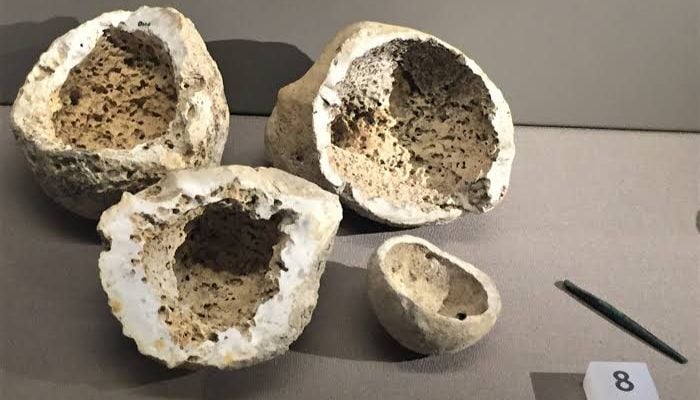
According to a cutting-edge ancient DNA analysis, the Upton Lovell Shaman, a bronze age individual who had been featured in gallery exhibitions as a bearded spiritual leader and metalworker was female.
The discovery indicated that the 4,000 year-old skeleton with the flint axes metalworking tools, and the remains of an elaborate ceremonial cloak is one of the most significant bronze age burials in Britain.
The artifacts date back to about 1,800BC-a time when the mechanical aptitude to transform lumps of rock into molten metal would have given her a crucial spiritual position in society.
In this connection, David Dawson, director of the Wiltshire Museum said: “ It’s a fantastic revelation of the position of women in society. We’re so used to the assumption that men do everything, men are the leaders, men are the metalworkers. Here we have smoking gun evidence of a female metalworker. And metalworking was the space science of its day.”
The initial analysis uncovered gold traces on the surfaces of stones indicating that the individual may have handcrafted items like clasps which consisted of wood or copper plated in gold.
The findings debuted at a new showcase on Ancient DNA that opens at the Francis Crick Institute in London on Thursday and looks at how genetic methods are shedding new light on the movements and lives of ancient people.
The team later evaluated two other bones, a tooth and a toe which gave reliable findings; there was no evidence that the grave contained more than one skeleton.
Pontus Skoguland, senior group leader of the ancient genomic laboratory said: “ The field of ancient DNA has surged in technical capability over the last two decades, now giving us answers to questions that were previously inaccessible.”
A comprehensive review of the bones suggested that the individual would have been tall for a bronze age woman and sturdily built. There was also evidence of arthritis in the right wrist which suggests she spent much of her life using the metalworking tools she was buried with.
Nonetheless, Prof Mary Beard said that ancient DNA promises to transform some significant parts of our understanding of the past. She especially emphasized that we have often assigned the sex of an ancient skeleton based on the presuppositions about sex and gender roles.


-
 Ancient DNA breakthrough solves 4,000-year mystery of Wiltshire’s Upton Lovell ‘Shaman’
 -
 Why Trump wants the FBI to drop the Lindsey Graham death investigation
 -
 Who is Chen Youlin? US scientist who tracked North Korea nuclear tests detained in China
 -
 PayPal draws massive $53 billion takeover offer from Stripe and Advent
-
 SpaceX gets green light for Starship’s next test flight following mishap probe
 -
 Tiny 2-inch space debris discovered in key satellite orbit, scientists warn
 -
 Could future moon landings cost humanity Earth's greatest secret? Scientists think so
 -
 What happens when a whale dies? Scientists explains surprising process
 -
 China's Long March-10B rocket recovery shakes up space race
 -
 NASA is hiring volunteers for year-long Mars mission simulation: Here's how to apply
 -
 Mount Etna may have different origin as study reveal new facts about its formation
 -
 What did NASA capture? Chief says mysterious UFO images remain unexplained