Blue Moon 2026: Everything to know about the rare celestial event
The second full moon to appear in the sky in a single month
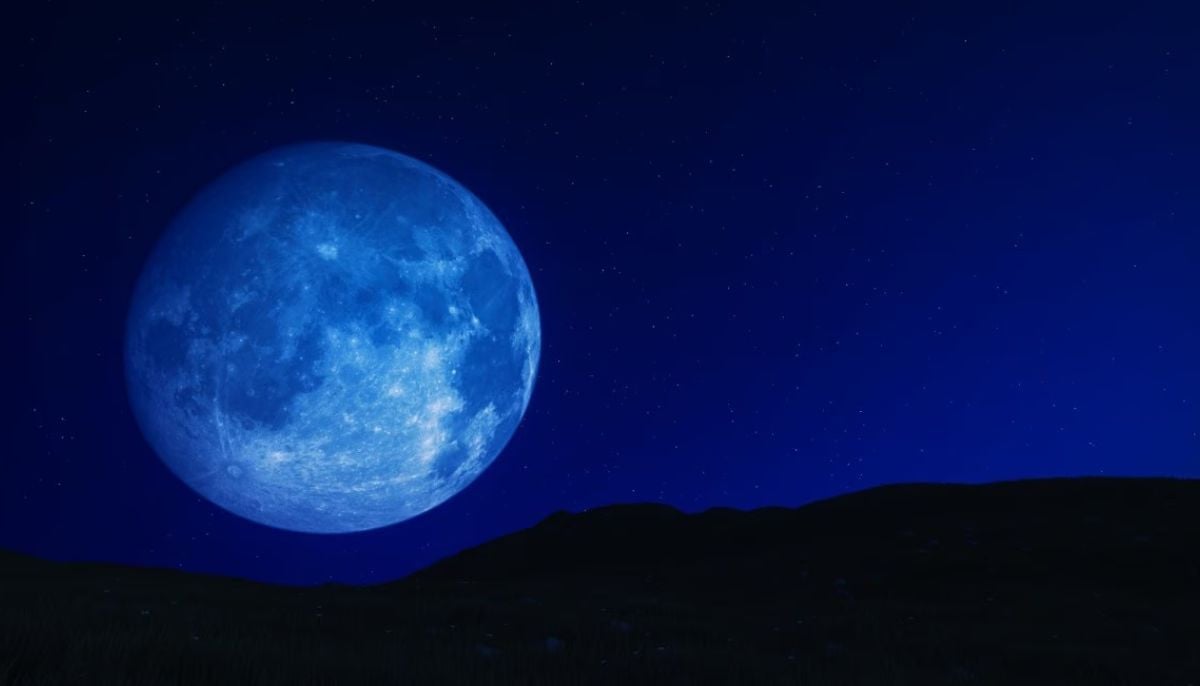
Skygazers are all set to witness a rare blue moon this weekend, which will be the second full moon to appear in the sky in a single month. This celestial event comes around roughly seven times or after every two to three years.
The phrase “the moon is blue” originated in the 1500s and was originally used to describe something impossible which is where the term Blue Moon comes from.
The prime reason why the 31st May Blue Moon will appear smaller than usual comes down the shape of the Moon’s orbit around Earth. There are two vital factors to track this upcoming Micromoon.
The first is that the Moon won’t look any more blue than usual. On the other hand, the “micrommon” appears smaller than usual.
It is due to the fact that it looks larger than usual. This is because the full moons of late spring and summer don’t rise high in the sky like autumn and winter full moons.
How to see the Blue Moon
May’s Blue Moon is all set to peak at 4:45 a.m. ET on Sunday before the sun rises. It will also feature a micromoon which means it will be at its furthest point from Earth in its orbit.
Gay said that the moon’s orbit around Earth is not a perfect circle; its apparent size varies by about 10% at different points in its orbit.
According to NASA, Sunday’s moon will be about 252,224 miles from Earth as compared with its distance of about 238, 855 miles.
The Blue Micromoon will be most visible in the southern sky around midnight. Notably, as it rises or sets near the horizon, it may even look orange or slightly reddish due to being scattered through the thicker part of Earth’s atmosphere-a visual effect of the Moon sitting so close to the horizon.
If you’re used to comparing the moon to known things in your landscape — or holding your thumb up at arm’s distance to compare it to your thumb — you can see that 10% difference. But to the average person you’re not going to notice the difference at all,” Gay said.
“When that moon is rising, sometime between 5:30 and 6:30 in your time zone, and the sky is still this beautiful blue, there’s not a lot of weird settings to fuss with, your cellphone will take care of all the details for you,” “This time of year is really kind of an awesome time to get those photos of the full moon.” Gay added.


-
 Why China’s internet is obsessed with Moonshot’s viral new Kimi model
 -
 Can the US secure the Strait of Hormuz without ground troops? Experts share insights
 -
 Why Boeing is asking the US to intervene over record EU loan to Airbus
 -
 Qatar condemns Houthi accusations against Saudi Arabia over the siege of Yemen
-
 Why China is crashing a spacecraft into asteroid 2015 XF261
 -
 Australia's Great Barrier Reef at extreme risk of ‘ecosystem collapse’, scientists warn
 -
 James Webb Space Telescope reveals how black holes feed themselves
 -
 Japan’s upper-close asteroid flyby: Why scientists said it was too dangerous
 -
 Scientists find hidden structure inside Orion Nebula
 -
 China launches first of 1,000 space-computing satellites
 -
 Perseid meteor shower 2026: Here is everything to know about peak dates and best viewing times
 -
 Solar storm risks may be worse than previously thought, study finds
-
 Actor James Franco claims mysterious video shows alien outside his home
 -
Rare New Jersey meteorite reveals 'alien world chemistry', study finds
-
Astronomers find universe's faintest planet after 11 years of hide-and-seek
-
Scientists discover new ‘unusual-looking’ monkey species hidden in DR Congo forest