Can the US secure the Strait of Hormuz without ground troops? Experts share insights
Experts have asserted that daily strikes may produce dramatic visuals but do little to reopen the Strait of Hormuz
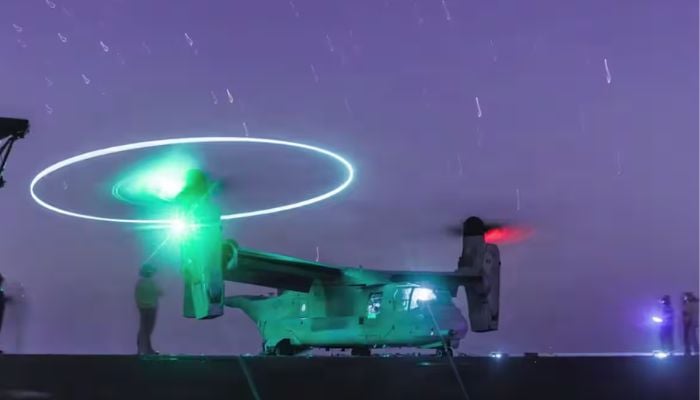
According to a recent analysis and military wargames evaluating a US-Iran conflict, the United States cannot reopen the Strait of Hormuz unless it sends more warships to the Persian Gulf and prepares forces for active duty in ground operations.
The US military is falling short of even that modest target; meanwhile Trump launched strikes on Iran to dismantle its programme, and reduce its military capacity.
The prime mission has now been reduced to keeping the Strait of Hormuz open. According to experts, the US military will continue to fail because achieving the mission would require more firepower than Trump appears willing to deploy to the region.
The US Central Command has currently 20 warships in the Persian Gulf and Arabian Sea engaged in the conflict with Iran. Experts asserted that the force is sufficient to reopen the Strait.
They further clarified that the daily strikes may create dramatic visuals, they do little to reopen the Strait. For the United States, this is just a few more days of strikes away from invalidating the agreement.
Iran's ability to keep the Strait closed is “a complete fallacy”, according to Jason Campbell, a Pentagon official associated with the Middle East Institute.
“The reality is that if you wanted to militarily open the Strait of Hormuz such that the shipping companies, and as important, the insurance companies that cover them, deem this safe for passage, it would take a major ground operation with tens of thousands of forces,” Campbell told The Hill.
Trump has not been able to show to shipping and insurance companies that the US military has retained dominance over the Strait because US strikes cannot neutralize Iran’s munitions reserves concealed in caves and buildings along the Strait.
According to Clark, at least a dozen ships would be required to remain positioned in the Strait full time, and additional vessels would be needed to enforce the blockade.
Nonetheless, Trump has no appetite either for taking casualties or for surging more military assets into the area, as he has failed to accomplish his objectives because he has avoided deploying the scale and type of force required.





-
 US EPA unveils sweeping power plant carbon limit rollbacks at G20 meeting to prioritize grid reliability
 -
 Savannah Guthrie makes another emotional plea to Nancy's kidnappers
 -
 'Hang Lindsay Clancy': GOP rep calls for mom-of-three's public execution
 -
 Royal family shares Princess Astrid's funeral plan
 -
 Italian Senate clears PM Giorgia Meloni electoral reform bill to overhaul voting system and establish majority bonus thresholds
 -
 US Senate advances landmark crypto bill to set new digital asset boundaries
 -
 Russia-Ukraine energy truce? Kremlin welcomes Trump's proposal with 'conditions'
 -
 UK State pension likely to rise by £488 a year in April
-
 Russia threatens Poland, claims Warsaw could ‘disappear’ in days
 -
China warns US over ‘weaponization of space’ after deployment confirmed
-
China tightens exit restrictions for citizens to safeguard national technology security and penalize overseas violations
-
Carney heads to Europe as Canada-EU ties take center stage amid US trade war