
Pak situation needs major shift in economic decision making: IMF
IMFWhile speaking at a seminar titled ‘Pakistan Economy & IMF Programme: Challenges & Opportunities’ organised by the Sustainable Development Policy Institute (SDPI), the IMF’s Resident Chief said that Pakistan was utilising 25 percent of its collected revenues on debt servicing while state-owned enterprises were running in losses.
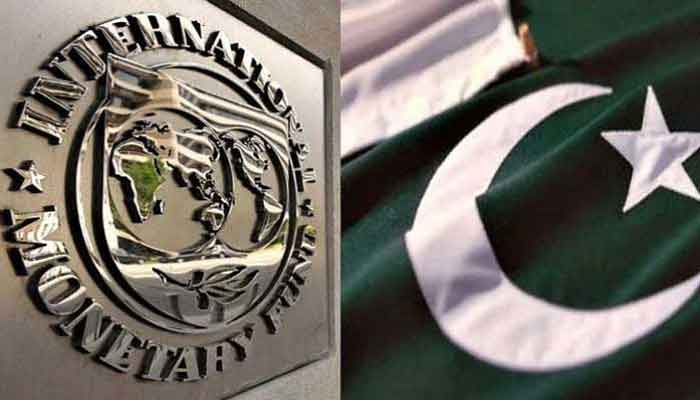
ISLAMABAD: Pakistan will have to undertake key reforms on internal and external fronts of the economy in order to bring a paradigm shift in economic policy making, IMF’s Resident Representative in Pakistan Teresa Daban Sanchez said on Friday.
While speaking at a seminar titled ‘Pakistan Economy & IMF Programme: Challenges & Opportunities’ organised by the Sustainable Development Policy Institute (SDPI), the IMF’s Resident Chief said that Pakistan was utilising 25 percent of its collected revenues on debt servicing while state-owned enterprises were running in losses.
She said that public debt and inflation were rising in the country. “The arising situation requires major shift in economic decision making and Pakistan will have to undertake key reformsto implement the IMF programme”, she added.
She said the exchange rate was artificially kept stable that resulted into erosion of foreign exchange reserves. The IMF, she said, would undertake first review by end September 2019 and Pakistan would be required to implement key reforms.
She said the government possessed thin majority into the Parliament so it would have to take opposition into confidence to pass the laws from the elected House. She said the government would not be able to borrow from the central bank as the inflationary pressures persisted and the SBP would have to take steps to bring improvement.
Speaking on the occasion, FBR Chairman Shabbar Zaidi said that condition of CNICs would not be abolished and they could not accept such demand of traders. All those are opposing CNICs condition who wanted to remain outside the tax system, he added.
He said the incumbent government and the International Monetary Fund (IMF) were on the same page as there was no disagreement by the government on the measures proposed by the IMF, especially the taxation measure. The government, he said, will not bow down against the pressure, protests and lame excuses of anyone. He said taxation is the only way to forward for equitable distribution of wealth, as we cannot have stabilize and equitable society unless we have a fare taxation system.
Owing to presumptive tax regime, we actually divorce the taxation from the economy where taxing the real income was out of question, he lamented. He expressed resolve of the government that the real income will have to be taxed and there was no second opinion on it.
While raising the concerns over the open transit trade agreement with Afghanistan, he said the agreement was being exploited and abused by the smugglers which negatively impacted the local industry. Pakistan needs to review this agreement and should take stringent measures to control illicit trade on Pak-Afghan border.
There are around 100 thousand companies registered with the government of Pakistan, where only 60 thousands file their returns, which shows the level of tax compliance. He said the measures taken in the current federal budget will fundamentally change the course of history of Pakistan. The government is taking steps to redress the institutional corruption through automation of the taxation system.
Dr Shamshad Akhtar, former finance minister said stabilization of the economy was very critical for the growth of the country, where one should not look stabilisations in isolation, rather a step-forward towards economic growth.
While talking on IMF programme, Dr Shamshad said the substantial delayed in going to IMF programme compounded the uncertainty, which negatively impacted the economy. She said if we negotiated the programme earlier, the country’s economy would probably be in the safer zone. The investor’s confidence has gradually eroded, which the government needs to looked at, she added. IMF policies usually are dynamic which may help Pakistan address fiscal imbalances, she hoped.
Dr Abid Qaiyum Suleri, Executive Director SDPI said at the very beginning there was lack of ownership on the IMF programme, which makes the programme controversial. He said the letter of intent of the current government to IMF focused on expanding social safety nets to cushion the impact of the needed stabilization policies on the poor, which is positive step. The government, he said, needs to strengthen its social protection programme and should focus on direct taxation to help reduce burden on the vulnerable segment.







-
 Eric Dane’s Friends Initiate GoFundMe To 'support' His Two Daughters After His Death At 53
 -
 Internet Erupts After Candace Owens Claims Elon Musk And Sam Altman Are ‘not Human’
 -
 Will Princess Beatrice, Eugenie Stay In Contact With Andrew? Source Speaks Out
 -
 ‘AI Revolution Is Coming Fast & US Has No Clue,’ Bernie Sanders Warns Of Speed Of Disruption
 -
 Hong Kong Touts Stability,unique Trade Advantages As Trump’s Global Tariff Sparks Market Volatility
 -
 ‘Miracle On Ice’ Redux? US Men Chase First Olympic Hockey Gold In 46 Years Against Canada
 -
 Friedrich Merz Heads To China For High Stakes Talks In An Effort To Reset Strained Trade Relations
 -
 Astronauts Face Life Threatening Risk On Boeing Starliner, NASA Says
 -
 Hailey Bieber Reveals How Having Ovarian Cysts Is 'never Fun'
 -
 Kayla Nicole Looks Back On Travis Kelce Split, Calls It ‘right Person, Wrong Time’
 -
 Prince William And Kate Middleton Extend Support Message After Curling Team Reaches Olympic Gold Final
 -
 Nvidia CEO Praises Elon Musk, Calls Him An ‘extraordinary Engineer'
 -
 Shia LaBeouf's Mugshot Released After Mardi Gras Arrest On Battery Allegations In New Orleans
 -
 Timothee Chalamet Felt '17 Again' After Reunion With 'Interstellar' Director Christopher Nolan
 -
 Conan O'Brien Speaks First Time After Rob Reiner's Killing
 -
 Giant Tortoise Reintroduced To Island After Almost 200 Years