
Senate panel slams gas firm, others for evading inquiries
Session opened with discussion on high cost of oil rigs, which cost Rs3.5 million per day in rent
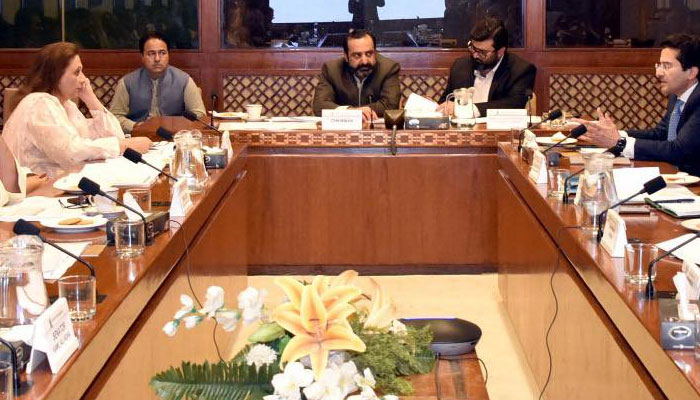
ISLAMABAD: The Senate Standing Committee on Petroleum on Tuesday sharply criticized the Oil and Gas Development Company Limited (OGDCL) and other public and private entities for failing to respond to parliamentary inquiries, as senators voiced alarm over worsening gas shortages and high operational costs in the energy sector.
During the meeting chaired by Senator Umar Farooq, lawmakers expressed particular frustration with OGDCL — one of the country’s largest public sector firms — for ignoring multiple questions sent by the committee. “OGDCL is one of the biggest firms, yet it failed to provide responses,” committee members said.
The session opened with a discussion on the high cost of oil rigs, which cost Rs3.5 million per day in rent. Senator Rana Mahmoodul Hassan pointed out that performance data requested from OGDCL remained pending and called for an independent audit by one of the country’s top four accounting firms.
Minister for Energy (Petroleum Division) Ali Pervaiz Malik responded by pledging transparency and accountability, promising to investigate it and share a long-term sustainability plan. He admitted that petroleum issues had been a little sidelined due to the focus on the power sector over the past year. “After today’s meeting, we will provide responses to the questions raised,” he assured.
Malik also highlighted delays in refinery policy implementation and emphasized untapped investment opportunities in the minerals sector. He noted a shift in household consumption from domestic gas to imported cargo-based gas due to declining local production.
Committee members Senator Kamil Ali Agha raised the alarm over severe gas load-shedding in Lahore. “There are areas in the country with no gas at all,” Agha said. “The poor are not getting this facility, while subsidized gas is supplied to industries.” He added that residents in Lahore must cook and bathe during fixed hours, calling the situation “unacceptable.”
The Managing Director of Sui Northern Gas Pipelines Limited (SNGPL) reported over 132,000 low-pressure gas complaints in the past year — including 25,000 during Ramadan — with 131,000 resolved. He added that domestic gas now fulfills just 45 percent of total demand, with imports making up the remaining 55 percent.
The committee examined province-wise production and consumption in last financial year, revealing sharp disparities. Punjab — the country’s most populous province — produced just 163 million cubic feet per day (MMCFD) but consumed 976 MMCFD, heavily dependent on 668 MMCFD of imported Re-gasified Liquefied Natural Gas (RLNG).
In sharp contrast, Khyber Pakhtunkhwa produced 346 MMCFD and consumed only 208 MMCFD, while consumed a negligible 3 MMCFD of imported RLNG. Sindh led the nation in production at 1,609 MMCFD against consumption of 1,115 MMCFD, with 112 MMCFD of RLNG use. Balochistan produced 492 MMCFD and consumed 334 MMCFD, relying on just 3 MMCFD of imported gas.
When senators raised concerns about gas loadshedding, the Sui Northern official stated that if an uninterrupted gas supply is to be ensured for domestic consumers without any loadshedding, an increase in tariffs would be necessary.







-
 Blake Lively Breaks Silence After Judge Dropped Her Major Claims Against Justin Baldoni
 -
 Queen Camilla, King Charles ‘private Date Nights’ Laid Bare By Insider
 -
 Tom Brady Reveals How Family Life Changed His Strict Diet
 -
 King Charles Powerful Enough To Stop Emerging ‘WW 3’ With US Visit
 -
 Meghan Markle Melts Hearts With Thoughtful Gift To Friend After Baby Arrival
 -
 Kylie Kelce Explains Why She Doesn't Like Losing Control
 -
 King Charles Decides To Skip Easter Message
 -
 King Charles ‘ridiculous’ Pranks On Staff Spilt By Butler
 -
 Jamie Lee Curtis Recalls 'harshest' And 'most Beautiful' Week Of Her Life
 -
 Prince Harry Talks About ‘hard Days’ As He Discusses Social Media
 -
 Camila Morrone: Dua Lipa 'lookalike' Hits New Heights After Netflix Series
 -
 Blake Lively Lawsuit Against Justin Baldoni Takes Dramatic Turn After Judge's Ruling
 -
 Royal Maundy Service 2026: King Charles And Queen Camilla In Pictures
 -
 Chris Pratt Shares Sad Update About 'Jurassic World'
 -
 Gucci Mane Robbery, Kidnapping: DoJ Makes Statement On Pooh Shiesty And Big30 Involvement
 -
 Why King Charles Gave Meghan Markle ‘ultimate Refusal’