
The crypto clock is ticking
Despite promising developments, Pakistan still lacks any enforceable cryptocurrency regulation
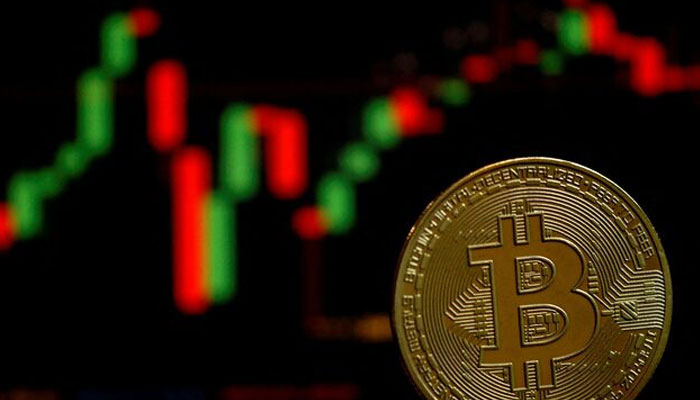
They say the law moves slowly, but the world doesn’t wait. Pakistan’s slow adaptation to emerging technologies has contributed to delayed progress, often leaving the country behind in a rapidly evolving digital world.
But the tide is turning. The uncharted legal terrain of cryptocurrency and digital assets – tools not of tomorrow, but of today – is now at the forefront. With increasing crypto wealth and the surge of trading influencers on digital platforms, a fast, digital and unpredictable financial era has already arrived. The question now is: can Pakistan embrace innovation through timely reform, or continue with a cautious, restrictive approach?
Surprisingly, with nearly 15 to 20 million users, Pakistan ranks among the top countries in crypto adoption. Yet, it still operates in a legal grey zone. There is no clear regulatory roadmap, no guardrails for innovation and no shield for investors. In contrast, Nigeria offers a case worth watching: once firm on a crypto ban, it has now shifted toward structured regulation. Pakistan could take a cue before the gap between innovation and policy becomes too wide to bridge.
In 2018, Pakistan’s central bank issued a circular barring financial institutions from dealing in cryptocurrencies, declaring them risky and unofficial. Despite the ban, crypto adoption grew – driven by the rupee devaluation, freelancing and a young digital population. In 2020, the Securities and Exchange Commission of Pakistan (SECP) released a position paper exploring regulatory strategies for digital assets, initiating public discourse on the issue.
More recently, in March 2025, Pakistan announced plans to implement a comprehensive legal framework surrounding cryptocurrency to attract global investment. Consequently, the Pakistan Crypto Council was formed, spearheaded by investor Bilal bin Saqib, known for his involvement in Web3 initiatives, who called for regulatory clarity and pro-business laws. He highlighted Pakistan’s low costs and startup potential, and the government began consulting regulatory models from countries such as the UAE, Nigeria and Turkiye. In support of this shift, Senator Afnan Ullah Khan introduced the Virtual Assets Bill 2025, proposing legal recognition for digital assets, a Digital Rupee backed by the Pakistani currency, and creating Virtual Asset Zones for blockchain innovation under regulatory supervision.
Despite these promising developments and ongoing policy discussions, Pakistan still lacks any enforceable cryptocurrency regulation. The regulatory landscape remains governed only by advisory efforts and non-formal law. The critical questions are whether Pakistan should embrace crypto regulation to support its economy or whether an outright ban would be a safer route. If the very essence of cryptocurrency is decentralisation, can it even be effectively regulated? And if so, how can the government frame regulations that manage risk and unlock economic opportunity?
Nigeria’s experience with cryptocurrency illustrates how regulation can be more effective than restriction. In February 2021, the Central Bank of Nigeria (CBN) issued a directive prohibiting banks from facilitating crypto transactions, citing risks such as money laundering and financial instability. However, this led to unintended consequences – crypto trading simply shifted to peer-to-peer (P2P) platforms, where individuals buy and sell digital currencies directly, without relying on traditional financial institutions. This made oversight even more challenging.
Realising the limitations of an outright ban, Nigeria reevaluated its approach. In October 2021, it launched the eNaira, Africa's first central bank digital currency, offering a secure digital alternative. In May 2022, Nigeria’s Securities and Exchange Commission (SEC) introduced a regulatory framework that included licensing requirements for crypto exchanges, approval procedures for token offerings, and rules for the custody of digital assets.
A tax policy was also established: a 10 per cent capital gains tax on crypto profits, income tax on earnings from mining or payments received in crypto, and a 7.5 per cent Value-Added Tax (VAT) on crypto service fees. Finally, in December 2023, the CBN lifted its ban and permitted banks to engage with licensed crypto firms under strict guidelines.
This shift from an outright crypto ban to a regulated framework brought tangible economic benefits. According to the Central Bank of Nigeria, integrating blockchain and digital currencies may contribute up to $29 billion to the country's GDP over the next decade. Between July 2022 and June 2023, Nigeria saw a 9.0 per cent increase in crypto transaction volume, reaching $56.7 billion. Investor confidence also surged and Nigeria’s fintech sector witnessed a dramatic rise in funding, growing from $53 million in 2017 to over $1.5 billion in 2022.
By choosing regulation over prohibition, Nigeria improved financial oversight, reduced crypto-related fraud and created legal income opportunities for its citizens through trading, mining, and blockchain-related ventures.
Cryptocurrency is no longer a distant possibility but a present-day reality. Pakistan now stands at a critical policy crossroads. With timely and decisive regulation, the country can pave the way for digital transformation, economic inclusion and global competitiveness, positioning itself as a serious contender in the evolving world of crypto and blockchain.
The writer is a lawyer.







-
 Scarlett Johansson Shares Wild First Concert Story
 -
 Inside King Charles, Queen Camilla's First US State Visit
 -
 Tiger Woods' Situation Deemed 'too Far Down The Line' After DUI Crash
 -
 List Of Blake Lively’s Dismissed And Allowed Claims Against Justin Baldoni
 -
 Dolly Parton's Rare Approach To Battle Grief Following Tragic Loss Of Late Husband Laid Bare
 -
 How Queen Elizabeth's Silence Impacted Diana And Meghan
 -
 Olivia Munn Raves About Her 'Your Friends & Neighbors' Costar James Marsden
 -
 Khloe Kardashian Gets Candid About Weight Loss Struggles
 -
 Jon Hamm Weighs In On ‘dark’ Modern Dating Culture: 'I Was Never Really Good At Dating Anyway'
 -
 Miley Cyrus Receives Heartfelt Praise From 'Love On The Spectrum's Logan Pereira
 -
 DeepSeek V4 Model Bets On Huawei Chips As Demand Surges
 -
 Ty Herndon Talks 'building A Future' With Partner Amid Memoir Release
 -
 'General Hospital' Star Sofia Mattsson Spills The Truth About 'Days Of Our Lives' Role
 -
 Ben Stiller Reveals Hidden Struggles Of Bro Bowlers
 -
 Brian Cox Launches Savage Attack On Johnny Depp
 -
 Pooh Shiesty, His Father Arrested Over Gucci Mane Kidnapping