
EV sector urged to shift from ambition to action
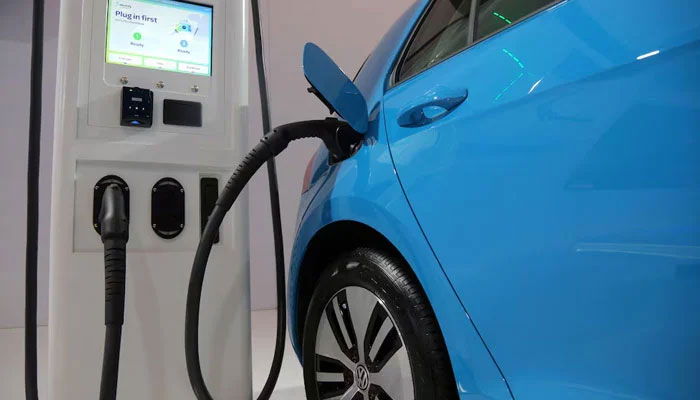
LAHORE: The second Electric Vehicles (EV) Conference, held in Lahore on Saturday, brought together industry leaders, policymakers, financiers and climate advocates to accelerate discussions around Pakistan’s EV landscape, highlighting both the sector’s promise and its challenges.
According to a statement issued here, the conference was organised by the Climate Action Centre (CAC) and PakEVO and sponsored by the Bank of Punjab.The event marked an important step in aligning public and private sector efforts to foster EV adoption and localisation in the country.
Head of Investment Banking, FI and Corporate Banking Central at the Bank of Punjab Umer Khan expressed confidence in his keynote speech about the prospects for EVs and related infrastructure in Pakistan.
“Consistent with experiences in several countries, the major push for EV adoption will come with tangible government support in the form of subsidies and tax credits,” he said.
He added: “There are significant pools of liquidity and credit enhancements available for climate finance and EV projects, which must be accessed with the right pitch to international development finance institutions.”
In his keynote, Dr Aazir Khan [director of Integrated Engineering Centre of Excellence (IECE), University of Lahore] introduced PakKEVO, a newly launched initiative aimed at promoting EV-related education, collaboration and policy reform. He underlined the missed opportunities in previous years when Pakistan’s economic difficulties prevented the allocation of budgets to key EV initiatives.
Discussions revealed that while global EV sales grew by nearly 40 per cent between 2023 and 2024, Pakistan’s market penetration remains dismally low. Nonetheless, the mood remained cautiously optimistic as several developments signalled momentum. Among them was Daewoo’s plan to replace diesel buses with EVs on shorter intercity routes between cities close to Lahore, such as Sialkot.
“Our goal is that within the next two years, we will convert our entire short-route fleet to electric,” said Sheriar Hassan of Daewoo during the first panel, adding that financing collaborations with the Bank of Punjab were already underway.However, distribution companies (DISCOs) face serious capacity and load management challenges, making long-route EV bus operations currently unfeasible. Hassan noted that while Daewoo had successfully initiated its first electric bus pilot project between Lahore and Sialkot, expanding to a larger intercity network -- such as Islamabad to Lahore -- would require time and significant investment.
Panellists also highlighted that Pakistan has a strong opportunity to leapfrog into becoming a regional EV manufacturing hub. Localisation emerged as a central theme, with Nauman Alvi of EVEE Motors pointing out that the surge in two-wheeler sales -- 1.4 million units in 2024 -- was largely driven by local production of affordable 70cc and 125cc models.
He called for similar localisation efforts for EV parts, starting with plastic components that account for 15 to 20 per cent of vehicle costs, and stressed that widespread EV adoption depends on achieving economies of scale.
Alvi also shared insights from EVEE Motors’ experience, noting that 20 per cent of EV users in Pakistan are women, compared to less than 1 per cent in traditional automotive markets, highlighting the importance of female education and awareness campaigns to drive adoption.
In her remarks, Saleha Hassan, a key official at DFML, challenged the misconception that EVs are luxury items. “It is a utility decision -- you invest in EVs because you invest in a lifestyle change,” she said.


