
PTI’s internal strife deepens
After years of scrutiny, committee has failed to produce substantial evidence, instead resorting to vague accusations
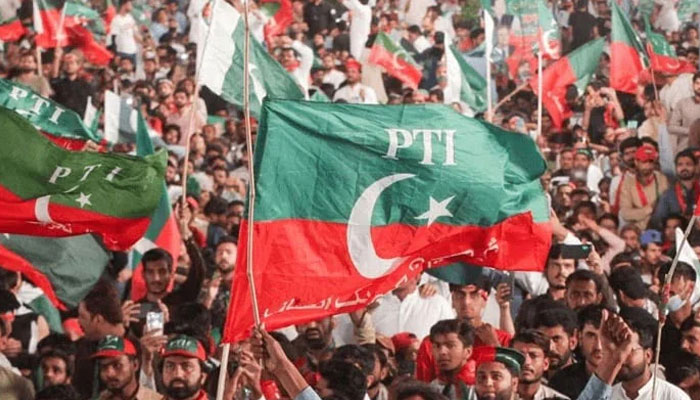
PESHAWAR: The differences within the Pakistan Tehreek-e-Insaf (PTI) have intensified, as the PTI Internal Accountability Committee (IAC) has launched an investigation into the former Khyber Pakhtunkhwa finance and health minister Taimur Saleem Jhagra, accusing him of financial mismanagement, governance failures and corruption.
The committee’s report highlights major financial irregularities, alleged violations in recruitment, and questionable policy decisions that led to significant losses to the provincial government.
Taimur Saleem Jhagra strongly rejected allegations of financial mismanagement, irregular recruitment and procurement violations. Calling the inquiry biased, baseless, and politically motivated, Jhagra accused the committee of conducting a targeted campaign to damage his reputation. After years of scrutiny, the committee has failed to produce substantial evidence, instead resorting to vague accusations. He said that the campaign against him started when Imran Khan ordered his inclusion in the cabinet.
The committee’s report raises severe concerns regarding financial mismanagement during Jhagra’s tenure as finance minister. Khyber Pakhtunkhwa reportedly defaulted multiple times on financial obligations under his leadership. The committee has sought an explanation for the recurring defaults and their impact on governance. The report alleges that Rs36 billion was withdrawn from the Pension and Gratuity Account but was never recovered. The funds were allegedly transferred without proper scrutiny from the Finance Department, despite Jhagra’s position as the provincial finance minister. The committee questions whether this constituted a conflict of interest and if he exercised due diligence in governance
Jhagra is accused of hiring a disproportionately large number of employees, including relatives. The report claims that many of these employees resigned soon after securing long-term employment benefits, raising concerns about manipulation of hiring policies. The province remained in debt throughout his tenure, with no significant efforts made to reduce financial liabilities. The committee questions what strategies, if any, were implemented to improve the financial situation.
The committee has flagged loans given by a financial institution to various entities. The report questions appointment of the financial institution’s managing director in violation of recruitment rules. The Anti-Corruption Establishment is reportedly conducting an inquiry into this appointment. The committee alleges that Jhagra’s long-term financial strategies resulted in a large number of dead projects, further wasting public funds.
As the former health minister, Jhagra also faces allegations of corruption and mismanagement in healthcare projects, particularly in the Sehat Card Program, medical equipment procurement, and COVID-19 relief efforts. Several hospitals were removed from the Sehat Card Program for failing to meet minimum quality standards. The committee claims that Jhagra never rectified the situation or provided a comprehensive explanation for these exclusions. The financial records show that during his tenure, Rs3.2 billion was spent on Sehat Card services despite a reduction in operational costs to Rs2.25 billion. The committee has demanded a justification for the increased spending despite lower operational expenses.
The committee accuses Jhagra of purchasing body scanner machines at inflated prices, leading to a waste of public funds. The National Accountability Bureau has reportedly initiated an inquiry into the procurement process, though no conclusions have been reached. Additionally, the scanners were never commissioned or used for public services, rendering the investment useless. The report highlights irregularities in the procurement and distribution of COVID-19 relief materials. It alleges that essential medical equipment remained unutilised, ultimately leading to wastage. Additionally, UN-donated contraceptives were allegedly left to expire at Karachi instead of being distributed for public use. The committee has demanded a justification for these losses.
The committee has questioned Jhagra’s affiliations with two foreign organisations, seeking clarification regarding his involvement with these entities and any potential conflicts of interest. The committee has formally sought explanations from Jhagra.
Responding to the accusation, Jhagra said that all major financial decisions were taken at the cabinet level and were not unilateral. He argued that KP’s financial crisis was a result of federal funding delays rather than mismanagement at the provincial level.
On the allegation that he appointed close relatives and associates to key positions, including the appointment of a managing director in violation of recruitment policies, Jhagra challenged the committee to present proof of unlawful hiring. He maintained that all recruitments were conducted through due process.
Addressing concerns that several hospitals were removed from the Sehat Card Program due to non-compliance and that expensive medical equipment, including MRI scanners, was procured at inflated rates, Jhagra defended the program as one of the most impactful health initiatives in KP’s history. He acknowledged that some hospitals had to be delisted but said this was necessary to maintain service standards. He also denied any wrongdoing in medical procurements, stating that price fluctuations were due to market conditions, especially during the COVID-19 crisis.
Regarding allegations that essential COVID-19 relief materials, including contraceptives sent by the UN, were wasted due to bureaucratic inefficiencies, Jhagra said the delays in distribution were an administrative issue rather than intentional mismanagement.







-
 Melania Trump Appears With Humanoid Robot At White House
 -
 ‘Addictive By Design’: Meta, YouTube Found Liable In Historic Verdict
 -
 Bruce Willis' Mom Marlene Makes Another Family Amid Son's Battle With Dementia
 -
 Roblox Safety Warning For Parents: Developer Says Kids Need 24/7 Monitoring
 -
 Chelsea Handler Explains Why She Dates Younger Men
 -
 Chappell Roan's Security Guard Takes 'full Responsibility' For His Interaction With Jorginho's Daughter?
 -
 Rosalía Cuts Concert Short Over Sudden Illness, Fans Shocked
 -
 'Buffy' Star Nicholas Brendon's Death Case Takes Massive Turn
 -
 FKA Twigs Takes Legal Stand Against Ex Shia LaBeouf
 -
 ‘Progressive’ Kate Middleton Snubs Outdated Royal Etiquette
 -
 Kylie Kelce Explains Why She Avoids Raising Kids With 'silver Spoon'
 -
 Meghan Markle Is Above Royal Family ‘empty Threats,’ Says Insider
 -
 Anne Hathaway Opens Up About 'defeated' Feeling As Working Mom
 -
 Shamed Andrew Should Testify In Epstein Case As ‘act Of Service’
 -
 What Really Happened Before Nicholas Brendon Was Found Dead At Home?
 -
 Sarah Ferguson Branded ‘most Famous Missing Person’ In UK Right Now