
Call for financing in water, sanitation and hygiene services
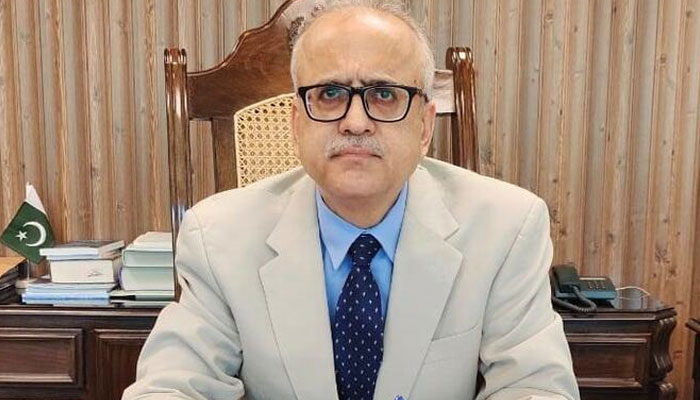
Islamabad: Mohsin Mushtaq Chandna, DG Debt, Ministry of Finance, has said that since water, sanitation and hygiene (WASH) falls under provincial jurisdiction, provinces must take ownership of financing and implementation rather than depending on federal interventions.
Mr Chandna was addressing an event organised here by WaterAid Pakistan in partnership with Sustainable Development Policy Institute (SDPI).
Mr Chandna emphasised the stark financial disparity between federal and provincial governments in terms of resources. While the Federal Government faces significant debt servicing burdens, provincial governments maintain surplus budgets, he observed.
Dr Hifza Rasheed, Director General (Water Quality), PCRWR, highlighted key issues surrounding water supply, pricing, wastewater treatment and policy implementation. She noted that while Pakistan has multiple policies—including the National Water Policy (2018), Climate Change Policy, Agriculture Policy, and Food Security Policy — they focus more on requirements than the resources needed to fulfil them. She called for stronger institutional support for water quality surveillance, emphasising the need for a national-level monitoring body. She suggested that PCRWR, given its research expertise, should assume this role.
Sarmad Iqbal from International Rescue Committee Pakistan identified critical gaps in compliance, project implementation, funding, and research. He described the WASH sector as suffering from a “sporadic eruption of actions” rather than following a structured trajectory. He called for a consolidated body of knowledge to provide evidence-based insights for sustainable WASH mechanisms. He further noted that decision-making remains inconsistent, often shifting between departments without a clear long-term vision.
Aftab Alam, Founder of Resilient Future International, emphasised the need to integrate funding sources into policy proposals to ensure successful implementation. He noted that evaluations of disasters, from the 2005 earthquake to the 2022 floods, consistently pointed to two major issues: inadequate local response capacity and poor stakeholder coordination.
Ismat Gul Khattak, Chief Advisor at NASTP, advocated for the promotion of small-scale microfinancing to empower community-based organisations and individuals.







-
 ByteDance’s New AI Video Model ‘Seedance 2.0’ Goes Viral
 -
 Archaeologists Unearthed Possible Fragments Of Hannibal’s War Elephant In Spain
 -
 Khloe Kardashian Reveals Why She Slapped Ex Tristan Thompson
 -
 ‘The Distance’ Song Mastermind, Late Greg Brown Receives Tributes
 -
 Taylor Armstrong Walks Back Remarks On Bad Bunny's Super Bowl Show
 -
 James Van Der Beek's Impact Post Death With Bowel Cancer On The Rise
 -
 Pal Exposes Sarah Ferguson’s Plans For Her New Home, Settling Down And Post-Andrew Life
 -
 Blake Lively, Justin Baldoni At Odds With Each Other Over Settlement
 -
 Thomas Tuchel Set For England Contract Extension Through Euro 2028
 -
 South Korea Ex-interior Minister Jailed For 7 Years In Martial Law Case
 -
 UK Economy Shows Modest Growth Of 0.1% Amid Ongoing Budget Uncertainty
 -
 James Van Der Beek's Family Received Strong Financial Help From Actor's Fans
 -
 Alfonso Ribeiro Vows To Be James Van Der Beek Daughter Godfather
 -
 Elon Musk Unveils X Money Beta: ‘Game Changer’ For Digital Payments?
 -
 Katie Holmes Reacts To James Van Der Beek's Tragic Death: 'I Mourn This Loss'
 -
 Bella Hadid Talks About Suffering From Lyme Disease