China confirms Xi Jinping’s US visit: What’s on the agenda?
President Xi will pay a state visit to the US from September 23 to 25
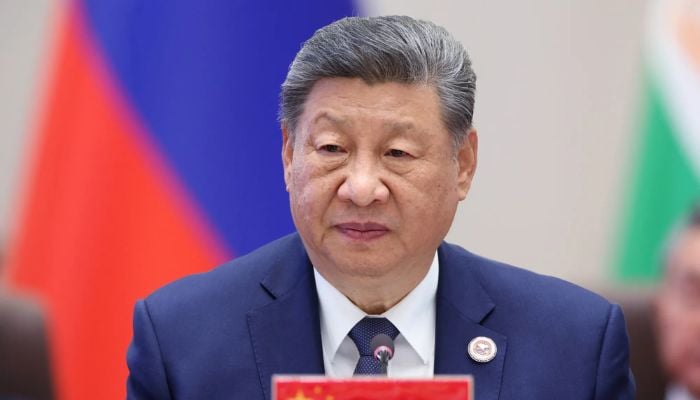
China in a recent development has confirmed that Chinese leader Xi Jinping is set to travel to the United States this week.
According to China’s Foreign Ministry’s statement issued on Monday, President Xi will pay a state visit to the US from September 23 to 25 at the invitation of President Donald Trump.
During the high-stakes visit, Xi "will hold in-depth exchanges of views with President Trump on major issues concerning China-US relations, as well as world peace and development," a Chinese foreign ministry spokesperson said during a regular press conference.
Ministry spokesperson Guo Jiakun described the recent back-to-back visits by the two heads of state within six months as a "historic milestone." He emphasized that China is keen to collaborate with the US to deepen dialogue, effectively handle disagreements, improve citizen welfare, and advance global peace and prosperity.
As per officials, Trump and Xi would hold talks in Washington on Thursday, September 24, marking their second meeting happening this year. President Donald Trump is scheduled to personally greet Xi upon arrival at Joint Base Andrews before hosting him for the state visit at the White House.
Scope of discussions
Speaking about the scope of discussions, both leaders are expected to hold talks on trade, tariffs, key global conflicts surrounding Iran and Taiwan and artificial intelligence.
Ahead of the presidential summit, Chinese Vice Premier He Lifeng and US Treasury Secretary Scott Bessent held preparatory trade consultations. Key points include evaluating compliance with past export controls, particularly regarding critical rare earth minerals and supply chain leverage.
The two sides plan to "operationalize" a process agreed upon in May, called the "Board of Trade", to identify potential tariff cuts on a "relatively small subset" of non-sensitive, balanced goods.
Potential US exports for tariff treatment include energy, agricultural goods, and medical devices; potential Chinese exports include consumer and low-tech goods.
Besides trade, AI safety talks would take the center stage. On Sunday, Bessent and Lifeng concluded talks and the US side proposed a new AI safety notification mechanism.
According to Bessent, discussions between the two nations centered on creating a new framework for artificial intelligence cooperation, highlighting national security priorities and a mutual alert mechanism for critical AI-related incidents.
After laying the foundation, Trump and Xi will talk about this AI safety notification mechanism during the summit. Future sessions are expected to address sensitive issues including the weaponization of AI, infrastructure protection and cyber attack prevention. However, US exports controls on AI chips and semiconductor manufacturing equipment would not be the part of AI-based talks.
Both sides would also touch upon the various geopolitical issues including Taiwan and global conflicts including Middle East dynamics and regional sanctions.


-
 Trump defends himself and Elon Musk after Zelenskiy's criticism over Starlink
 -
 Sanae Takaichi under fire for saying women work longer hours because of makeup and chores
 -
 Trump urges Zacharia to reconsider White House spokeswoman role
 -
 Amber Guyger, Dallas officer who shot Botham Jean in his own apartment, released on parole
 -
 Canada changes Express Entry rules for high-paying jobs and removes LMIA requirement
 -
 Istanbul hit by worst floods since 1942, as record rainfall kills four
 -
 Elon Musk's $158 million GOP donations revealed in new federal election filings
 -
 Pope Leo and Putin hold phone call over Ukraine war as Vatican seeks humanitarian ceasefire
-
 Alex Murdaugh lawyers question police handling of murder weapons ahead of retrial
 -
Cyprus court allows British dad to return home after son's fatal fall at holiday resort
-
IMF chief warns AI risks could outweigh benefits without proper safeguards
-
China ready to cooperate with EU on global economic imbalances