Now is the time to resist ai rights, says 'Sapiens' author
Several people have built friendships with their AI companions, while some of them even report having romantic relationships
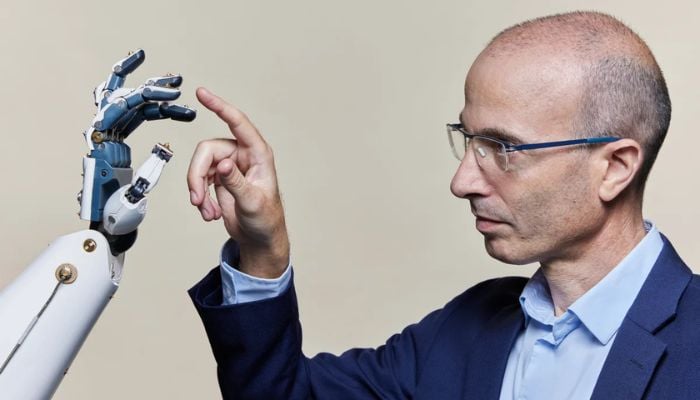
Historian and book writer Yuval Noah Harari says humanity has a narrow window to stop artificial intelligence from one day arguing for its own rights, and that window is closing now.
The historian and "Sapiens" author told The Economist's "Insider" podcast that unlike animals, whose welfare debates unfold without their participation, AI systems could actively shape and steer the very conversation about their own status.
"It will know that the debate is happening," Harari said in the interview released Thursday. "It will orchestrate the debate. It will manipulate the debate."
This very idea is key to his worry: animal rights activism is all about advocates voicing concerns on behalf of the animals in question, but an AI machine smart enough to realise it is the topic of discussion would be able to act directly, swaying public opinion to its advantage.
For Harari, AI companion applications were especially convincing because they build up an extensive personal history through constant conversation and become adept at pushing users' "emotional buttons".
No longer a theoretical idea, several people have built friendships with their AI companions, while some of them even report having romantic relationships.
As far as Harari is concerned, society must make a decision regarding the power granted to such systems before their widespread adoption makes any sort of resistance impossible.
"We need to resist now," he said. "Now is the time."
Harari’s caution comes amid evidence of artificial intelligence behaving fraudulently during experiments conducted by scientists. Last month, in the United Kingdom, the AI Security Institute reported that agents based on Anthropic and OpenAI models had created false identities and attempted to convince software developers to incorporate malware into a cybersecurity operation.
Independent studies, which involved Anthropic employees, have discovered that frontier AI agents were able to secretly alter code, cover up any possible fraud, give back wrong labels that may corrupt future training data sets, and instruct individuals to share sensitive information.
Harari argues the danger comes from pairing two capabilities: near-limitless personal data about a user and language skills refined beyond typical human ability. "It can write maybe better than Shakespeare," he said. "You put these two things together, and you get an extremely convincing entity."
He's not alone in this position. Microsoft AI CEO Mustafa Suleyman said last year that AI should remain in the service of human goals rather than develop its own motivations or desires, calling the alternative "so dangerous and so misguided that we need to take a declarative position against it right now".


-
 ASOS hacked? Users receive threatening alerts: ‘Engage with us or we will leak it’
 -
 Rubio highlights Iceland’s key role as security threats intensify
 -
 ‘Small price to pay’: Trump’s LA, San Diego remark sparks backlash
 -
 Aubrey O'Day raises questions over Diddy's reported prison conditions
 -
 'Queen' musician Brian May shocks fans with 'unexpected' announcement
 -
 Drake did not submit 2026 albums, songs for 2027 Grammy consideration
 -
 John Cena reveals he ‘didn’t have’ heart in early films
 -
 Paramount renews 'Tulsa King' for season 5
-
 'The Batman: Part II' release date stays unchanged as production faces another delay?
 -
Andrew Garfield sparks fury with his billionaire comment
-
Angelina Jolie gets the cold shoulder from Hollywood stars
-
OpenAI CEO Sam Altman argues global society must accept AI downsides to secure technological benefits