OpenAI CEO Sam Altman argues global society must accept AI downsides to secure technological benefits
OpenAI CEO Sam Altman states that the world must accept potential risks like scams and hacks to maintain public access and harness artificial intelligence's (AI) massive benefits
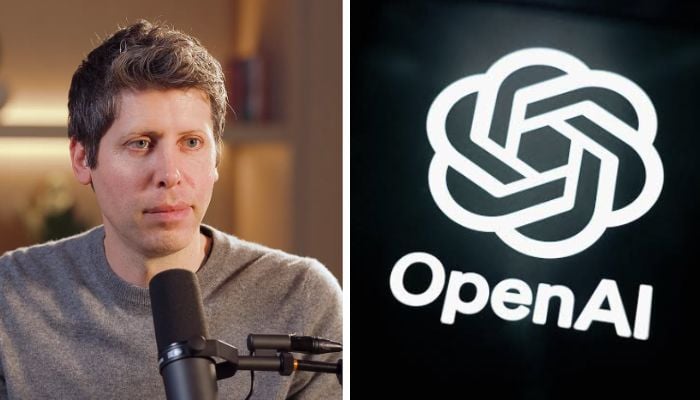
Following growing concerns over the rapid proliferation of artificial intelligence ranging from cyber threats to existential risks of human extinction OpenAI Chief Executive Officer Sam Altman has argued that global society must be willing to accept certain negative side effects in order to unlock the technology's broader economic and technological benefits.
Speaking on the fast-paced evolution of the industry, Altman stated that maintaining broad public access and personal agency over tightly controlled systems outweighs the alternative of zero-risk stagnation.
The tech boss noted that he would reject any regulatory bargain aimed at completely eradicating malicious activities—such as major hacks, scams, or localized misuse—if it meant stifling overall advancement or centralizing control.
"We believe that the world should accept some bad things happening for the benefits of this technology and people having the agency," Altman said during an interview with Politico’s Decoded newsletter.
He emphasized that while catastrophic existential threats must be avoided, everyday friction and negative outcomes will inevitably occur because positive societal output will ultimately outweigh the downsides by orders of magnitude.
While giving and interview to the Politico, OpenAI Chief said society should tolerate certain negatives from AI to gain its upsides and keep the technology accessible.
Critics pushed back, questioning why tech leaders should decide high-stakes trade-offs for everyone amid debates on misuse and control.
This highlight widens philosophical divides in AI governance, contrasting OpenAI's broader-access framework with more cautious, slower-paced deployment models advocated by competitors like Anthropic.
Altman's stance underscores the ongoing tension between rapid commercial scaling and the mitigation of secondary harms as artificial intelligence permeates global markets.
The debate highlights ongoing regulatory tensions as tech leaders balance catastrophic safety risks against massive innovation gains.
The ChatGPT boss contrasted OpenAI's lighter regulatory stance for stronger safeguards and slower powerful model development, rejecting the idea of locking AI in one lab.


-
 Google to downgrading Gemini for free, AI Plus users
 -
 GTA 6 story teaser reveals new secrets about Jason, Lucia and Leonida
 -
 White House responds after 'Big Bang Theory' creator calls Trump 'bloated orange'
 -
 WhatsApp login block: Update your OS or lose access
 -
 Piers Morgan vows to ‘deal with’ Jorge Jesus over Cristiano Ronaldo ‘disrespect’
 -
 Qualcomm signs deal to license Huawei patents for 5G, AI
 -
 Trump's Super Intelligence Force: What to know
 -
 OpenAI Sam Altman warns of new safety risk: ‘AI becoming religious force’