Europe wildfires could jump 39% even in best case: Study
Nearly 600,000 hectares of land have been burnt this year, with Belgium, France, and Slovakia breaking their respective record figures

Europe's wildfires are set to burn 39% more land by the end of the century than today, even under the most optimistic climate scenario researchers modelled, according to a new study. Only aggressive investment in fire management can meaningfully soften that trajectory, and even then, it won't erase it.
The team of researchers from the Potsdam Institute for Climate Impact Research analysed the projections of the annual burnt area during 2070–2100 in relation to modelling during 2000-2030.
In the case of a situation where the planet is heated by 1.8C, which exceeds the current 1.4C, certain regions will experience moderate changes, whereas some will show minimal changes.
If the planet warms up to 3.6°C, which is the worst-case scenario outlined in the study, then the annual burning area will be three times higher than the initial figure, and the conditions of fire weather will worsen in “virtually all of Europe". At present, the policies being followed may lead to 2.6C warming by 2100.
Using the Human Development Index as a stand-in for firefighting capability, the team found continued improvements in suppression could cut burnt area by up to 92% in the cooler scenario compared with freezing capabilities at today's level.
"Investments into fire management could help to a certain limit, but if we go on a path of high emissions … we still see strong increases in burnt area," said Maik Billing, an ecosystem researcher at PIK and the study's lead author. "Fire management cannot replace climate mitigation."
The findings land as Europe lives through what's shaping up to be its third-worst fire season on record, trailing only 2025 and 2022, according to European Forest Fire Information Service data released Thursday.
Already, nearly 600,000 hectares of land have been burnt this year, with Belgium, France, and Slovakia breaking their respective record figures for this time of year. Wildfires in France and Spain last month led to the displacement of about half a million people as well as being beyond the capacity of firefighting operations to contain.
Another report released recently shows that many decades of suppressing fires, even small ones, have resulted in the accumulation of high amounts of fuel across the southern European landscapes. This has reduced the number of fires occurring in total but made any fire that breaks out under favourable conditions very extreme.
Víctor Resco de Dios, an engineering forester from the University of Lleida, who did not contribute to the PIK report, says that wildfire seasons result in "an unproductive blame game", as either climate change or landscape management is blamed on its own without acknowledging that they should be considered together.


-
 Washington governor finally comes forward after claims ICE arrested travellers at Seattle airport
-
 France rejects new EU budget proposal over farm funding cuts, calls it 'disappointing'
-
 EU and Indonesia sign landmark free trade deal after 10-year talks
-
 Zelenskiy says, Trump urges Europe to cut Ukraine spending for a peace deal
-
 Canada defense minister says no shift in US military ties amid rising tensions
-
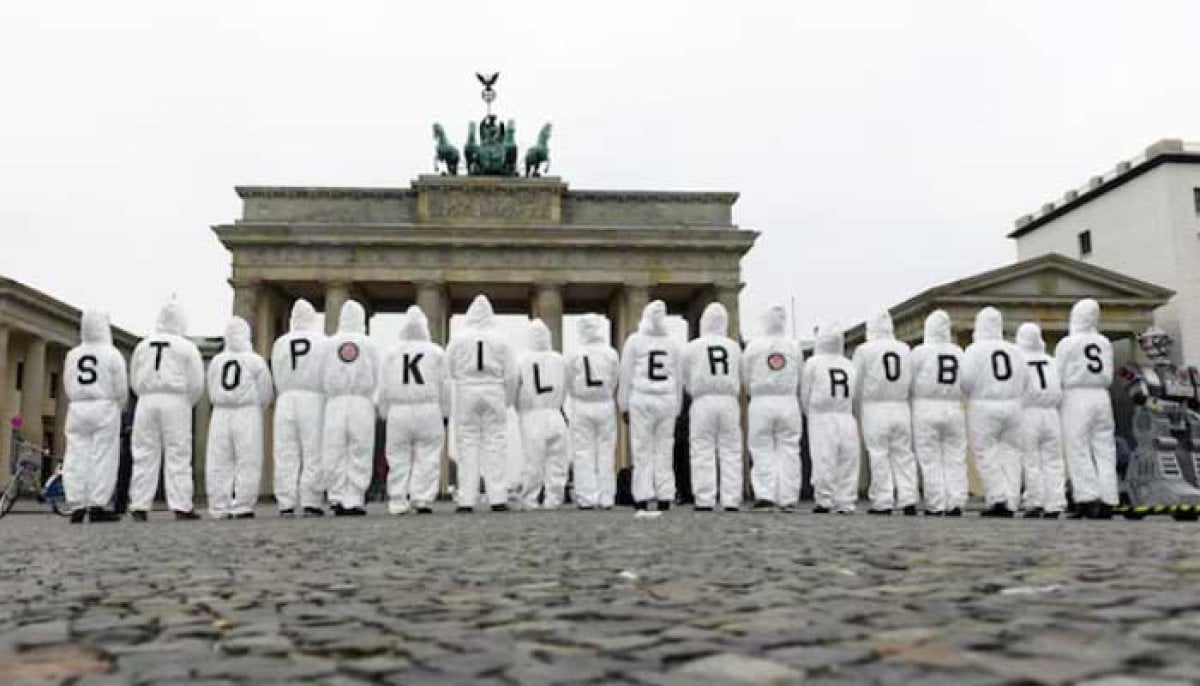 'Killer robots': Nations agree to talks on new rules within two years
-
 FBI most-wanted cartel leader arrested in Mexico after violent gun battle
-
 Democrats win big in the midterms: What’s next for America?
-
 Melania Trump warns son Barron about 'dangerous world out there'
-
Denmark urges EU to tighten restrictions on Russians after foiled plot
-
US Defense Secretary Pete Hegseth restricts military ties with Canada in classified: report
-
Chapo Isidro arrest: Violence grips Sinaloa as security forces deploy to restore order