Empire State building-sized asteroid to pass close to Earth: What scientists know
Apophis asteroid in a close flyby can be seen with a naked eye in Eastern Hemisphere
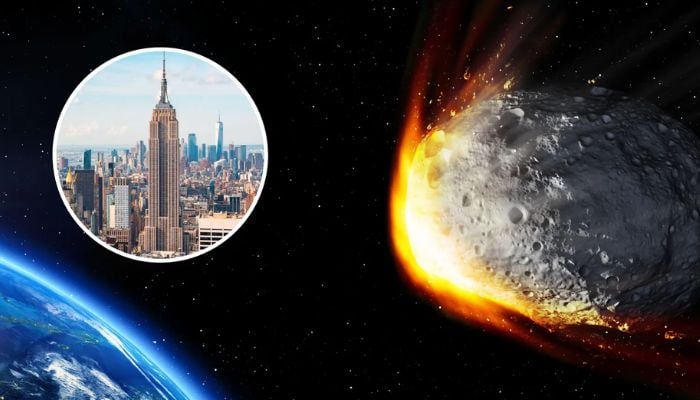
A giant asteroid the size of an Empire State building is set to soar past Earth and the best thing it will be visible to billions of people around the world if the conditions are suitable.
The massive asteroid is named after the Egyptian god of chaos and destruction. The name was denoted on the basis that early calculations suggested a potential impact risk. But as per the latest findings the scientists have confirmed it poses no threat to Earth for at least the next 100 years.
Speaking about its features, the asteroid, Apophis, is peanut-shaped roughly 340 meters in diameter, at least 450 meters long and composed of primordial "raw material".
The asteroid is expected to pass through Earth in a close flyby on April 13, 2029. It will pass roughly 20,000 miles from Earth’s surface, which is closer than many orbiting satellites.
Under clear skies, it will be visible to the naked eye across the Eastern Hemisphere, including parts of Africa, Europe, Asia, and Australia.
It was first discovered in 2004 by the late astronomer Roy Tucker as well as David Tholen and Fabrizio Bernardi.
NASA said the celestial event is "an amazing and totally unprecedented opportunity to learn much more about Apophis and similar near-Earth asteroids".
"An asteroid this large passes close to Earth only every few thousand years on average, so it's likely that an event like this has not happened at any time in recorded human history.”
This marks the first time humans have had the technology to observe it up close. Space agencies plan to monitor it with ground observatories and dedicated spacecraft.






-
 US finally confirms weapons in orbit: What it means for space warfare
 -
 How China's FAST telescope is mapping the cosmic gas behind star birth
 -
 Did Sun eat super-Earth? New study says maybe
 -
 Did Sun swallow a super-Earth? Scientists search for its ‘fingerprints’
 -
 Blue Origin sets sights on Mars with new NASA network
 -
 NASA, IBM launch open-source lunar foundation AI model to help map ice, craters on moon
 -
 Bacteria can remember without brain, new study finds
 -
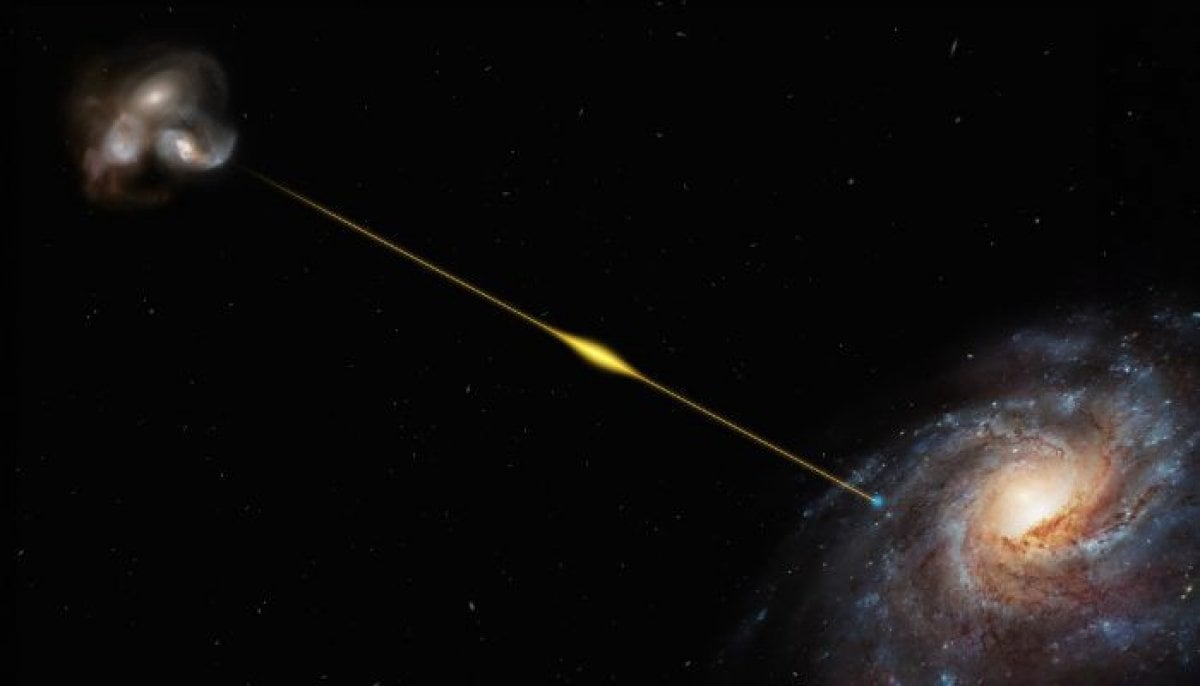 Fast radio bursts may unlock secrets of dark matter, energy and neutrinos