Scientists unveil first eco friendly technology to destroy ‘Forever Chemicals’
Forever chemicals are made up of thousands of man-made chemicals found in water, which don't break down in the environment and accumulate potential health risks

With everyday advancement, new utilities, including plastics and other materials have produced chemicals that are harmful for health as well as our surroundings, known as "forever chemicals."
They are formed by thousands of man-made chemicals that are grease, water and heat resistant, used in products like non-stick pans, waterproof clothing and firefighting foams.
The reason these chemicals are called “forever chemicals”, as they don’t break down in the environment or the human body, leading to their accumulation and potential health risks like increased cancer risk and hormone disruption.
While considering its harmful impact a research team at Rice University, working with international collaborators, has created new eco-friendly technology can capture and destroy PFAS which is dangerously found worldwide in water.
Scientists developed first technology that can quickly trap and break down toxic "forever chemicals" PFAS in water.
Researchers informed that new technology can break down these "forever chemicals" at record speed and with unprecedented efficiency, offering a potential breakthrough in efforts to tackle one of the most persistent forms of environmental pollution.
The approach targets per-and polyfluoroalkyl substances PFAS, a large family of synthetic chemicals known for their strong carbon–fluorine bonds, which allow them to persist in the environment for decades.
The new method dismantles these bonds far more quickly than conventional treatments, converting PFAS into less harmful components rather than simply capturing or concentrating them.The system safely breaks them down and refreshes itself for reuse.
Laboratory tests showed the technology could eliminate high levels of PFAS in minutes, using visibly less energy than thermal or chemical destruction methods.
Scientists say this efficiency could make large-scale cleanup of contaminated water, soil, and industrial waste streams more feasible.
Although further testing is needed to confirm its performance outside the lab, researchers say the findings represent an important step toward scalable solutions for PFAS pollution.
The results come as governments and health agencies intensify efforts to regulate PFAS due to mounting evidence linking them to adverse health and ecological effects.
The project was led by Youngkun Chung, a postdoctoral fellow mentored by Michael S. Wong, a professor at Rice's George R. Brown School of Engineering and Computing.
The research Regenerable Water Remediation Platform for Ultrafast Capture and Mineralization of Per‐ and Polyfluoroalkyl Substances was originally published in the journal Advanced Materials.






-
 Four hidden dead stars found in Earth's backyard
 -
 What happened during SpaceX’s 13th Starship test? First upgraded Starlinks successfully deployed
 -
 Astronomers may have found the first moon beyond our solar system
 -
 Space datacenters could catastrophically pollute Earth, groups warn
 -
 Astronomers just solved a 10-billion-year-old Milky Way mystery
 -
 Why China is crashing a spacecraft into asteroid 2015 XF261
 -
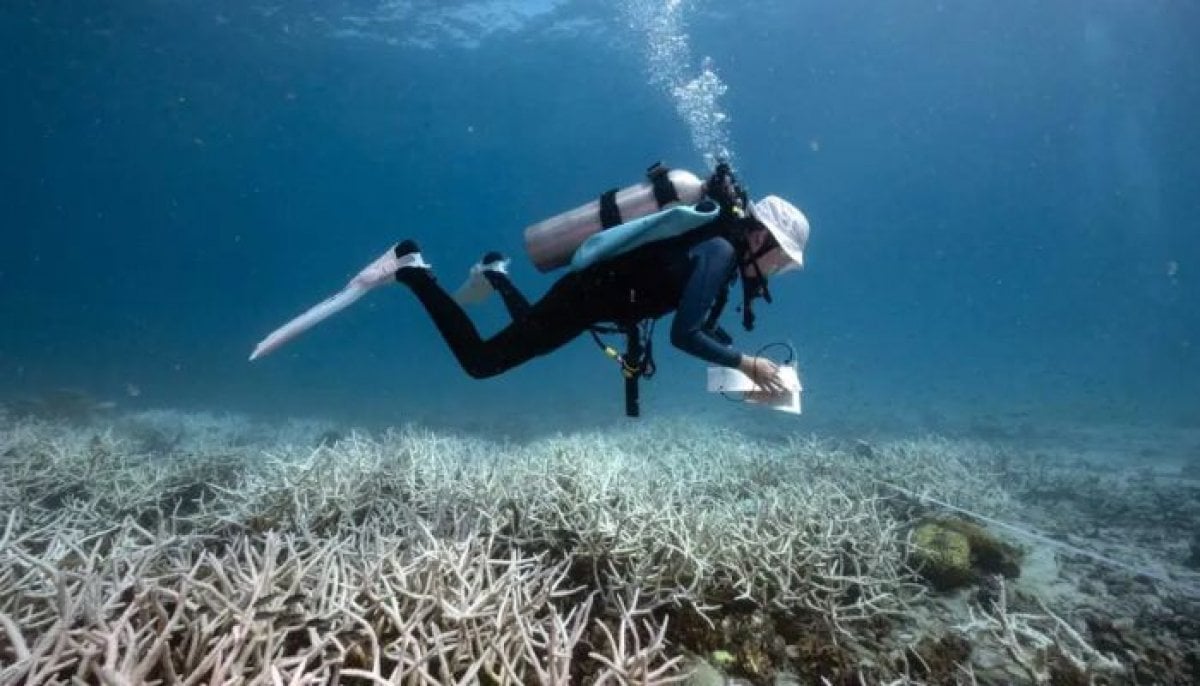 Australia's Great Barrier Reef at extreme risk of ‘ecosystem collapse’, scientists warn
 -
 James Webb Space Telescope reveals how black holes feed themselves