Meet X-59: NASA’s quiet supersonic jet that could cross Atlantic in 4 hours
Despite its successful flight, there were some drawbacks too
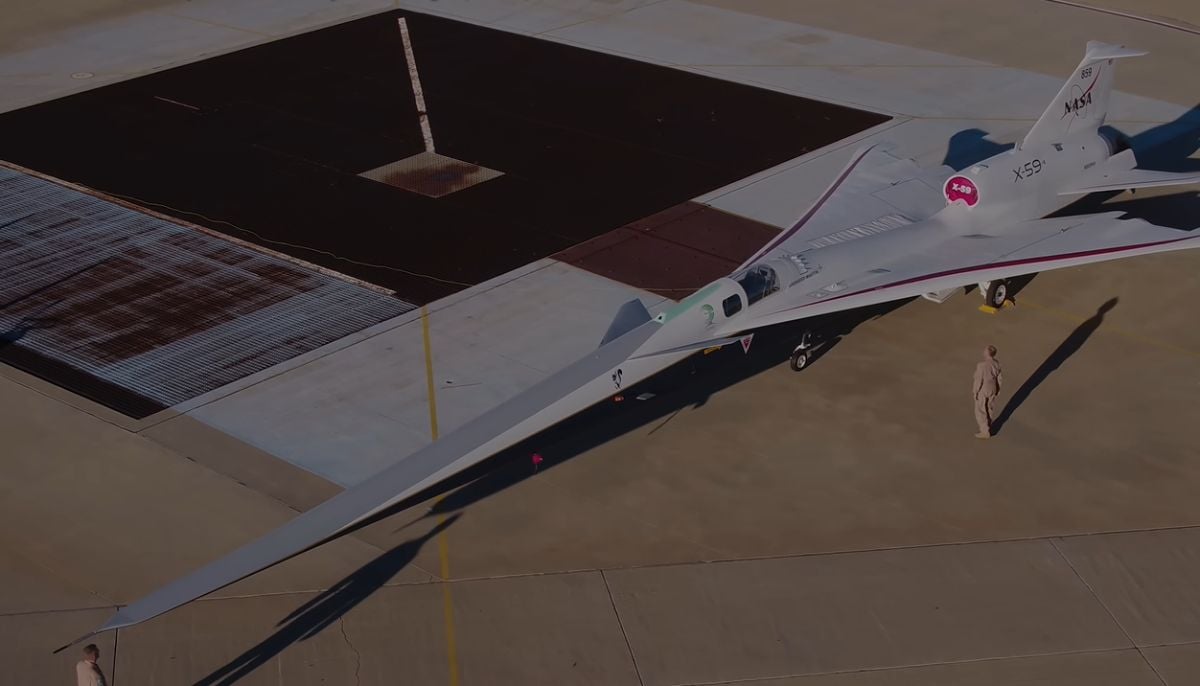
The National Aeronautics and Space Administration (NASA) has unveiled the world’s first quiet supersonic jet. The jet, dubbed “Son of Concorde”, took almost 10 years to build and completed its first test flight on Tuesday, October 28, 20225.
aircraftThe supersonic jet, developed by Lockheed Martin for NASA, is officially known as the X-59, a 100-foot aircraft costing $247 million. It took off for the first time from Palmdale Regional Airport and landed back safely at NASA’s Armstrong Research Center after nearly an hour in the air.
The jet traveled at a peak altitude of 12,000 feet, much lower than a commercial airplane. However, experts are hopeful that it will soon fly at 55,000 feet altitude.
The flying vehicle has a top speed of 925 mph meaning that it can travel from New York to London in just four hours.
Lockhood Martin appeared thrilled after the first successful flight of their product.
The vice president and general manager at the company’s Skunk Works division, OJ Sanchez, said, “we are proud to be at the forefront of quiet supersonic technology development,” adding, “the aircraft is a testament to the innovation and expertise of our joint team.”
Despite its successful flight, there were some drawbacks as the single engine jet only reached the speed of 230mph.
However, experts and developers are hopeful that future test flights, after “expanding the X-59’s flight envelope,” will help it reach its top speed of 925 mph.


-
 US Treasury chief says Iranian ports blockade is working in putting pressure on Iran's economy
 -
 Iran urges BRICS to challenge West’s ‘false sense of superiority’
 -
 How China allowed sanctioned Marco Rubio into Beijing with a Chinese name for Trump visit
 -
 King Charles visits Jewish community after Prince Harry's article on antisemitism in UK
-
 Khloe Kardashian reacts to Nancy Guthrie kidnapping claims: ‘Weird’
 -
 Reba McEntire shares insight into wedding planning with fiancé Rex Linn
 -
 GTA 6 pre-order listings leak online: Everything we know so far
 -
 Donald Trump Jr. under fire for posting racy photos of daughter Kai online
 -
 How did Brandon Clarke die?
 -
 Taylor Swift wins BMI Songwriter crown for third year in a row
 -
 Katseye announces world tour, sending internet into meltdown
 -
 Pete Davidson urged not to target Charlie Kirk in comedy set: Insider