Northern lights alert on Valentine’s Day: How, where & best time to watch auroras
Aurora Borealis will be visible across the different parts of the US and Canada
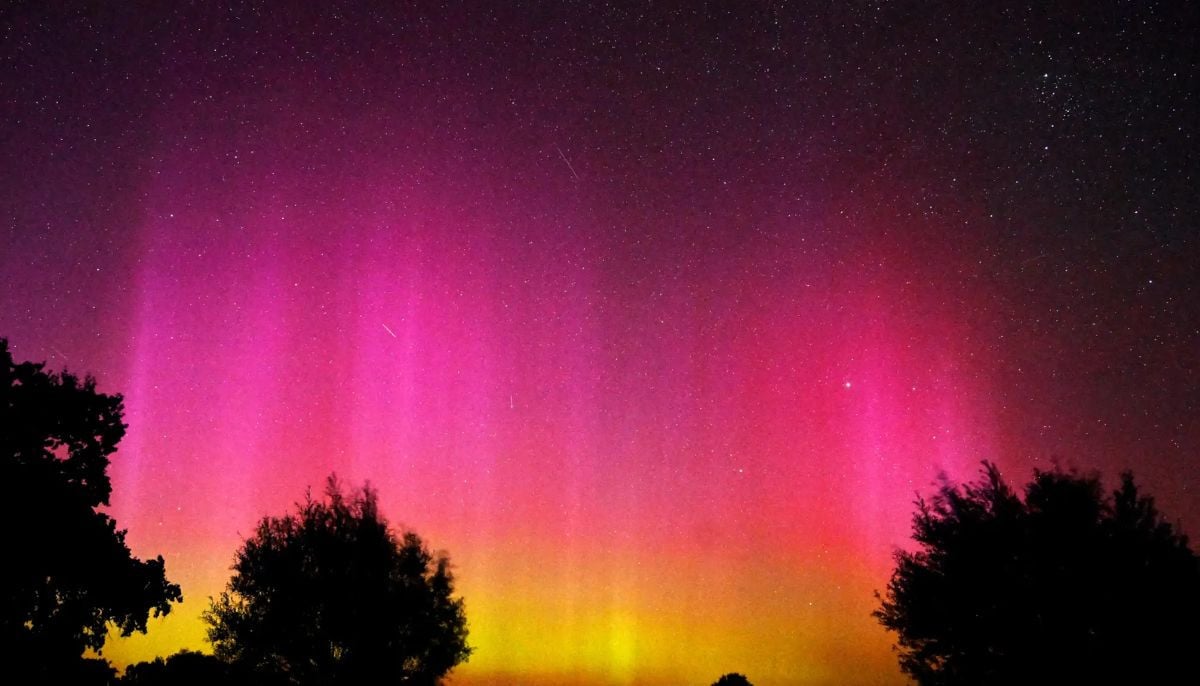
Skywatchers may get the chance to watch northern lights with their loved ones on Valentine’s Day.
This weekend, one might be able to see Aurora Borealis across the different parts of the US and Canada.
According to the National Oceanic and Atmospheric Administration’s Space Weather Prediction Center’s prediction, the Universe is maybe ready to give a celestial Valentine’s Day gift as “a minor geomagnetic storm” is set to happen.
NOAA’s forecast says, “G1 storms are likely on Feb. 15 due to combined potential from a recurrent coronal hole and a passing (CME) coronal mass ejection.”
Just after the sunset on Saturday, February 14 and Sunday, February 15, the skywatchers can see the auroras visible from as many as 12 US states.
The best time to watch northern lights
If you are thinking of spending your Valentine’s Day by watching celestial spectacle, the most suitable time is shortly after sunset and into the overnight hours on Saturday and Sunday.
But, the northern lights are expected to be more visible on Sunday night with clearer and darker skies.
States where northern lights will be visible?
Auroras may appear across Alaska and northern parts of Washington, Idaho, Montana, Wyoming, North Dakota, South Dakota, Minnesota, Wisconsin, Michigan, New York and Maine.
Which locations offer the best view?
Only darker northern skies away from urban light pollution will offer the best views with higher visibility.
How to watch the northern lights?
There is no need to use special equipment to watch aurora borealis. With the naked eye, you can experience this mesmerizing event.
With your smartphone, you can capture beautiful aurora pictures by using “night mode.” For DSLR or mirrorless camera SO 1600, f2.8 aperture and 2-10 seconds exposures will yield good outcomes.
Other space highlights
This weekend, several planets will dazzle the skies and be lined up in the sky all weekend for “planet parade.”
The New Moon Solar Eclipse will be visible on Tuesday, February 17, 2026.


-
 YouTube warns UK creators over government’s new content control rules
 -
 Prince William forced to face Prince Harry during UK visit
 -
 Deadly heat wave forces 4th of July event cancellations in Washington, Philadelphia and Colorado
 -
 Prince Harry triggers Buckingham Palace ‘frustration’ with last-minute UK trip decision
-
 Study reveals human cells that compute like chips
 -
 Taylor Swift follows in Meghan Markle, Prince Harry’s footsteps in wedding with Travis Kelce
 -
 Nancy Guthrie case update: What we know about the ongoing mystery
 -
 BBC 'Breakfast' star makes emotional return after months off-air
 -
 TikTok's 'only survivor' claims he's been alone in 2028 for 340 days
 -
 France deploys naval minehunters to clear Strait of Hormuz after US-Iran pact
 -
 Pope Leo issues major appeal as America celebrates its 250th birthday
 -
 Dog attacks woman after man attempt to help goes horribly wrong
-
 Why Trump’s campaign-style rally for America’s 250th anniversary is sparking debate
 -
‘Trump accounts’ for children go live today: What parents need to know
-
Insider spills where Taylor Swift is now emotionally as she snubs Blake Lively on her wedding
-
Nancy Guthrie case update: How a cruel ‘imposter’ allegedly ‘harassed’ Annie Guthrie and Tommaso Cioni