Trump meets Emperor Naruhito: What you need to know about Japan's Imperial System
Donald Trump's visit to Japan in six years marks a historic milestone in U.S.-Japan bilateral ties
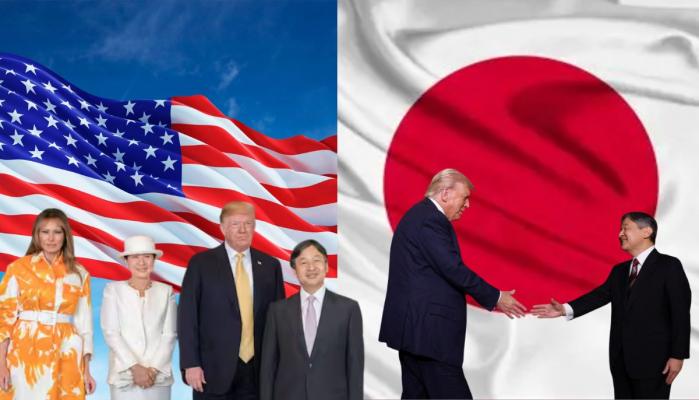
U.S. President Donald Trump is in Japan, where he is meeting today October 27, 2025, with Emperor Naruhito, marking the first meeting between the two in a period of six years.
Let’s dive deep to understand what the emperor means to this Asian nation.
Donald Trump's visit to Japan in six years marks a historic milestone in U.S.-Japan bilateral ties.
The Japanese emperor Naruhito enthroned the seat in 2019, three years after his father, Akihito, then emperor, relinquished his powers amid aging.
It also marked the first time that an emperor handed over the reins since Emperor Kokaku, who stepped down in 1817.
The current Emperor Naruhito, 65, and Empress Masako, 61, have studied at Oxford University.
Akihito was born in 1933, and throughout his reign he has strived to maintain cordial relations with its former colonies in Asia and tried to portray Japan’s image to the outer world as a peace-loving nation.
He, along with the empress Emerita Michiko, has introduced modernization to the royal family in an effort to bridge the gap between the royals and the masses.
After Japan was defeated in WWII in 1945, Hirohito (Naruhito’s grandfather) renounced his divine status.
The new constitution, drafted by the U.S. occupation forces, redefined the emperor as the “symbol of the state and the unity of the people,” rather than a god, as he had been treated earlier.
In the Japanese royal hierarchy, women may not take the throne, although historically females have played their roles as place-holders who could not pass the throne to their children.
The emperor Naruhito has only one sibling, a 23-year-old Princess Aiko, therefore, upon the death of Naruhito, the throne will pass on to his younger brother, Prince Akishino, then to Akishino’s 19-year old son, Prince Hisahito.
While Prince Hitachi, 83, Akihito’s younger brother, is the next man in waiting for the throne.
Traditionalists view Japan’s imperial family as the world’s oldest continuous hereditary monarchy.
For most of the imperial institution’s history, the emperor lacked direct political power, serving mainly as a symbolic and religious figure.
The Meiji Constitution of 1889 transformed him into a constitutional monarch while retaining his divine status, making him the central figure of national loyalty.


-
 King Charles receives historic invitation after announcing US state visit
 -
 King Charles faces heart-wrenching plea by family ahead of controversial US tour
 -
 Kristi Noem's husband was blackmailed by hostile intelligence services?
 -
 Trump signals possible US exit from Nato, claims allies ‘weren’t there for us’
-
 Comment: I’m panicking that I’m obsessed with 'Harry Potter' AI videos
 -
 Kanye West hit with wild warnings by mystery man as video explodes on April Fool's Day
 -
 Artemis II mission poised for a historic moment with Victor Glover
 -
 Zayn Malik reveals why he collaborated with Blackpink's Jisoo for 'eyes closed'
 -
 Megan Thee Stallion's latest hospitalization echoes 2020 shooting trauma
 -
 Why did Luke Combs think his career was over when he met Blake Shelton?
 -
 Amanda Batula's dating history: 'Summer House' star new romance confirmed after past relationship ends in chaos
 -
 Lamar Odom makes darkest confession about Khloé Kardashian marriage
-
 Kid Rock's controversy resurfaces after viral helicopter video triggers probe
 -
Kane Brown, wife Katelyn spills their 'Beauty and the Beast' duet struggle
-
Khloe Kardashian recalls 'overwhelming guilt' over Lamar Odom heart attacks: 'I hid it'
-
Selena Gomez shares personal struggles with bipolar disorder