Russia’s ‘invincible’ Burevestnik cruise missile: Threat to nuclear deterrence?
Russia tested its nuclear-powered Burevestnik cruise missile with limitless range
_updates.jpg)
Russia has successfully carried out a test of “invincible” nuclear-powered cruise missile named Burevestnik on Sunday, which is known for covering a greater distance with limitless range.
The announcement came from Russian president Vladimir Putin who hailed this breakthrough saying it a missile system that can elude today’s defences or in the unforeseeable future.
According to Putin who was dressed in camouflage fatigues at generals’ meeting, “It is a unique ware which nobody else in the world has.”
Key facts about Burevestnik
The 9M730 Burevestnik, dubbed as “storm petrel” is a ground-based and low-flying cruise missile that is not only nuclear-powered but also can carry a nuclear warhead.
Nato called the cruise missile the SSC-X-9 Skyfall.
In the recent test, the missile covered a distance of 14,000km and remained in the air for around 15 hours.
However, Chief of General Staff Valery Gerasimov said, “this is not yet the achievable limit for the cruise missile.”
The Burevestnik cruise missile project was first announced in 2018 by Putin who claimed that it is equipped with unlimited range and could successfully bypass US missile defences.
But, the Western governments and experts have voiced concerns over Burevestnik strategic value.
British intelligence has previously reported that Burevestnik is a nuclear-powered subsonic cruise missile system with indefinite range and in-flight time. Moreover, it can also attack from unpredictable directions.
According to the Russian news agency Tass, the development of the Burevestnik started after the US pulled out of the 1972 Ballistic Missile Treaty in December 2001.
‘Invincible’ Burevestnik cruise missile: Threat to nuclear deterrence?
The Nuclear Threat Initiative, U.S.-based non-profit security organisation, said in a 2019 report, "In operation, the Burevestnik would carry a nuclear warhead (or warheads), circle the globe at low altitude, avoid missile defenses, and dodge terrain; and drop the warhead(s) at a difficult-to-predict location (or locations).”
Some western experts say the Burevestnik’s subsonic speed would make it more detectable, making it more vulnerable for the hostile targets.
Jeffrey Lewis, director of a non-proliferation program at the Middlebury Institute, said that while Russia was 'crazy enough' to build a nuclear-powered missile, it didn't mean they are the only country with the capability.
“I don't think the missile system is invincible, but it's part of the deepening arms race that we are in where other countries come up with other systems to shoot it down,” he added.
The US and Russia are heavily investing in new offensive systems and defenses..
According to report by the United States Air Force’s National Air and Space Intelligence Center in 2020, if Russia became successful in operationalizing Burevestnik, the Moscow would finally be equipped with "unique weapon with intercontinental-range capability"
Given the arms race driven by the successful test, it is no mistake to assume that the world will experience weakening nuclear deterrence.
On the other hand, the poor test record of Burevestnik in the past, followed by the explosion and radiation emission will downgrade the efficacy of cruise missiles, thereby downplaying threats to nuclear deterrence.


-
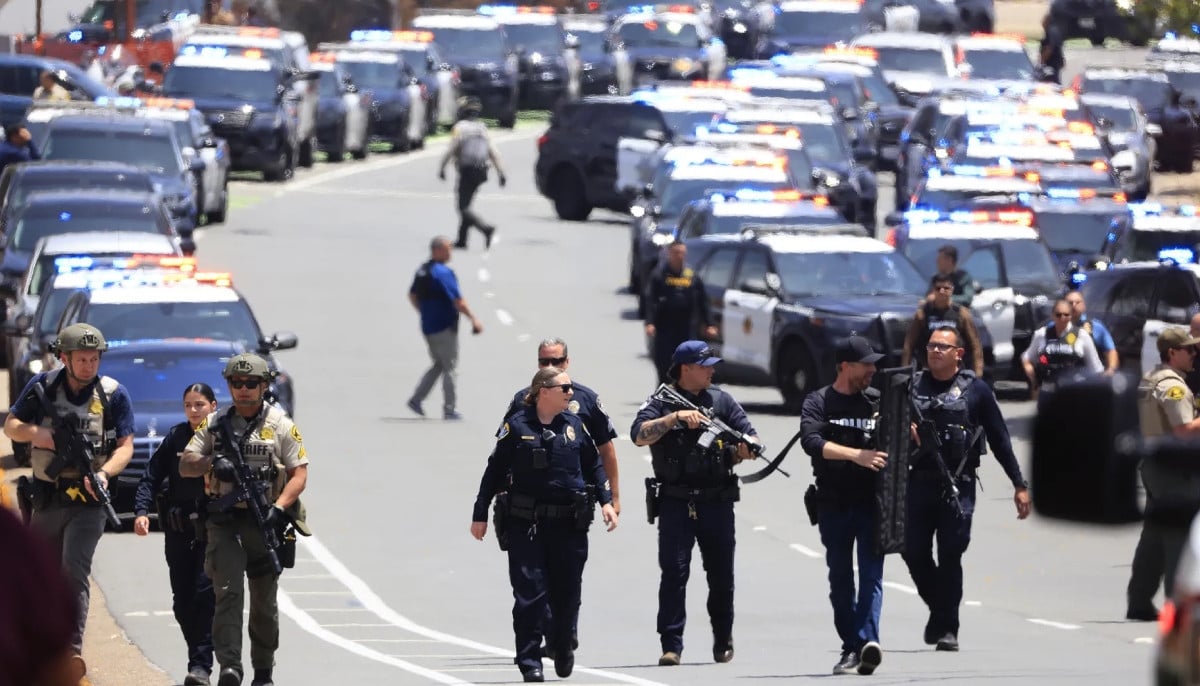 Three worshippers killed in San Diego mosque shooting as police probe 'hate crime'
 -
 Ariel Winter makes stunning confession about her relationship with 'Modern Family' costar Nolan Gould
 -
 'Game of Thrones' star Kit Harington breaks silence on series 'amazing' impact after years
 -
 Léa Seydoux opens up about her severe mental health struggles
-
'Game of Thrones' star Kit Harington breaks silence on series 'amazing' impact after years
-
 Yungblud stalker fails to show up in front of magistrate, being sought by authorities
 -
 Jamahl Mosley joins New Orleans Pelicans but NBA fans are divided
 -
 Nancy kidnapping: Major update in Savannah Guthrie's mother case comes to light
 -
 Why GTA 6 was delayed from spring 2025 to 2026, Take-Two CEO reveals
 -
 Shakira achieves major legal victory in tax fraud case
 -
 Michael Jordan explains why he keeps his philanthropy private amid public debate
 -
 Drama deepens as Pete Davidson's pal responds to Elsie Hewitt's parenting claims
-
 Ella Langley dominates ACM awards with record-breaking 5 wins: 'Thank you so much'
 -
Jon Favreau reveals how 'Star Wars' shaped his life before 'The Mandalorian and Grogu' release
-
Matthias Schmid’s girlfriend Nora Worlke joins him at PGA Championship
-
Who is Aaron Rai’s golfer wife? Meet Gaurika Bishnoi