Scientists find signs of modern life recorded in ancient rocks
The concept of DNA from residues has been applied to learn more about Earth’s history
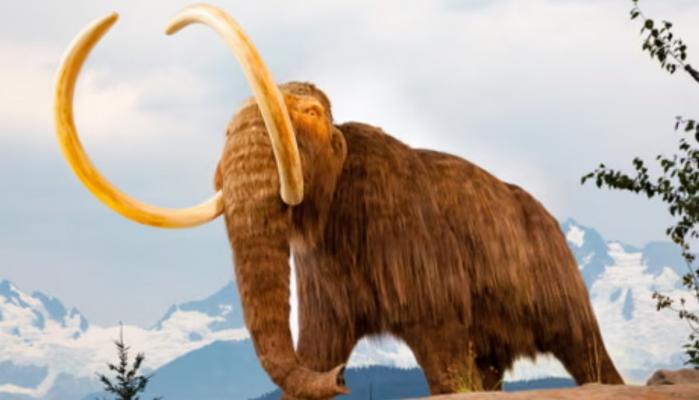
In a groundbreaking study, researchers succeeded in reconstructing the history of life and environments that was previously impossible through traditional fossilization.
Fossilization is primarily rare, and most living things vanish without a trace and are recycled back into planet Earth.
However, in some environments the DNA from living things adheres to the soil and rock, leaving evidence for hundreds of thousands or even millions of years.
Scientists have made a new discovery and are using DNA from sediments to rebuild a clearer picture of past environments, for instance using it to show that woolly mammoths lived in the Arctic long after they were thought to be extinct from the specific region, or to map the history of soft-bodies' creatures that commonly do not fossilize such as worms.
It has been observed that every living thing leaves evidence of their DNA- in flakes of skin, hair, faeces, urine, pollen or decaying tissue everywhere it goes.
In this connection, Tony Brown from the University of Southampton wrote in Geoscientist and explained how the DNA can be incorporated into a well-preserved mineral under the appropriate circumstances.
The researchers have been able to compare sedaDNA with ancient rock paintings of animals on cave walls.
The discovery uncovered a remarkable ability to reconstruct past environments with accuracy and to gain new insights into the lives of ancient civilizations.


-
 Bollywood legend Nana Patekar dies aged 75
 -
 Diddy's release date delayed further after sending rapper to solitary
 -
 Katie Price's ex Lee Andrews reportedly reveals age range he wants in his next partner
 -
 Ben Affleck keeps it real on awards after being asked about Lopez's Oscar 'snubs'
 -
 Michael Douglas makes ‘painful’ confession about early acting days
 -
 Jeremy Allen White ready for Gene Wilder role?
 -
 Andrew Garfield turned against ChatGPT after playing Sam Altman
 -
 Dua Lipa interview about children and Callum Turner is fake