
MIT scientists discover hidden remains of early earth’s ancestor deep underground
Rare fragments of proto-Earth have been discovered

Massachusetts Institute of Technology (MIT) scientists and international partners have recently reported major discoveries regarding “proto-Earth”, the planet’s ancient precursor that existed 4.5 billion years ago.
Primarily, these remnants offer a unique glimpse into the material that existed before the significant influence that formed our modern planet.
As reported by ScienceDaily, the study was published in Nature Geosciences on Tuesday.
In this connection, Paul M. Cook, career development assistant professor of Earth and planetary sciences at MIT said, “This may be the first direct evidence that we have preserved materials from proto-Earth.”
MIT scientists have discovered a spectroscopic signature in deep rock samples from Greenland, Canada and Hawaii, indicating a deficiency in the potassium-40 isotope in comparison to most modern Earth materials.
The findings further indicate that these rocks may contain fragments of proto-Earth, surviving billions of years of galactic upheaval.
Scientists have made an effort to understand Earth’s original chemical make-up by analyzing distinct meteorite groups.
These findings profoundly challenge the deep-rooted belief that the colossal giant impact has completely melted and abolished all traces of the original planet’s composition, and much more remains to be discovered about our planet's origins.






-
 Kim Kardashian, Lewis Hamilton's romance being called a calculated move?
 -
 David, Victoria Beckham melt hearts with sweet Valentine's Day throwbacks
 -
 Valentine’s day on X: New animation rolls out for seasonal mentions
 -
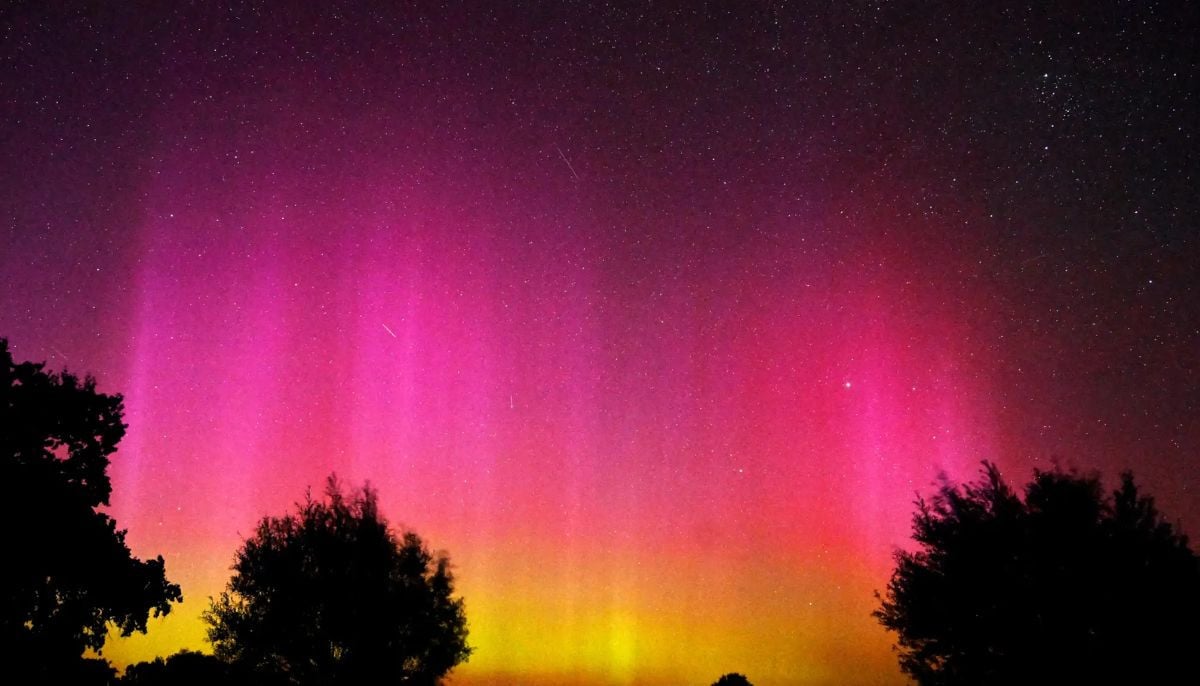 Northern lights alert on Valentine’s Day: How, where & best time to watch auroras
 -
 Jessica Alba, Cash Warren finalize divorce after 16 years of marriage
 -
 James Van Der Beek's brother breaks silence on actor's tragic death
 -
 Nicole Kidman celebrates Galentine’s Day months after Keith Urban split
 -
 Justin Bieber unveils Hailey Bieber as first face of SKYLRK in intimate campaign debut