Iran’s Taftan volcano shows signs of awakening after 710,000 years
A volcano is declared extinct if it hasn’t erupted since the Holocene era
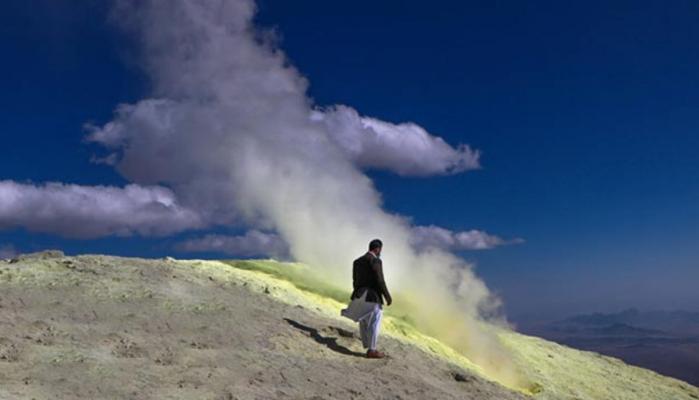
A volcano in Iran has shown signs of awakening after 710,000 years since its last eruption.
The Taftan volcano near the Pakistan border has shown signs of activity and the ground near the volcano’s summit has risen nearly 3.5 inches between July 2023 and May 2024.
A study published in Journal Geophysical Research Letters on October 7 revealed that the uplift has not yet receded, indicating a gas pressure buildup below the volcano’s surface.
Taftan volcano was previously considered extinct but now the recent findings suggest that it can be more accurately described as dormant.
For context, a volcano is declared extinct if it hasn’t erupted since the Holocene era, which began some 11,700 years ago.
Pablo Gonzalez, a volcanologist at the Institute of Natural Products and Agrobiology in Spain and a senior author of the study, has called for close monitoring of the volcano, which has never been considered a risk to people before.
Taftan volcano that has no recorded eruption in known human history has shown no signs of activity since 2020. However, in 2023, gaseous emissions from it were reported that can be smelled from the city of Khash nearly 31-miles away.
A doctoral student working under Gonzalez, Mohammad Hossein Mohammadnia, observed the satellite imagery of the volcano and revealed that the source of uplift sits nearly 490 to 630m below the surface.
Mohammadnia told Live Science that the magma of the volcano is nearly 2 miles below the surface, much deeper than the unknown source causing ground uplift.
He added that their study wasn’t meant to cause panic but serves as a call for regional governments to allocate resources for continuous monitoring of the Taftan volcano.






-
 Taylor Swift and Travis Kelce's wedding guest list revealed
 -
 New GTA 6 features confirmed: Dual protagonists, larger map, social feeds
 -
 Arrest warrant issued for Eminem’s ex-wife Kim Scott
 -
 Why Netflix’s expanded deal for Russian cartoon ‘ Masha and the Bear’ is sparking backlash in Ukraine
 -
 Brad Pitt rejects marriage plans with Ines de Ramon: 'Never feels like his girlfriend'
 -
 'Mildred Pierce' star Ann Blyth passes away at 98
 -
 Sam Smith announces fifth album 'Hazel Eyes,' releases new love song
 -
 Bill Gates' extramarital affairs: Who are Mila Antonova, Karima Nigmatulina and Alice Jacobs?