Australian rainforests emitting more carbon than usual, warn experts
The Australian rainforest is no longer a carbon sink
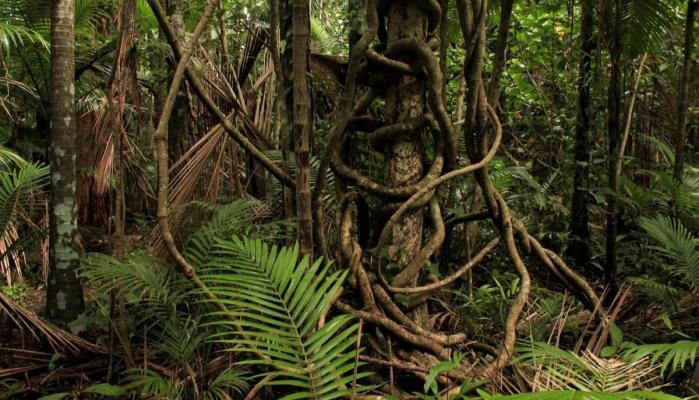
A new international study has warned that Australia’s tropical rainforests have become the first in the world to release more carbon than they absorb; this change is particularly concerning as tropical forests are globally important carbon sinks.
Rainforests are primarily deemed as so-called “carbon-sinks” as they absorb more carbon dioxide than they release into the atmosphere.
A study looking at data from Queensland forest found that extreme temperatures have resulted in more decaying wood than growth.
The study was published in the science journal Nature, and the lead author said that the findings may have significant implications for emissions reduction targets, which are partly based on how ecosystems, such as rainforests, can absorb carbon.
In this regard, Dr Hannah Carle of the Western Sydney University said, “Current models may overestimate the capacity of tropical forests to help offset fossil fuel emissions.”
Meanwhile, the report found that the coarse woody debris and branches of dead trees-commonly known as woody biomass- have become carbon emitters rather than carbon absorbers about 25 years ago.
Prime reasons behind the desiccated trees
The trunks and branches of dead trees, known as woody biomass, became carbon emitters rather than carbon absorbers about 25 years ago.
Dr Carle said, “Forests help to curb the worst effects of climate change by absorbing some of the carbon dioxide from burning fossil fuels, but our work shows this is under threat.”
It has been observed that a surge in trees drying in recent decades was due to climate changes such as atmospheric drying and drought.
Data from 20 forests in Queensland based on 49 years, have shown an escalation in the number of cyclones and severity of cyclones, which is killing more trees and ultimately making it harder for new ones to grow.
Australia has new plans to meet carbon reduction targets
Australia, one of the world’s biggest polluters per capita and the world's second-largest exporter of fossil fuels, recently announced its new carbon reduction targets, committing to a reduction of at least 62% compared to 2025 levels by 2035.
The country has continually faced global criticism for its continued reliance on fossil fuels, even as the government allowed one of the country's mega gas projects-Woodside's Northwest Shelf to keep operating for another 40 years.
Global efforts to alleviate warming are necessary
Australia’s tropical rainforests have shifted from being a carbon sink to releasing more carbon, a change that is due specifically to climate change and has profound implications for global efforts to mitigate warming.
These tropical forests are reportedly the first globally to show their climate-driven regime shift.
Additionally, a new report from last month in Australia showed that the country had already experienced warnings of above 1.5C, and that no community would be immune to surging, compounding and contemporaneous climate risks.


-
 David Jonsson shares training photos ahead of 'Black Panther 3'
 -
 Piers Morgan’s own book error exposed amid Earl Spencer legal threat
 -
 Tesla adds Grok AI assistant to cars for hands-free tasks: What to know
 -
 Why is Kanye West in Chicago and what is the link to his mother Donda?
 -
 Charles Spencer opens up about his childhood memories with Princess Diana
 -
 Tobey Maguire and Jennifer Meyer officially divorced yet?
 -
 Six-year-old Chinese prodigy shatters Rubik’s Cube world record twice
 -
 George Clooney leaves his Hollywood buddies behind?