Costa Rica sets to make history by nominating first female UN secretary general
Former VP Rebeca Grynspan has been nominated for next UN secretary general
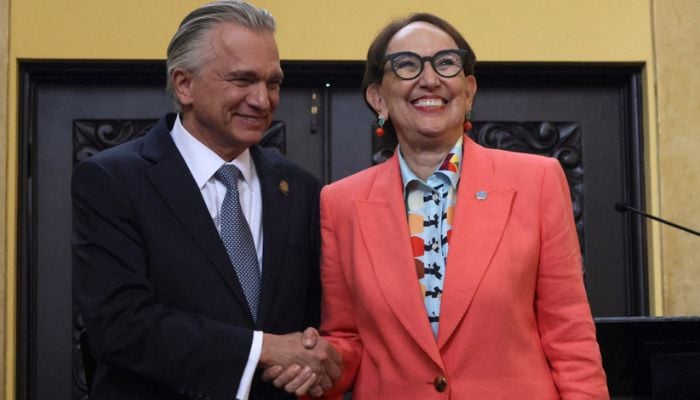
Costa Rica has put up the name of its former Vice President, Rebeca Grynspan, for the next Secretary General of the United Nations (UN).
Her nomination is set to make history as pressure builds to select the first female leader in the UN’s 80-year history.
President Rodrigo Chaves announced the nomination of the 69-year-old on Wednesday, October 08, endorsing Grynspan as a candidate whose extensive experience would "significantly contribute to strengthening multilateralism.”
“This candidacy will be formally registered at the United Nations in the coming weeks. We trust that the career and commitment of Rebeca Grynspan, who has very broad experience in issues of development, international cooperation and regional leadership, will significantly contribute to strengthening multilateralism,” President Rodrigo Chaves said in a video message.
She currently serves as the Secretary General of the UN Conference on Trade and Development (UNCTAD).
Grynspan has extensive work experience of working with the UN as she has also served as the UN under-secretary-general, associate administrator of the UN Development Programme (UNDP), and head of the Ibero-American General Secretariat.
She also played an eminent role in resuming the UN-brokered talks related to Ukrainian and Russian grain exports, which validates her diplomatic skill in high-stakes negotiations.
“I know the United Nations well, I know it well enough to reform it and well enough to defend it,” Grynspan said. “The United Nations requires both things. Right now, being a multilateralist means being a reformer.”
Her candidature is consistent with the regional understanding that the next UN chief is to be a Latin American.
She, however, faces competition from the former Chilean President Michelle Bachelet.
Analysts observe that her insider edge and moderate profile make her a good candidate but the route is full of geopolitical hurdles.
According to Carlos Cascante, a Costa Rican analyst of international relations, it may be possible that Grynspan has a Polish Jewish background and that the Costa Rican government is close to former U.S. President Donald Trump, something that she may have to tread carefully on, lest she be vetoed by the powerful member states.
The procedure to succeed the current Secretary-General Antonio Guterres who leaves office at the end of next year is expected to get heated next year.


-
 Why Josh Duhamel believes his fans will be 'alienated' if he talks politics
 -
 Chappell Roan's security guard takes 'full responsibility' for his interaction with Jorginho's daughter?
 -
 'Buffy' star Nicholas Brendon's death case takes massive turn
 -
 Meryl Streep left shaken on 'The Devil Wears Prada 2' set: Here is what shocked her
 -
 Savannah Guthrie 'Today' return: Fans receive exciting update as search for Nancy continues
 -
 Kim Kardashian shares cryptic message after Lewis Hamilton vow
 -
 'Heated Rivalry' season 2: Jacob Tierney teases shocking twist
 -
 '13 Going On 30' reboot confirmed: Jennifer Garner returns with new cast