US scientists create human embryos from skin cells for first time in fertility breakthrough
US researchers say their early-stage work could help older or infertile women to have own biological children

US scientists have created embryo from human skin cells for the first time.
A team scientist has turned DNA from human skin cells into “functional” eggs, which were able to be fertilized by sperm in a lab.
Moreover, US researchers have developed a “proof-of-concept” technique, which they believe has the potential to one day help infertile people have their own biological children.
They created early-stage human embryos using DNA from human skin then fertilized later with sperms.
Normally the cells in our body divide using two methods, mitosis, which occurs in most cells and meiosis, which occurs in sperm cells and split chromosomes for reproduction.

In the latest development researchers have been able to combine them into a new form of cell division-Mito meiosis.
Researchers believe “Mito-meiosis”, could be used to treat infertility for the number of situations.
Shoukhrat Mitalipov, researcher at Oregon Health and Science University, said, “We achieved something that was thought to be impossible "
“Nature gave us two methods of cell division and we just developed a third,” he added.
Mitalipov further said, “It is a significant step forward” as millions of women can’t have children using their own eggs due to multiple reasons, therefore scientists have been trying to create eggs in labs, carrying the genes of people struggling to have children.
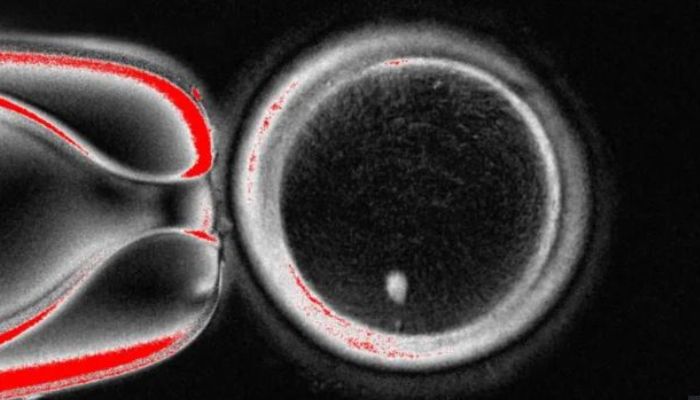
This new field is known as “vitro gametogenesis”, the same technique which was previously used as for cloning.
Naturally reproduction was used to be a simple process involving sperm and egg that fuse together to form an embryo which later produces a baby after 9 months.
While scientists are now changing the rules and they started the latest experiment with human skin cells.

The new process involves 'nucleus’ from the skin which have copies of the entire genetic DNA code which is needed to build body cells.
Nucleus is then placed inside donor egg that has been stripped of its genetic instructions.
So far, this new technique is more like the one which was used to create “Dolly the Sheep”, the world’s first cloned mammal born back in 1996.
The new technique is potentially transforming IVF (In Vitro Fertilization) treatment for couples who does not have any other option.
However, the work is at an early stage but if scientists can perfect the process, it would provide genetically related eggs for women who are infertile because of older age, illness or medical treatment.
Professor Paula Amato, Obstetrics and Gynaecology from Oregon Health and Science University, said, "In addition to offering hope for millions of people with infertility due to lack of eggs or sperm, this method would allow for the possibility of same-sex couples to have a child genetically related to both partners."
The latest research has been published in the Journal Nature Communications on September 30,2025.


-
 Mick Jagger teases his upcoming tour with the Rolling Stones
 -
 Best Poki games for June 2026: Check list here
 -
 Google to release 32 million mosquitoes in Florida, California–Why critics are concerned
 -
 UFO spotted behind active volcano? Harvard professor exposes real truth
 -
 Donald Trump decides to headline America 250 concert after major artists cancelled
 -
 Dramatic rescue as hero dog battles rough waves for 30 minutes at sea
 -
 Ellie Kemper reveals why landing role in 'The Office' still feels 'rare'
 -
 New Xbox chief says ‘hard choices’ ahead in major reset