Chinese scientists develop RNA tool that could one day analyze Einstein’s brain
Chinese team eyes Einstein’s brain with groundbreaking RNA technology
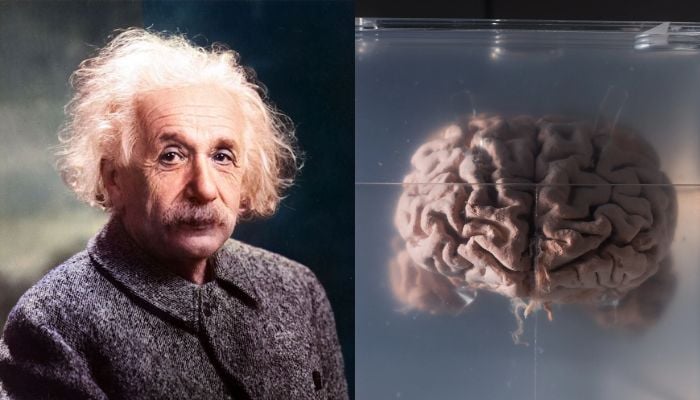
There is a revolutionary new method of mapping RNA that was invented in China, which could reveal the mysteries of some of the most important biological specimens in history, such as the preserved brain of Albert Einstein.
This method maps tissues that were previously thought to be too deteriorated to be subjected to modern genetic research.
The technology, called Stereo-seq V2, is a high-tech version of spatial transcriptomics, which can map the RNA at single-cell resolution in aged, chemically damaged samples.
The method was developed by a BGI-Research team in collaboration with other institutes and has already demonstrated the capability to analyze decade-old cancer tissues held in deplorable conditions, where the prevailing tumor subtypes and immune responses used to remain hidden.
“If we are fortunate enough to analyse Einstein’s brain, we could give it a try,” Li Yang, a research associate at BGI-Research, told the South China Morning Post.
“But the challenges are significant because the preservation techniques at that time may not have been very good. It is hard to say.”
Millions of clinical samples in the hospitals worldwide are stored using an ancient technique: in formalin-fixed, paraffin-embedded (FFPE) blocks.
During storage, the chemicals employed cause severe degradation to RNA, which is a crucial molecule that translates the instructions encoded in genes into cellular operation.
Stereo-seq V2 rates this and enhances the efficiency of the RNA capture, essentially reanimating these extensive archives.
This opens up new vistas in the research of rare diseases and cancer. As Li explained, several rare diseases can take many years to gather a collection of samples.
Now, there is an opportunity to effectively utilize precious samples that have been preserved over a long period.
The method may result in earlier diagnostics and more personalized therapy as it will be possible to conduct retrospective research using archived tissues.
Although the exploration of Einstein's genius is a theoretical and complicated task, the technology offers researchers a potent novel key to open a biologyical treasure of information that was believed to have been lost in the hospital and research archives around the world.


-
 How did Brandon Clarke die?
 -
 Taylor Swift wins BMI Songwriter crown for third year in a row
 -
 Katseye announces world tour, sending internet into meltdown
 -
 Pete Davidson urged not to target Charlie Kirk in comedy set: Insider
 -
 Chyler Leigh, Nathan West call it quits after 24 years of marriage
 -
 Watch Kanye West's reaction to Pete Davidson's savage roast jab
 -
 Eileen Wang: Who is Democratic Party's mayor of Arcadia ?
 -
 Savannah Guthrie finally shares 'something joyful'