‘Deceptively Cute' prehistoric whale discovered in Australia
New discovery found astonishing razartooth whale which lived 25 million years ago
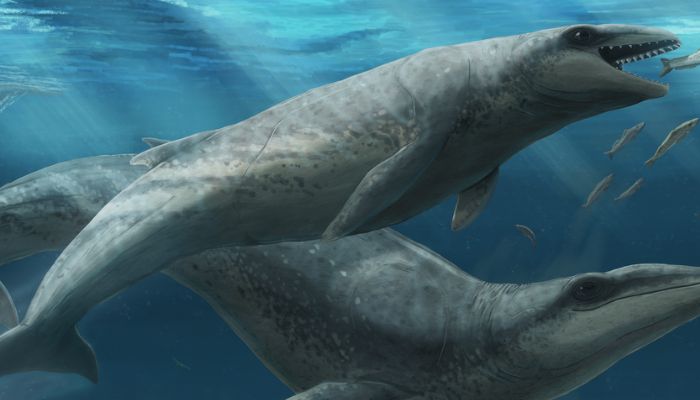
Scientists have unearthed a new species of ancient whale, called Janjucetus dullardi from a 25 million-year-old fossil found on Victoria’s surf coast.
This early species is described as a “small and deceptively cute, but definitely not harmless whale”. It was tiny about the size of a dolphin, and had razor sharp teeth having little resemblance with the baleen whale family.
Senior curator of vertebrate palaeontology at Museums Victoria Research Institute, said that it was an extremely unusual animal.
According to the American novelist Fitzgerald, the whale's heavily built skull was "almost over-engineered". It had larger eyes and a short snout with deeply rooted teeth used for gripping and tearing.
He further explained, “This was a really gnarly whale that I personally wouldn't want to get in the water with.”
In this connection, co-author and researcher Ruairidh Duncan at the Museums Victoria Research Institute, said, “Imagine the shark-like version of a baleen whale which is small and deceptively cute, but definitely not harmless.”
In the Zoological Journal of the Linnean Society, Duncan and Fitzgerald described the new species as an “exceedingly rare” fossil that includes a partial skull, ear bone and eight teeth that enabled the scientists to identify it as a new species.
Fitzgerald further stated, “Janjucetus Dullari lived during the Oligocene which is about halfway back to the extinction of the dinosaurs."
It was the fourth known species from a group known as mammalodontids, usual animals that were an “early offshoot” of the baleen whale family-group of whales which is characterized by having baleen plates in their mouths instead of teeth, which they use to filter feed of small organisms like plankton.
This discovery was not possible without the contribution of local resident and school principle Ross Dullard, who has found the specimen in 2019 while casually walking along the beach near Jan Juc on Victoria’s surf coast.
It is a crucial study that should be highlighted in Australian palaeontology, and also a reminder that these world-changing fossils can be found in your own backyard.


-
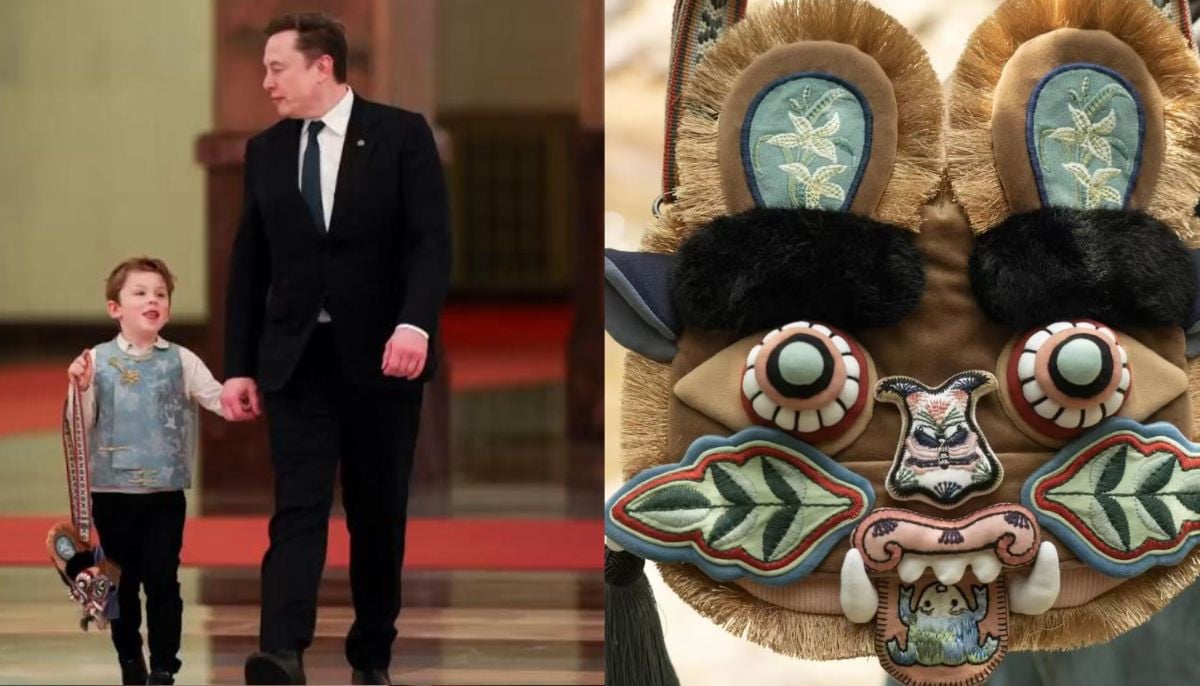 Elon Musk’s son Lil X sparks fashion craze with traditional Chinese-style vest, tiger-head bag
 -
 Millions react after Arianna Roberson, Cooper Flagg confirm dating rumors
 -
 Jensen Huang’s Beijing street food moment goes viral amid Trump-Xi 2026 summit
 -
 China launches world’s first transforming robot with pilot cockpit
 -
 Kodak Black detained again in fresh police action
 -
 Drake drops emotional bombshell: 'My dad got cancer right now’
 -
 Elsie Hewitt heartbreaking confession came just before Pete Davidson split bombshell
 -
 Nicki Minaj drops bombshell: 'Lots of rappers' secretly hate Jay-Z