
After tropical Storm Dexter hurricane, what’s next for the Atlantic?
Dexter becomes the fourth named storm of 2025 Atlantic hurricane season
Hurricane Dexter has joined the 2025 Atlantic hurricane season which is an ongoing natural event occurring in the Northern Hemisphere. The season officially started on June 1, 2025 and is expected to last till November 30, 2025.
The dates are suggested based on the previous trends when almost 97% of the subtropical and tropical cyclogenesis occurs in the Atlantic Ocean.
Tropical Storm Dexter has been named as the fourth named storm of the 2025 Atlantic hurricane season on the night of August 03, 2025, forming earlier than usual but continuing a trend of short-lived, weak storms so far this year.
Dexter developed from a stalled weather front approximately 300 miles west-northwest of Bermuda. By August 4, 2025, the hurricane was moving to east-northeast at a speed of 12mph with the formation of persistent wind gusts of about 45mph.
Currently, the ocean water is unusually warm (around 1.5°C/ 2.7°F above average) which fuels the Dexter hurricane.

While Dexter is predicted to last only three days despite the favourable conditions, there are chances of new hurricane formations in the Atlantic.
The season’s previous storms i.e., Andrea, Barry, and Chantal lasted approximately just 2.5 days. However, they caused deadly flooding in North Carolina claiming six lives.
Every year, the first hurricane is predicted to form around August 11, 2025 but this year a delay is expected due to unusual warm waters in the North Atlantic.
The National Hurricane Centre is monitoring two areas of possible development: the Southeast U.S. Coast and the Central Atlantic.
- Southeast U.S. Coast: Near development of the Dexter hurricane, a weak low-pressure system is expected to develop later this week that will further cause heavy rain to parts of Florida, Georgia, and South Carolina. There are approximately 30% chances of it developing into a tropical storm.
- Central Atlantic: In the late week, a tropical wave is also expected to develop which has relatively more chances (50%) than the Southeast U.S. Coast to become a named storm. It can possibly move towards the Bahamas or the U.S. East Coast rather than entering the Caribbean next week.
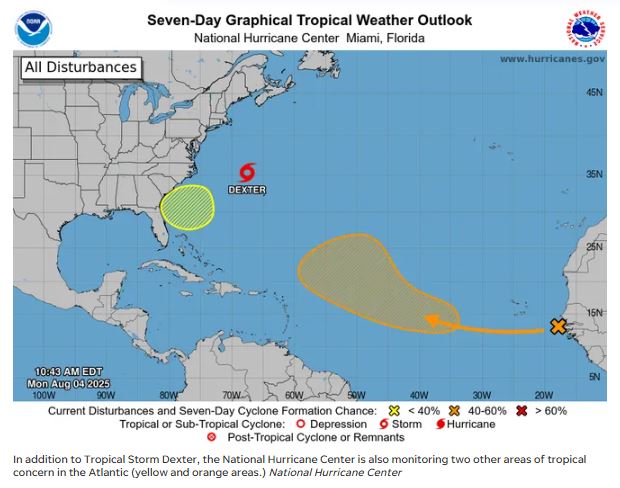
If they are formed, the hurricanes will be named Erin and Fernad respectively. As reported by USA TODAY, weather trader meteorologist Ryan Maue stated: “We are now moving into a more active period (of the) Atlantic hurricane season.”






-
 Milo Ventimiglia calls fatherhood 'pretty wild experience' as he expects second baby with wife Jarah Mariano
 -
 Charli XCX applauds Dave Grohl’s 'abstract' spin on viral ‘Apple’ dance
 -
 Eric Dane's wife Rebecca Gayheart shares family memories of late actor after ALS death
 -
 Eric Dane's girlfriend Janell Shirtcliff pays him emotional tribute after ALS death
 -
 Sam Levinson donates $27K to Eric Dane family fund after actor’s death
 -
 Timothee Chalamet rejects fame linked to Kardashian reality TV world while dating Kylie Jenner
 -
 Sarah Chalke recalls backlash to 'Roseanne' casting
 -
 Willie Colón, salsa legend, dies at 75