WhatsApp rolls out chat lock feature on linked devices
Meta app steps up user security for users

WhatsApp is now letting users try the locked chats feature on linked devices.
Meta app has been planning to provide secured chats and more devices for its users, particularly for its online version. But for the time being, if you have connected your WhatsApp account to another phone, you may access the security feature on Android in the beta avatar.
Meta introduced the feature of locking chats, which prevented unauthorised access and added an additional degree of security on top of the device biometrics already in place.
WhatsApp chats that are locked on the primary device will automatically lock on any associated devices as well in the latest Android beta version.
The new Android version 2.24.11.9 in beta is testing the feature with selected users as of now. The screenshot of the feature being tested has been shared by Wabetainfo this week, and over here, you can clearly see the Locked Chat folder at the top of the WhatsApp main screen of the Linked Device.
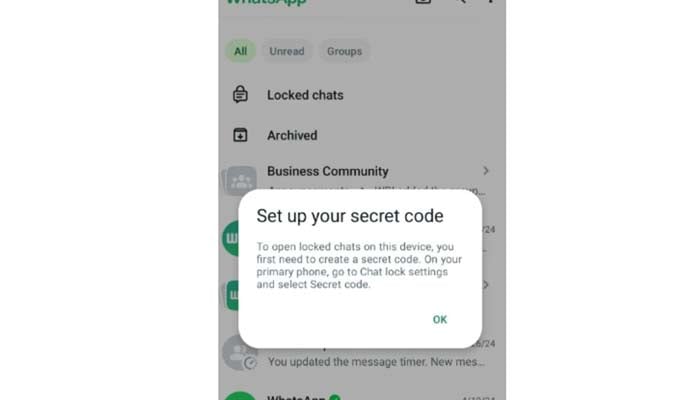
The crucial part of the new tool is that the current chat lock PIN will not work for the Linked Device, so you will have to create a secret code from the primary device settings to make it work.
The new tool's most important feature is that the Linked Device will not accept the chat lock PIN you already have, therefore you will need to establish a new one.
It appears from the beta version that you only need to set up one secret code on the primary WhatsApp account device, and it will sync to all associated devices, saving you the trouble of setting it up on each one.


-
 Where is Artemis II today? Here is everything to know about NASA’s journey to the moon
 -
 European Space Agency to negotiate with NASA on future lunar missions
 -
 SpaceX AI satellites plan raises doubts after Microsoft setback
 -
 NASA Artemis II lifts off, sending cubesats into deep space study
 -
 Could there be life on Mars? NASA Jared Isaacman claims chances are 90%
 -
 NASA Artemis II Moon mission set for liftoff today: Here’s what to know
 -
 Did the Big Bang happen differently? New theory challenges origin of Universe
 -
 April’s Pink Moon 2026: How to see the full moon in all its glory