3I/ATLAS flyby: Why is Jupiter’s 96th Moon drawing intense scientific interest?
The 3I/ATLAS flyby and the mystery of Jupiter’s 96th Moon represent a major scientific debate
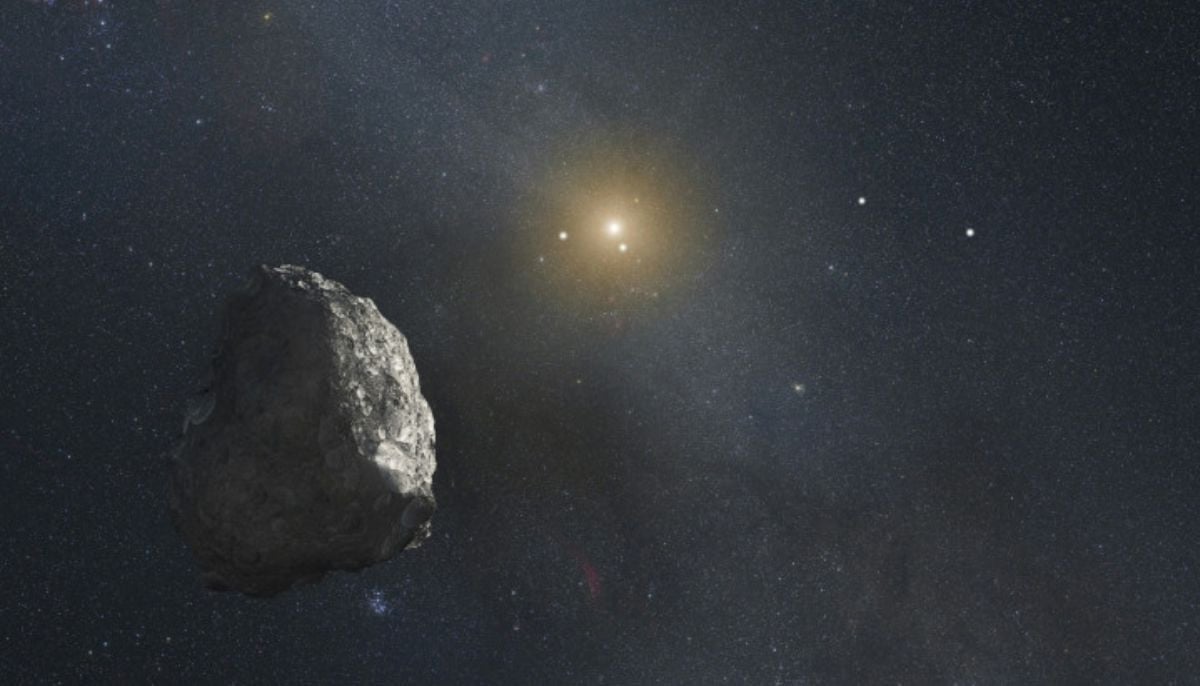
As 2026 unfolds, the discussion surrounding the 3I/ATLAS flyby and Jupiter’s 96th Moon represent a theoretical debate as the interstellar visitor heads towards its final dramatic act before vanishing into the deep dark of space.
It is something potentially more profound than Harward’s Professor Avi Loeb initially suspected. He pointed out a fine-tuned coincidence: the comet’s trajectory-influenced by non-gravitational accelerations during its 2025 perihelion- seems perfectly aligned to brush the edge of Jupiter’s gravitational sphere.
Jupiter currently has95 known moons; should a new 96th moon suddenly appear in a stable orbit after March 16, Loeb believes that we will have discovered a clear technological signature from the interstellar visitor.
The comet is set to exit our system and will never return; meanwhile scientists are keeping their telescopes on the gas giant.
Whether 3I/ATLAS leaves behind a scientific mystery or a new member of the Jovian family, its departure will mark the end of a historic visit that has challenged our understanding of the objects that glided between the stars.


-
 Rare 3,200-year-old coral blue hole discovered in South China Sea
 -
 What happens at black hole’s event horizon? Scientists find the first-ever clue
 -
 Scientists discover evidence of fires used by humans 1.8 million years ago
 -
 Did NASA just uncover evidence of ancient life on Mars? Key discoveries explained
 -
 Four powerful earthquakes strike three continents within hours: Scientific link or coincidence?
 -
 Mysterious interstellar comet passing our solar system may be 12 billion years old, scientists say
 -
 When do we really become adults? Science has an answer
 -
 Strawberry Moon peaks June 29: When and where to watch