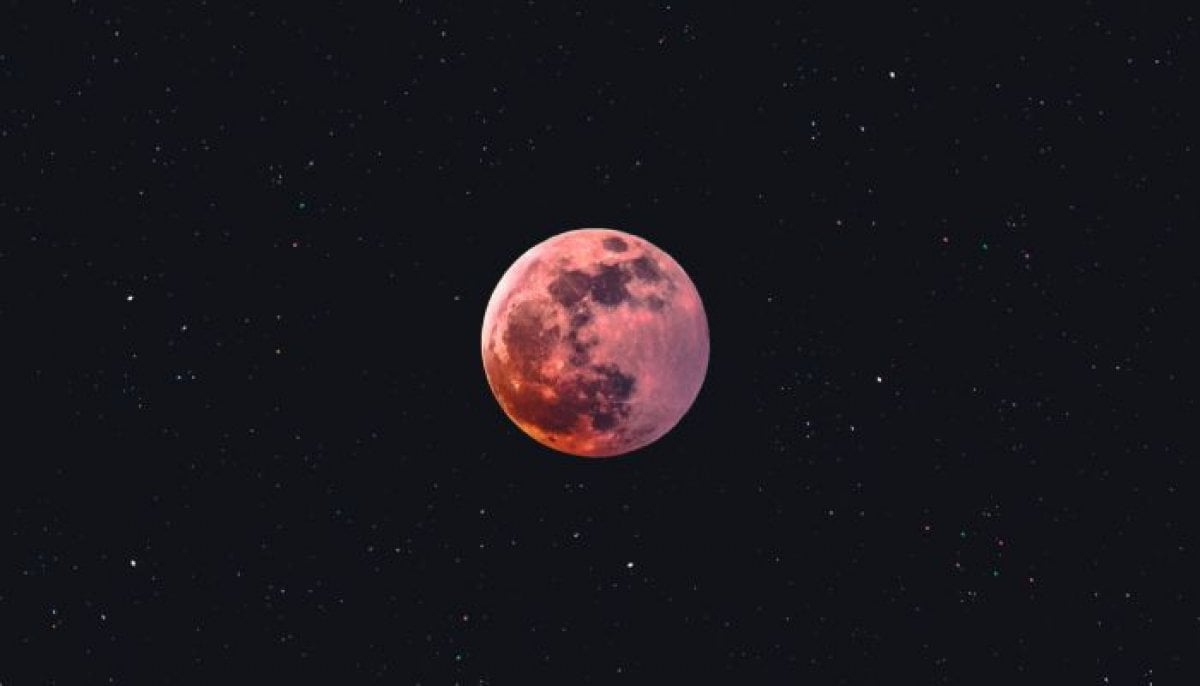
From Mercury to Neptune: When and where to spot the solar system’s giants in 2026
Top planetary events and rare alignments not to miss this year
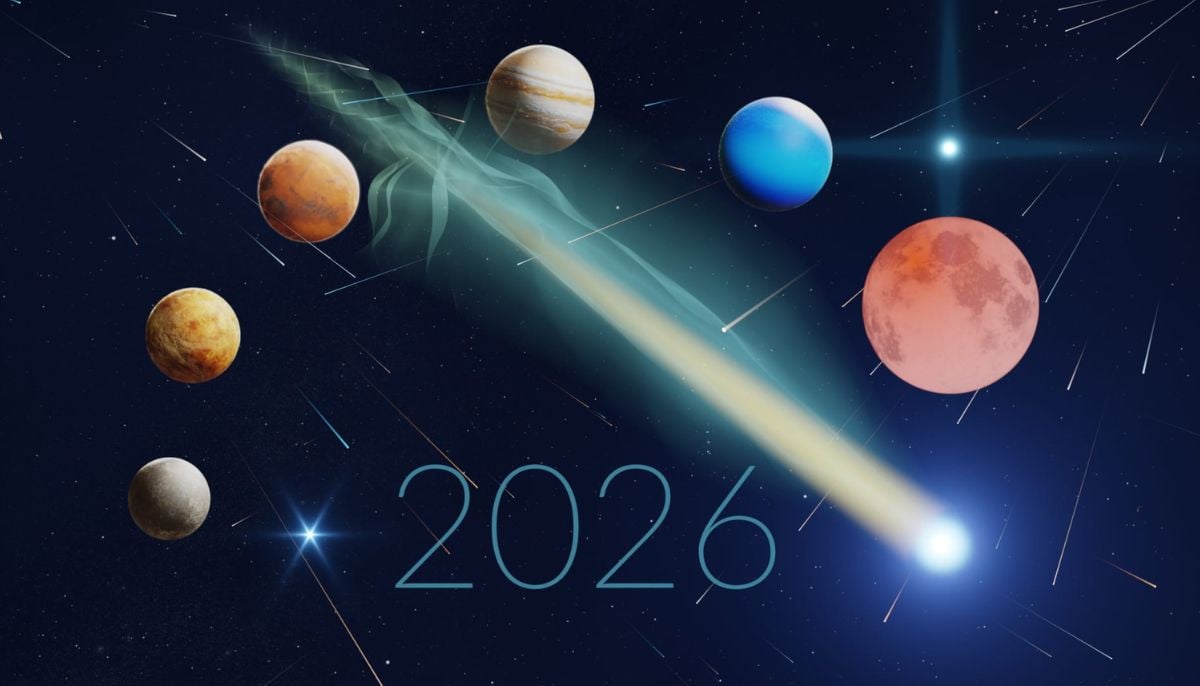
The year 2026 is officially here and is all set to a spectacular one for stargazers. This guide will break down the planetary events, from conjunctions and oppositions to rare planet-star encounters.
Mercury
Mercury is the smallest part of the planet visible to the naked eye, appearing as an evening star in the western sky or a morning star in the east.
When it rises about an hour before the sun, ensuring a clear and obstructed horizon is crucial for a good view. To the observer, Mercury typically resembles a bright star with a pale, yellowish-white or greyish- brown hue.
Visibility windows in 2026
- Evenings: Feb.5-26; June 1-22; Sep.28-Oct.19
- Mornings: March 27-April 17;July 26-Aug.16;Nov, 13-Dec.4
When will Mercury be in its best position?
- Evening: Feb.5-26
- Morning: Nov.13-Dec.4
Venus
Venus, which mainly moves in a nearly circular orbit and a diameter roughly 400 miles smaller than Earth's, shines with a brilliant. Steady light.
Visibility windows in 2026
- Evenings: March 8-Oct.14
- Mornings: Nov 3-Dec.31
When will it be at its best?
- Evenings: March 8-Oct.14
- Mornings:Nov.3-Dec.31
Venus will reach a remarkable height in the evening sky on Sept.19 and the morning sky on Nov.29. It is expected to be visible for most of November, during which it will show a striking phase through a telescope.
Mars
Mars has long been associated with Ares, the Greek god of war; it shines like a star with a yellowish-orange hue that is often significantly brighter than the stars around it.
Visibility in 2026
Mornings: March 18-Dec.31
When will it be at its best?
The planet 2026 begins lost in the sun’s glare and reaches solar conjunction on Jan.9, when it will be on the distant side of the solar system, roughly 223 million miles from Earth.
Jupiter
The giant planet, which shines with a bright silver luster, has a diameter about 11 times bigger than Earth’s.
Visibility windows in 2026
- Mornings:Jan.1-9;Aug.19-Dec.31
- Evenings:Jan.10-July 7
Jupiter reaches opposition on Jan.10 and shines brightly from Jan.1-22 at magnitude-2.7 in Gemini. On June 9, Jupiter will pair with Venus in a stunning ‘double planet’ low in the evening twilight.
Saturn
Saturn gleams as a yellowish-white star of moderate brightness, and is easily invisible to the naked eye.
Take a glimpse at its constellation path through 2026
- Stars in Aquarius (to Jan.14)
- Enters Pisces (Jan.14-April 8)
- Moves through Cetus (April 9-June 2)
- Back into Pisces (June 3-Sept4)
- Back into Cetis (from Sept.5 onward)
Visibility windows in 2026
- Evenings: Jan.1-March 8;Oct.4-Dec.31
- Mornings: April 12-Oct.3
Uranus
According to Space.com, Uranus can be seen with the naked eye under very dark sites at magnitude +5.5, and it is easily found with binoculars.
Visibility windows in 2026
- Evenings:Jan.1-May 5; Nov.25-Dec.31
- Mornings: June 9-Nov.24
Neptune
Neptune will remain in Pisces throughout 2026. At magnitude +7.8, it is visible only with binoculars or a telescope, appearing as a bluish-grey disk.
Visibility windows in 2026
- Evenings: Jan.1-March 6;Sept.25-Dec.31
- Mornings: April. 8-Sept.24
This year will stand out for both causal stargazers and serious astronomers due to a rare series of planetary alignments.


-
 Scientists find ancient microbial life in places it shouldn't exist
 -
 Why Marijuana is suddenly sending thousands of dogs to hospitals in US?
 -
 36 years on, Hubble shows how stars actually change over time
 -
 Hidden magma beneath Mars? Scientists' 'unexpected' discovery raises new questions about alien life
 -
 Rare 3,200-year-old coral blue hole discovered in South China Sea
 -
 What happens at black hole’s event horizon? Scientists find the first-ever clue
 -
 Scientists discover evidence of fires used by humans 1.8 million years ago
 -
 Did NASA just uncover evidence of ancient life on Mars? Key discoveries explained
-
 Four powerful earthquakes strike three continents within hours: Scientific link or coincidence?
 -
Mysterious interstellar comet passing our solar system may be 12 billion years old, scientists say
-
When do we really become adults? Science has an answer
-
Strawberry Moon peaks June 29: When and where to watch