NASA spacewalk 2026: Medical issue prompts rare talk of early ISS crew return
The early ISS return linked to crew medical issue
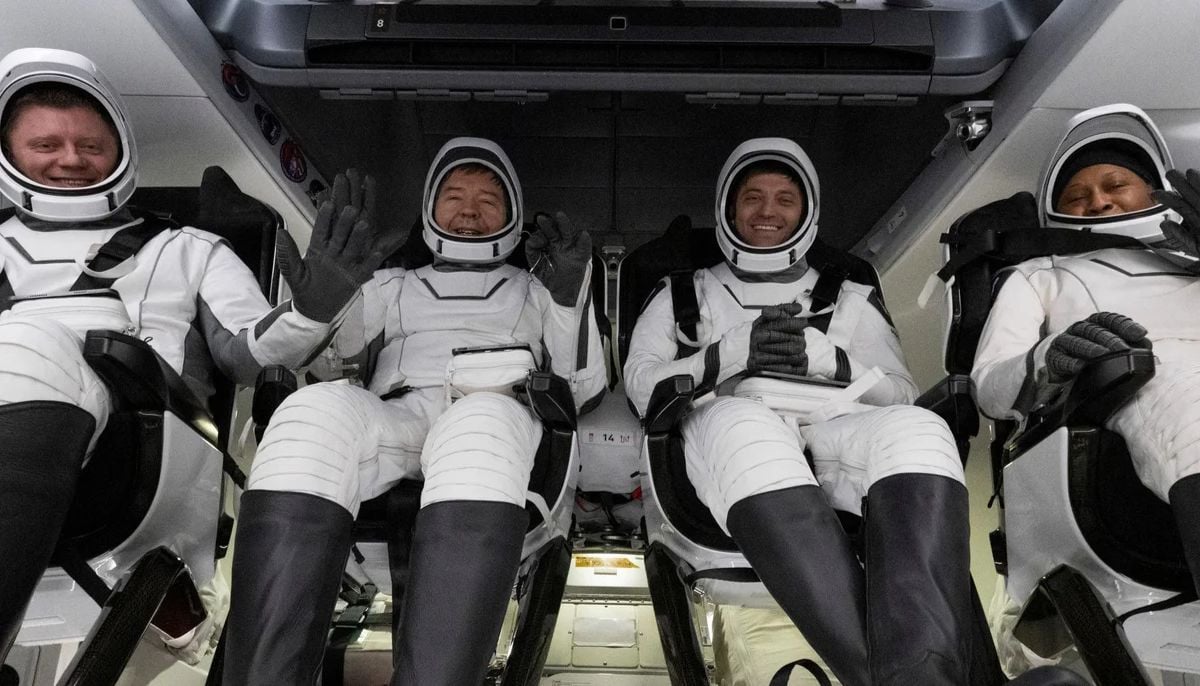
NASA is considering an early return of the (ISS) crew due to an unspecified medical issue, just hours after cancelling a planned spacewalk that had been scheduled for Thursday.
NASA announced a delay on the International Space Station (ISS) just hours before two astronauts were scheduled to exit the orbiting laboratory, confirming a medical concern with a crew member that arose Wednesday afternoon.
Meanwhile, the announcement came just four hours after NASA reported that the crew had finished preparations for the endeavor, which is formally known as Extravehicular Activity (EVA).
According to Reuters, a NASA spokeswoman said that the astronaut- who she did not identify out of medical privacy- was in a stable condition in the orbiting laboratory.
The spokeswoman said in a statement on Wednesday night, “Safely conducting missions is our highest priority, and we are actively evaluating all options, including the possibility of an earlier end to Crew-11’s mission.”
The early return of the four-person Crew-11 would be an unusual outcome of a medical issue aboard the ISS, where astronauts commonly live in six to eight month rotations with access to basic medical equipment and medications for some types of emergencies.
The four-person Crew-11 includes U.S. astronauts Zena Cardman and Mike Fincke, Japanese astronaut Kimiya Yui and Russian cosmonaut Oleg Platonov.
Spacewalks are challenging and demanding missions that require months of training, involving bulky spacesuits and carefully coordinated instructions while remaining tethered to the ISS.
Nonetheless, the potential early return would mark an unusual outcome for a medical issue, as astronauts commonly live in six-to-eight month rotations while the station is equipped with basic medical supplies for emergencies.


-
 Scientists develop technology to send smells through phones
 -
 Earth’s close encounter with giant asteroid Apophis is less than 3 years away
 -
 Chinese astronomers discover real-life three-body system unlike Liu Cixin’s fiction
 -
 Hunter’s Moon 2026: When and how to watch October’s full moon
 -
 Elon Musk’s Mars colonization dream faces reality check from Nobel laureate
 -
 NASA competition model 2.0 cuts mission selection by 45%
 -
 A ‘neglected’ neutrino may hold the key to why the Universe exists
 -
 Can cancer drugs be made in space? Here’s what the new mission aims to find out