Study shows Mars was once blue
Researchers have always agreed on the fact that Mars once had water but debate regarding the amount of water the planet had
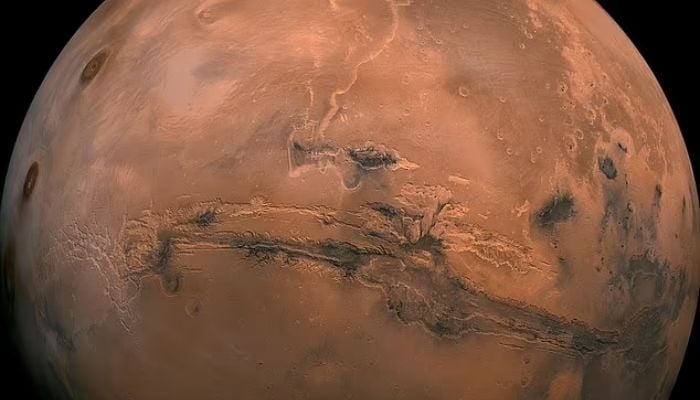
A new study has claimed that Mars, often called the red planet for its dry and desolate desert was once predominantly blue and covered with oceans.
Researchers have always agreed on the fact that Mars once had water but they debated regarding the amount the planet had. A new study has said that the planet was covered by 984ft-deep oceans around 4.5 billion years ago.
A team of researchers at the University of Copenhagen believe that their findings bring scientists closer to the age-old question of whether Mars ever had life.
In 2007, NASA's twin rovers Spirit and Opportunity found evidence of water in rocks that broke Spirit's wheels. Experts analysed the silica-rich layer found on the rover's scratch.
A year later, when the Pheonix lander disappeared while gathering geological samples, scientists suggested that the machine interacted with pieces of ice. Later an assessment confirmed that the lander had detected water vapour.
Another rover, Curiosity was exploring the Martian surface in 2012 when it studied rocks that had been exposed to liquid water billions of years ago, reported MailOnline.
According to a recent study, the entire planet was covered with oceans and their depth could have ranged from 984 feet (300 metres) to 3,280 feet. Professor Martin Bizzarro, from the Centre for Star and Planet Formation said that in comparison to Mars, Earth actually has very little water.
"This water was brought to Mars by asteroids filled with ice," according to the professor.


-
 Draconid meteor shower tonight: Best time and places to see it
 -
 ‘A dream for 50 years’: Why world’s first nuclear clock could change timekeeping
 -
 NASA Curiosity captures strange ‘wind-carved’ Mars landscape in dawn image
 -
 NASA's Crew-12 Dragon begins return trip from space station
 -
 Mysterious ‘phoenix planet’ found around the remains of a dying star
 -
 First possible evidence of Planet Nine found in infrared data
 -
 Elon Musk announces SpaceXAI rebrand to SpaceXSI following presidential order on 'Super Intelligence'
 -
 ISS Command changes hands in emotional ceremony