
Herald’s closure is a sad statement on state of media
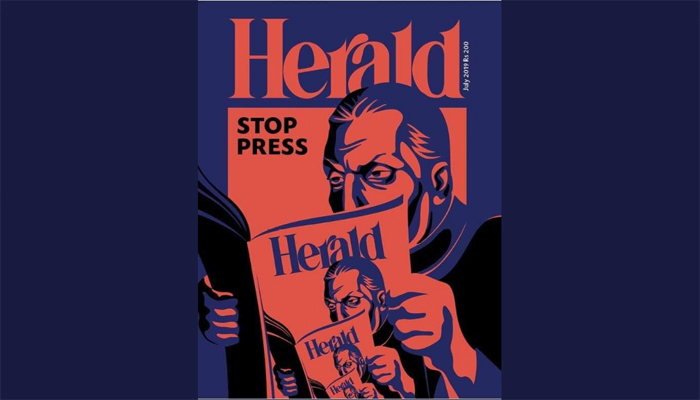
Closure of the prestigious Herald Magazine is a classical example of curbs on media, resulting in financial squeeze, and changing reading habits. Though it’s been in the grapevine for some time now, the official announcement that Herald has published in its last issue is still shocking. Herald has been a voice of dissent for decades. Despite the pressure of daily newspaper coverage, the magazine kept itself relevant by doing investigative stories and detailed political analyses.
As a young reporter in the 90s, working with accomplished journalists like Zaffar Abbas, Idrees Bakhtiar and Talat Aslam, it was at Herald that I learned why writing in public interest is more important than any other interest. Why bringing the truth out at any cost and not hiding it out of fear or favour actually benefits our country.
Despite the most difficult time for Karachi journalists in the 1990s, especially because of the atrocities of MQM against media, there was no pressure at all from our Editor or seniors for not printing the truth. Journalists were threatened, even attacked, for speaking the truth, but the struggle continued. And when during an operation against MQM there were certain human rights violations, the same Herald did an exclusive against the action as that was truth and truth must be printed.
Though in those days the pressure was mostly from the non-state actors, even though at times backed by the state, at Herald we were never forced to self-censor our stories. Something the new generation of journalists growing under the atmosphere of curbs and “advices” would find hard to believe.
I did some of my best cover stories during that time. Like “The Creeping Coup,” a story done only months before General Musharraf overthrew Nawaz Sharif and imposed military rule. Or “Cricket in a Fix,” a comprehensive exposé of the powerful match fixing mafia and the involvement of cricketers. But never once was I asked to tone down the story. If the facts are correct and checked, if it’s in public interest, it should be printed. But maybe those were different times.
The latest attack on media that started in 2014 has not only affected journalists’ freedom to write and speak the truth, it is financially crippling those who are not ready to play ball as per the rules set for establishing Naya Pakistan.
Herald is the first major casualty of this onslaught. With advertising taking a nosedive — as a related casualty — and people turning to TV and online, survival of print media, especially magazines, had already become a huge challenge. Press curbs making journalism difficult are proving to be the last nail in the coffin, particularly for the print. If both the owners of media houses and journalists don’t get their act together, Herald closure unfortunately won’t be the last. United we stand, divided we have started falling.


