
Barefoot children in Rawalpindi streets
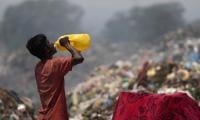
Over the past decades due to rising cost of living, the demand for money among the urban poor has grown, and more and more small girls and boys are pushed by their parents on to the streets to scavenge some items from the garbage bins which can bring them some
By Ibne Ahmad
March 30, 2015
Over the past decades due to rising cost of living, the demand for money among the urban poor has grown, and more and more small girls and boys are pushed by their parents on to the streets to scavenge some items from the garbage bins which can bring them some money. One might ask why these children’s parents are willing to let them become scavengers, but it is not a question of willingness. They are squeezed economically.
Throughout the day these small girls and boys called rag pickers are seen walking barefoot on city’s streets hovering around garbage bins and also cleaning vegetable and fruit shops at the markets in the hope to get some fruit leftovers from the shopkeepers for filling their tummies and for taking home some free of cost vegetables for cooking.
“I have seen on Salahuddin Avenue, Fazal Town Phase-I, barefoot kids in the early morning winter cold and intolerable heat of the summer picking up items from the garbage pile-ups often stepping on unhygienic spots, where people spit. Therefore, walking barefoot is very harmful for their health, says Shabbir Naqvi, an area resident.
Besides the cold, heat and dust, the practice of travelling barefoot could have serious health implications, according to medical experts. Dr. Naheed, a Pediatrician at a private hospital, says “Walking barefoot could lead to problems such as worm infestation, infections due to thorn pricks, or from other dangerous objects such as nails lying on the ground.”
Rozeena and her sister Hira daily go to search the garbage bins, marching barefoot in their unsuitable clothes. Every day they walk to the bins and back home, without any slippers. Being illiterate, Rozeena and her sister cannot maintain good personal hygiene, washing their feet frequently. “I don’t have a pair of slippers, so I don’t wear,” says Rozeena. As they cannot afford footwear, it is not of even remote concern to them.
Asked how they manage to walk during the cold and hot days, she replies: “There is no difficulty with that. It is all right. We march on a daily basis to our job. Nothing comes to pass.” Despite her denial, it is so disheartening to see them walk without any footwear. Whether it is the summer or winter season, they have an extremely hard time.
“The ladies of the mohallah where we do our work daily neither scold us for not wearing slippers nor provide us any footwear. However, some ladies have been very kind to us. They provide us both food and slippers,” she recounts.
Every day, hundreds of small boys and girls from behind the Railway Colony, Lohi Bher get up in the morning hours with nothing to look forward to except hours of strenuous activity roaming the streets and hunting through the garbage piles to find their livelihood.
Ahsen Ali, an NGO worker, says: “It is very unfortunate that these kids as young as 7 to 12 year-old are left untaught and weighed down with health troubles, as they are required to work seven days a week for up to 18 hours a day by their parents — mostly sweepers and housemaids.”
“Belonging to very underprivileged families, these kids are often left untaught and weighed down with health troubles, they remain in a pitiless grip of fate less likely to find a job once they attain maturity. This persistent enslavement of children entangles families in an inhuman loop of poverty,” adds Ahsen Ali.
Throughout the day these small girls and boys called rag pickers are seen walking barefoot on city’s streets hovering around garbage bins and also cleaning vegetable and fruit shops at the markets in the hope to get some fruit leftovers from the shopkeepers for filling their tummies and for taking home some free of cost vegetables for cooking.
“I have seen on Salahuddin Avenue, Fazal Town Phase-I, barefoot kids in the early morning winter cold and intolerable heat of the summer picking up items from the garbage pile-ups often stepping on unhygienic spots, where people spit. Therefore, walking barefoot is very harmful for their health, says Shabbir Naqvi, an area resident.
Besides the cold, heat and dust, the practice of travelling barefoot could have serious health implications, according to medical experts. Dr. Naheed, a Pediatrician at a private hospital, says “Walking barefoot could lead to problems such as worm infestation, infections due to thorn pricks, or from other dangerous objects such as nails lying on the ground.”
Rozeena and her sister Hira daily go to search the garbage bins, marching barefoot in their unsuitable clothes. Every day they walk to the bins and back home, without any slippers. Being illiterate, Rozeena and her sister cannot maintain good personal hygiene, washing their feet frequently. “I don’t have a pair of slippers, so I don’t wear,” says Rozeena. As they cannot afford footwear, it is not of even remote concern to them.
Asked how they manage to walk during the cold and hot days, she replies: “There is no difficulty with that. It is all right. We march on a daily basis to our job. Nothing comes to pass.” Despite her denial, it is so disheartening to see them walk without any footwear. Whether it is the summer or winter season, they have an extremely hard time.
“The ladies of the mohallah where we do our work daily neither scold us for not wearing slippers nor provide us any footwear. However, some ladies have been very kind to us. They provide us both food and slippers,” she recounts.
Every day, hundreds of small boys and girls from behind the Railway Colony, Lohi Bher get up in the morning hours with nothing to look forward to except hours of strenuous activity roaming the streets and hunting through the garbage piles to find their livelihood.
Ahsen Ali, an NGO worker, says: “It is very unfortunate that these kids as young as 7 to 12 year-old are left untaught and weighed down with health troubles, as they are required to work seven days a week for up to 18 hours a day by their parents — mostly sweepers and housemaids.”
“Belonging to very underprivileged families, these kids are often left untaught and weighed down with health troubles, they remain in a pitiless grip of fate less likely to find a job once they attain maturity. This persistent enslavement of children entangles families in an inhuman loop of poverty,” adds Ahsen Ali.







-
 AI CEO Era Begins: Mark Zuckerberg Building ‘smart Assistant’ To Help Run Meta
 -
 Taylor Frankie Paul Responds To 'The Bachelorette' Cancellation With Humor
 -
 Savannah Guthrie Could Be Back On 'Today' Show Sooner Than Expected: Source
 -
 Fuyao Plant Fire Update: No Injuries Reported As Crews Continue Battling Blaze In Moraine
 -
 UN Issues Global Climate Warning: Earth In Critical Energy Imbalance, El Nino Threat Grows
 -
 Worldwide Caution Advisory Issued For Americans Overseas As Tensions Rise In Iran War
 -
 Microsoft Windows 11 Emergency Update Fixes Connectivity Bug Affecting Office, Teams, OneDrive
 -
 Steven Spielberg Shares Working Experience With Tom Cruise
 -
 Laguardia Airport Delays Worsen As TSA Lines Grow And Shutdown Leaves Workers Unpaid
 -
 Air Canada Plane Collides With Ground Vehicle At LaGuardia Airport
 -
 Canada Immigration: New Funding Targets Francophone Immigration Amid Workforce Shortages
 -
 Gold Price Drops Sharply Despite Global Tensions, Marking Biggest Weekly Fall Since 1983
 -
 Kylie Jenner, Timothée Chalamet Plan To Take Their Relationship To Next Level: Report
 -
 'Supernatural' Actress Carrie Anne Fleming's Cause Of Death Revealed
 -
 Why Jessica Biel Wants To 'move Past' Justin Timberlake Arrest Drama?
 -
 Jude Law's Ex Opens Up As Chappell Roan Denies Involvement