
‘Taxing solar panels to not reverse transition towards clean energy’
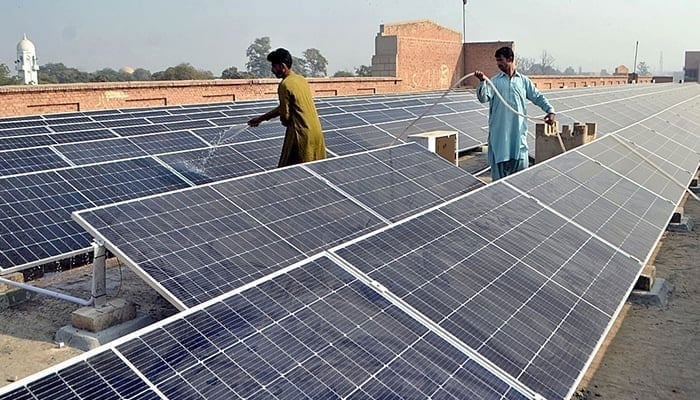
The imposition of general sales tax (GST) on imported solar panels, regardless of the final tax rate decided by the federal government, will not slow down Pakistan’s accelerating transition towards renewable energy. This progress is driven by the unwavering commitment of end-consumers and businesses dedicated to improving environmental conditions and reducing the carbon footprint of Pakistan’s power sector.
This was the collective view expressed by clean energy experts, academics, industrialists, climate activists and renewable energy traders during a webinar examining the federal government’s recent budgetary proposal to impose GST on imported solar panels. The proposed measure aims to encourage domestic manufacturing of renewable energy equipment.
The webinar, titled ‘Taxing the Sun: Will Solar Still Shine in Pakistan?’, was jointly organised by the Energy Update and Pakistan Solar Association (PSA). PSA Chairman Waqas Moosa opened the discussion by thanking environmental advocates and non-governmental organisations for their continued support of solar energy adoption by households and commercial users. He emphasised that shifting to solar power was a critical means to reduce dependence on polluting fossil fuels.
Moosa highlighted that the decade from 2020 to 2030 had been globally recognised as a pivotal era for transitioning to clean energy. He predicted that Pakistani consumers would persist in embracing solar energy to power their homes and businesses, regardless of the added cost from the GST.
He cautioned, however, that Pakistan's local industry was not yet sufficiently developed to meet the growing demand for advanced solar panels in adequate quantity. As such, relying solely on local production at this stage could risk stalling progress.
He criticised the proposal to tax imported solar panels, calling it a serious setback to Pakistan’s efforts in combating the climate crisis. "Whether or not a tax is implemented", he said, "domestic consumers will continue shifting to solar energy due to persistent power shortages and unaffordable electricity tariffs."
Muhammad Zakar Ali, chief executive officer of the Inverex Solar Energy, echoed this sentiment. He said that the vast majority of electricity users in Pakistan now understood the long-term value of clean energy and would continue to transition away from grid-supplied electricity, regardless of tax implications.
He argued that Pakistan needed a minimum of 18 to 24 months to establish a viable local industry capable of producing clean energy equipment at scale. Imposing a tax prematurely, he warned, could deter both domestic and international investors.
He noted that high electricity tariffs for industrial users could discourage investment in solar panel manufacturing plants. He, however, predicted that prospective Chinese investors would soon launch joint ventures with Pakistani industrialists to set up such facilities.
Ali explained that establishing local solar panel manufacturing plants could lead to the development of five supporting vendor industries, significantly boosting the clean energy supply chain in Pakistan.
Former Karachi Chamber of Commerce and Industry (KCCI) office-bearer Tanveer Ahmed Barry stated that industries had little choice but to transition to renewable energy due to the unreliable and unstable power supply from the national grid.
He pointed out that while Pakistan’s installed electricity generation capacity exceeded 45,000 megawatts, only around 27,000 megawatts were currently deliverable to end-users due to the outdated transmission infrastructure. He also highlighted the immense untapped potential for solar energy adoption among off-grid rural households.







-
 Elizabeth Hurley Expresses Her True Feelings About Miley Cyrus: 'I Always Knew Who She Was'
 -
 Meghan Markle Pulls Something Diana’s Old Hat Against Cancer-stricken King Charles
 -
 Did Ines Garcia Hint At Pregnancy? Lamine Yamal's Girlfriend Faces Backlash Over TikTok Repost
 -
 Progressive Democrats Endorse Donavan McKinney Against Shri Thanedar
 -
 'Love Island' Crowns Winners After Final Twist
 -
 Andrew And Tristan Tate To Remain In Jail As UK Extradition Case Continues
 -
 Ariana Grande Takes Legal Action After Alleged Theft Of Private Files
 -
 Johnson & Johnson Seeks To End Baby Powder Cancer Lawsuits With $5.5bn Deal
 -
 Anthropic CEO Dario Amodei Breaks Silence On Open-weight AI Ban Debate
 -
 France Wildfire Reaches Outskirts Of Bordeaux As Thousands Evacuated Amid Heatwave Fears
 -
 Celeste Rivas Hernandez's Family Reacts As D4vd Heads To Trial
 -
 Blue Jays Defeat Nationals 3-2 As Max Scherzer Returns From Injury
 -
 Oil Prices Post Biggest Drop Since April As US And Iran Pause Fighting
 -
 Brooke Nader, Taron Egerton Break Up After Months Of Dating
 -
 Jamal Adams Agrees To Join Minnesota Vikings Ahead Of 2026 NFL Season
 -
 New Joe Biden Audio Recordings Reveal Disagreements With Obama And Memory Lapses