
Alleged anomalies in solarisation scheme: Anti-graft body restrained from action against company
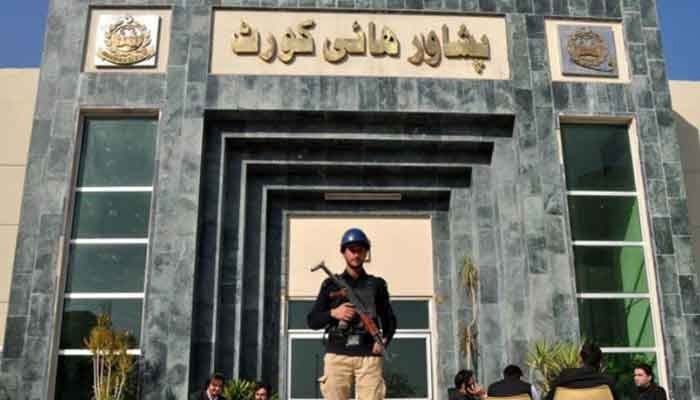
PESHAWAR: The Peshawar High Court (PHC) has restrained the Anti-Corruption Establishment from taking action against a private company in connection with an inquiry into alleged irregularities in the solarization scheme of mosques in various constituencies of Mardan.
A two-member bench comprising Justice Ejaz Anwar and Justice Inamullah Khan heard the writ petition filed by Abdul Sattar Khan, CEO of Best Sun Power and Pak Friends Construction and Development Limited.
The petitioner made the Director of Anti-Corruption, Khyber Pakhtunkhwa and others respondents in the case. During the hearing, the petitioner’s counsel, Advocate Ahmad Farooq Khattak, informed the court that the petitioner’s company was duly registered with the Securities and Exchange Commission of Pakistan (SECP) in Peshawar.
The Tehsil Municipal Administration (TMA) Mardan had floated tenders for the solarization of mosques in constituencies PK-51, PK-58, and PK-53, in which the petitioner company participated and was declared successful.
He stated that a formal agreement was signed between the company and the Mardan TMA, under which the company completed the project.
A physical inspection of the project was also carried out, and a report was submitted to the concerned authorities. Payments were subsequently made to the company.
However, MPA Muhammad Salam from PK-56 later levelled allegations of corruption in the scheme, claiming that government funds allocated for the project were embezzled and procurement officers misused their authority. Based on this complaint, the Anti-Corruption Department conducted an audit.
The petitioner’s lawyer argued that the audit report, dated May 19, 2025, was prepared without any inspection or proper record verification and is baseless and contrary to facts.
He added that the petitioners were neither heard nor was any physical verification of the project sites conducted. Despite this, proceedings were initiated against them. The lawyer contended that the audit report was unlawful and lacked transparency, violating the fundamental rights of the petitioner company.
He requested the court to declare the audit report and the resulting proceedings as illegal and to order a fresh inquiry or audit, including a site visit and an opportunity for the company to present its version.
The court observed that the petitioner company had already completed the project. However, according to the company, it is now being made a scapegoat for political reasons.







-
 Eric Dane Got Honest About His Struggle With ALS In Final Public Appearance: 'No Reason To Be In A Good Spirit'
 -
 Google AI Overviews And Mental Health: Why Experts Say It’s ‘very Dangerous’
 -
 Prince Harry Issues A Statement For His 'incredible' WellChild Children
 -
 5 Famous Celebrities Who Beat Cancer
 -
 Spinosaurus Mirabilis: New Species Ready To Take Center Stage At Chicago Children’s Museum In Surprising Discovery
 -
 ByteDance Expands Artificial Intelligence Operations In US
 -
 Angelina Jolie’s Breast Cancer Surgeon Appreciates Her For Calling Scars 'a Choice': 'They Are Choices To Survive'
 -
 Detective Chief Inspector Reveals How Andrew Got Treated In Police Custody
 -
 Gemini 3.1 Pro Unveiled: Google’s Next-gen AI For Advanced Reasoning & Faster Enterprise Workflows
 -
 Oprah Winfrey Talks About Weight-loss 'tool To Manage' Health
 -
 Texas Emerges As World's Future Data Center Capital
 -
 South Korea’s Ex-President Yoon Issues Public Apology After Being Sentenced To Life Over Martial Law
 -
 Eric Dane Recorded Episodes For The Third Season Of 'Euphoria' Before His Death From ALS Complications
 -
 Inside Morning Of Andrew’s Arrest And How He Responded: ‘Do You Know Who I Am?’
 -
 OpenAI Sam Altman Predicts AI Superintelligence By 2028: Is Humanity Ready For A Turning Point?
 -
 WhatsApp Rolls Out Group Message History To Ease Group Chats