
Unsustainable fiscal deficit
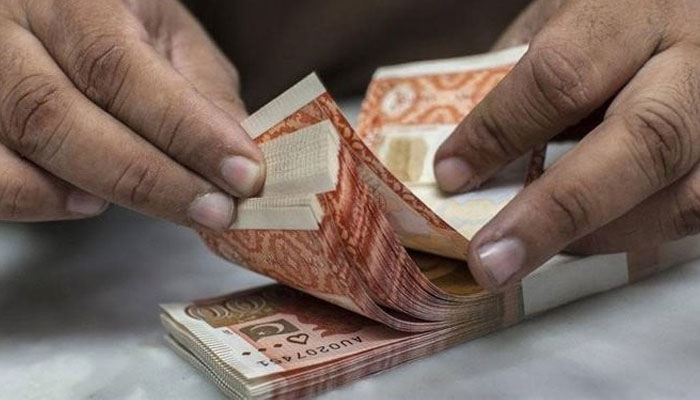
LAHORE: If Pakistan fails to address the structural issues in its economy and continues running persistent fiscal deficits for more than 5-7 years, it could face a debt crisis or economic collapse.
While the current government has achieved some level of economic stabilisation, it has yet to tackle numerous issues that hinder long-term sustainability. The country’s annual fiscal deficit remains viable as long as it secures financing through domestic and external sources without triggering a debt crisis, hyperinflation, or economic collapse. However, the sustainability of persistent fiscal deficits depends on several factors.
Pakistan’s fiscal deficit has consistently ranged between 6-8 per cent of GDP in recent years, indicating that the government is spending far more than it collects in revenue. For developing countries, a sustainable fiscal deficit is generally considered to be around 3-4 per cent of GDP. Instead of generating the necessary revenue, the government continues to rely on borrowing.
This increasing borrowing has significantly added to Pakistan’s debt burden. The country’s total public debt stands at around 90 per cent of GDP, far exceeding the 60 per cent threshold recommended by the IMF. Servicing this debt consumes over 50 per cent of government revenue in interest payments, even after an 11 per cent reduction in the central bank’s policy rate and a stabilised rupee. Due to its high debt levels, Pakistan struggles to secure low-cost loans from donor agencies and is increasingly dependent on high-interest, short-term loans from domestic banks and external lenders, exacerbating its fiscal challenges.
Persistent fiscal deficits erode investor confidence and contribute to currency depreciation, increasing the cost of foreign debt repayments and making deficit financing more difficult. The resulting high inflation further reduces purchasing power, worsening economic instability.
Pakistan has one of the lowest tax-to-GDP ratios globally, standing at just 9-10 per cent. Without meaningful tax reforms, the government will continue to struggle with deficit financing. In comparison, India’s tax-to-GDP ratio reached a record high of 18.5 per cent in the fiscal year 2023-24, comprising 11.7 per cent from the central government and 6.8 per cent from state governments. Unlike Pakistan, where provincial tax collections account for only about 1.0 per cent of federal tax revenue, Indian states contribute a far more substantial share, demonstrating a more balanced fiscal structure.
Some critics argue that the government lacks the will to enforce tax collection. While it reluctantly implements reforms recommended by the IMF and other financial institutions, these efforts are often half-hearted. Lawmakers who pass tax legislation should lead by example and pay their own taxes. Although the Punjab and Sindh assemblies have approved an updated agriculture tax, its effective implementation remains uncertain.
Policymakers must recognise that global donors will not always rescue Pakistan. The government must generate resources domestically rather than relying on repeated IMF bailouts. Without structural reforms, international lenders may withdraw support, making deficit financing unviable.
In the short term (1-3 years), Pakistan can continue running deficits through additional borrowing. However, in the medium term (3-5 years), debt servicing will become unsustainable if economic growth remains sluggish. In the long term (beyond five years), without major reforms -- such as broadening the tax base, boosting exports, and accelerating privatisation -- Pakistan will face a heightened risk of default, leading to economic instability similar to that of Sri Lanka.
To stabilise its economy, our country must expand its tax base by taxing the retail and agricultural sectors while reducing non-development expenditures, including subsidies and inefficient government spending. Increasing exports and foreign direct investment (FDI) is essential for generating foreign exchange. At the same time, the country must reduce its dependence on short-term external debt to ensure long-term economic stability.







-
 Eric Dane Got Honest About His Struggle With ALS In Final Public Appearance: 'No Reason To Be In A Good Spirit'
 -
 Google AI Overviews And Mental Health: Why Experts Say It’s ‘very Dangerous’
 -
 Prince Harry Issues A Statement For His 'incredible' WellChild Children
 -
 5 Famous Celebrities Who Beat Cancer
 -
 Spinosaurus Mirabilis: New Species Ready To Take Center Stage At Chicago Children’s Museum In Surprising Discovery
 -
 ByteDance Expands Artificial Intelligence Operations In US
 -
 Angelina Jolie’s Breast Cancer Surgeon Appreciates Her For Calling Scars 'a Choice': 'They Are Choices To Survive'
 -
 Detective Chief Inspector Reveals How Andrew Got Treated In Police Custody
 -
 Gemini 3.1 Pro Unveiled: Google’s Next-gen AI For Advanced Reasoning & Faster Enterprise Workflows
 -
 Oprah Winfrey Talks About Weight-loss 'tool To Manage' Health
 -
 Texas Emerges As World's Future Data Center Capital
 -
 South Korea’s Ex-President Yoon Issues Public Apology After Being Sentenced To Life Over Martial Law
 -
 Eric Dane Recorded Episodes For The Third Season Of 'Euphoria' Before His Death From ALS Complications
 -
 Inside Morning Of Andrew’s Arrest And How He Responded: ‘Do You Know Who I Am?’
 -
 OpenAI Sam Altman Predicts AI Superintelligence By 2028: Is Humanity Ready For A Turning Point?
 -
 WhatsApp Rolls Out Group Message History To Ease Group Chats