
People opting for decentralised solar solutions: Sherry
“Pakistan has emerged as market leader in South Asia for solar adoption," says Sherry Rehman
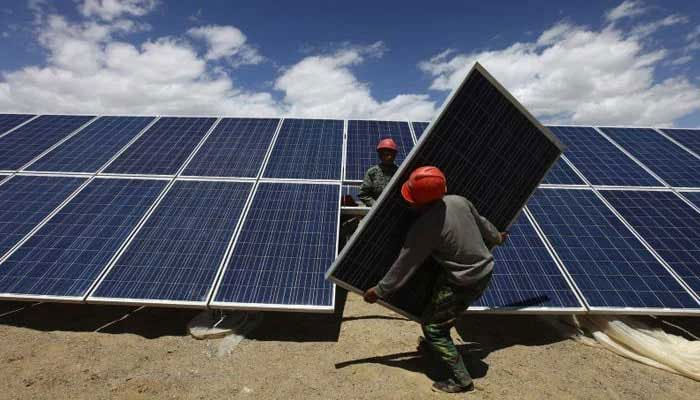
ISLAMABAD: Pakistan’s solar revolution is reshaping the energy sector, with communities and businesses increasingly taking control of their power supply, surpassing government policy and infrastructure. Over the past 18 months, the country has imported 22 GW of solar panels, signalling a mass shift towards decentralized solar solutions.
“Pakistan has emerged as a market leader in South Asia for solar adoption. We should not be disabling this revolution; we should be enabling it,” Senator Sherry Rehman said at a day-long conference titled, ‘Great Solar Rush Conference in Pakistan’, that was jointly organized by ‘Renewable First’ and ‘Pakistan Solar Association (PSA)’ here Thursday. She highlighted the need for policy alignment to sustain this people-driven transformation.
The senator also warned that without integrating solar into national energy planning, Pakistan’s progress on energy security and economic stability could be jeopardized. “Failure to integrate solar into national planning would stall Pakistan’s progress,” she cautioned. She called for comprehensive policy reforms, infrastructure upgrades, and market mechanisms to ensure the long-term sustainability of the solar sector. Rehman, the chairperson of the Senate Standing Committee on Climate Change emphasised that solar adoption in Pakistan is not just a climate necessity but an economic imperative, as one-third of the country’s installed capacity now comes from privately imported solar panels.
Pakistan has seen a 200 per cent increase in solar adoption, with $2.1 billion in solar imports and 16 gigawatts of solar energy integrated into the grid. However, Rehman cautioned that high electricity prices—among the highest in the region—continue to burden consumers, particularly those in middle and low-income brackets. “The solar rush, much like a gold rush, risks being penalized by policy that is failing to catch up with public needs,” she said.
Rehman urged policymakers to support net metering, which allows consumers to sell excess electricity to the grid. She praised the retirement of 2,000MW of ageing fuel plants but stressed that further reforms are needed to align energy policy with market realities.


