
Fertiliser firms face uneven playing field after gas tariff revision
LAHORE: A major increase in the feedstock gas tariff for fertiliser manufacturers has triggered a heated debate among the industry players, who have different views on the impact of the policy change on their businesses.
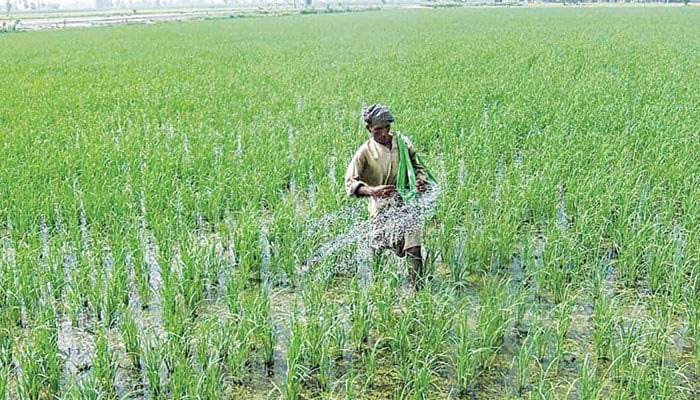
The government last week approved an increase in gas price for fertilizer producers who get their supply from the Sui Northern Gas Pipelines Limited (SNGPL) and Sui Southern Gas Company (SSGC) network, which covers 60 percent of the country's fertilizer capacity, from Rs580 per million British thermal units (mmbtu) to Rs1,597 per mmbtu, almost a 300 percent jump in feedstock prices.
The move was aimed at reducing the debt and losses of gas utility companies. However, the government did not change the gas price for the remaining 40 percent of the fertilizer capacity, which is connected to the Mari Gas Company Limited (MGCL) network and enjoys a lower tariff of Rs580 per mmbtu.
The decision has created a wide disparity in the cost of production and the selling price of urea, the most widely used fertilizer in Pakistan, among the fertilizer companies.
Fauji Fertilizer Bin Qasim Limited (FFBL), one of the largest fertilizer producers in the country and a major consumer of gas from the SSGC network, reacted swiftly to the gas price hike by increasing its urea price by Rs1,350 per 50-kilogram bag on Tuesday, according to brokerage JS Research.
The new urea price of FFBL stands at Rs5,331 per bag, which is significantly higher than the prices of its competitors, Fauji Fertilizer Company Limited (FFC), which gets its gas from the MGCL network and Engro Fertilizers Limited (EFERT), which is mainly supplied gas from SNGPL network. FFC and EFERT are selling their urea at Rs3,597 and Rs3,767 per bag, respectively.
Following the massive increase in feedstock gas tariff, one of the major market players has called for equal terms for the fertilizer manufacturing sector across the country. Engro Fertilizers, the second-largest fertilizer producer in the country, welcomed the gas tariff revision as a step in the right direction, but also called for a level playing field for the entire fertilizer sector.
"Engro Fertilizers welcomes the fact that the government has taken a bold first step by removing the subsidy for fertilizer manufacturers that get their gas from the Sui network, which represents 60 percent of all fertilizer manufacturing capacity," the company said.
"While this is a step in the right direction, we believe the battle is half won, as the remaining 40 percent of fertilizer manufacturing capacity that is on the Mari network, is still on the subsidized price of 580 rupeesper mmbtu." The company argued that the partial removal of the subsidy may create a distortion in the fertilizer market and affect the farmers, who are already facing high input costs and low crop prices.
Pakistan’s current financial position is distressed; it is in a debt crisis, with the debt-to-GDP ratio already above 70 percent and more than $27 billion of foreign debt to be repaid by November 2024.
"The country cannot afford further fiscal pressures or half measures that do not go all the way in solving Pakistan’s problems. The dependence on government subsidies must end, for Pakistan to really move forward and break away from the vicious cycle of debt," the company said. Therefore, the fertilizer manufacturer adds, in the national interest of the country and to fix the problem at the source, "we urge the government to completely remove all subsidies from the fertilizer sector".
"Only with the complete removal can the government free the nation from this debt and truly benefit the people of the country." The company said that the complete removal of the subsidy would save the government Rs150 billion per year, which could be used for targeted agricultural projects and initiatives.
“This is a fantastic opportunity for all fertilizer manufacturers to demonstrate that even without subsidized gas they are globally competitive. In fact, when everyone has the same gas price, it will encourage the manufacturers to become more efficient, lean, and to encourage capital investment in the fertilizer industry,” Engro said. “In addition, the fertilizer industry will emerge as a role model that can operate efficiently without any subsidies, thereby encouraging the government to potentially look at removing subsidies from other sectors of the economy as well.”






-
 Detective Chief Inspector Reveals How Andrew Got Treated In Police Custody
 -
 Gemini 3.1 Pro Unveiled: Google’s Next-gen AI For Advanced Reasoning & Faster Enterprise Workflows
 -
 Oprah Winfrey Talks About Weight-loss 'tool To Manage' Health
 -
 Texas Emerges As World's Future Data Center Capital
 -
 South Korea’s Ex-President Yoon Issues Public Apology After Being Sentenced To Life Over Martial Law
 -
 Eric Dane Recorded Episodes For The Third Season Of 'Euphoria' Before His Death From ALS Complications
 -
 Inside Morning Of Andrew’s Arrest And How He Responded: ‘Do You Know Who I Am?’
 -
 OpenAI Sam Altman Predicts AI Superintelligence By 2028: Is Humanity Ready For A Turning Point?
 -
 WhatsApp Rolls Out Group Message History To Ease Group Chats
 -
 Tesla Expands Cybertruck Lineup With Affordable Model In US, Slashes Cyberbeast Price To Boost Demand
 -
 AI Is Not As Powerful As We Think, Says Mathematician Hannah Fry
 -
 How Andrew's Feeling Since His Arrest & Subsequent Release Amid Tech & Computers Seize
 -
 Trump Officially Directs US Agencies To Identify And Release Files On Extraterrestrial Life
 -
 2026 Winter Olympics: Alysa Liu Claims Gold, Snapping 20-year Drought For US Figure Skating
 -
 Hilary Duff Opens Up About Marriage Fears Despite Strong Bond With Matthew Koma
 -
 ‘Grey’s Anatomy’ Star Eric Dane Breathes His Last At 53