Trump says only older US chips should go to China amid broader trade talks
US president says Washington is negotiating a 'very comprehensive deal' with Beijing while maintaining strict limits on advanced AI semiconductors to keep China from accelerating domestic chip production
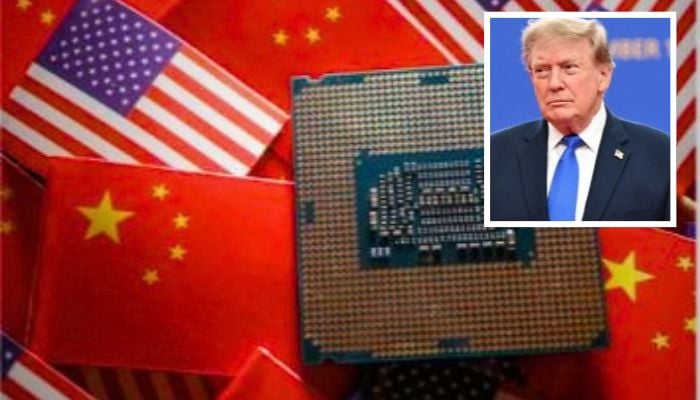
United States President Donald Trump stated the United States wants only older-generation chips to be sold to China—though he added he would not mind if no chips were sold at all—while confirming his administration is discussing a broader agreement with Beijing.
Stance on Chip Exports:
Speaking to reporters at a press conference on Friday, Nov 20-following his trip to Asia and a meeting with Chinese President Xi Jinping, Trump said, "We want only older chips, and we don't mind if none go.
But only older". He added that blocking all sales entirely could push Beijing to accelerate its own domestic production: "You have to understand, China makes chips too, and if we're not going to sell them, they'll make them themselves".
Ongoing Trade Discussions:
When asked whether he was considering easing export restrictions on chips to China, Trump stated that the U.S. is discussing "a very comprehensive deal with China," though he declined to provide specifics on the terms or timeline.
Broader Policy & Industry Context
Tightened Export Curbs:
Earlier in the week, ahead of Trump's trip, the administration announced new measures aimed at closing loopholes and further restricting China's access to advanced AI chips—such as those from Nvidia—including shipments routed through third countries and foreign data centers.
Definition Remains Unclear:
According to Reuters, Trump's remarks signal an effort to separate legacy semiconductors from frontier AI accelerators, though officials have not yet specified the technical threshold for what qualifies as an "older" chip or whether formal export quotas will be introduced.
Supply Chain & Congressional Scrutiny:
The remarks follow heightened scrutiny in Washington over prior Commerce Department export licenses for advanced AI chips, alongside moves by major manufacturers like Taiwan's TSMC to halt certain advanced manufacturing orders (16 nanometers and below) for Chinese chip designers in line with U.S. rules.
China's Ministry of Foreign Affairs has criticized the tightening U.S. restrictions, stating they disrupt global supply chains and warning of potential countermeasures.


-
 EU–UK Summit: Post-Brexit trade, carbon and youth mobility reset deals explained
-
 Kushner says Russia open to NATO-like security pact for Ukraine
-
 Mystery stomach illness hits nearly 150 aboard Princess Cruises ship from Florida
-
 Trump adviser Peter Navarro accuses Canada of ‘dishonesty’ as trade negotiations continue
-
 House Democrats propose crackdown on alleged fraud on platforms like Kalshi and Polymarket
-
 Myanmar challenges ICJ’s landmark Rohingya genocide ruling after 7-year legal battle
-
 Trump administration seeks to end Alaska Senate race lawsuit after Republican defeat
-
 ‘Unacceptable’: UK PM Andy Burnham condemns Russian violation of Polish airspace
-
 Melania Trump reveals marriage advice and family secrets in new documentary series
-
White House fires back after Trump accused of sleeping at China summit
-
Trump fires cyber chief Sean Cairncross after major technology outages hit US
-
New York City to close Rikers Island by 2032 under Mamdani's new proposal