Scientists discover hidden drainage route at the back of the eye
Mouse study finds fluid from the back of the eye drains into the lymphatic system, a new lead on glaucoma
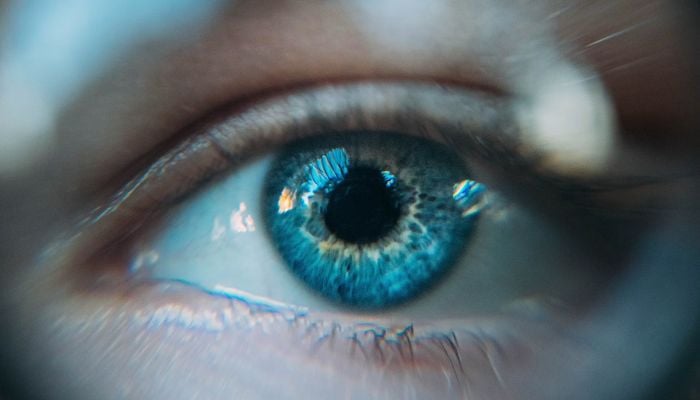
Within minutes of being placed at the back of a mouse's eye, fluorescent tracers reached nearby lymph nodes. The result points to a drainage route scientists did not know existed, and it challenges a belief held for more than a century.
This posterior ocular lymphatic outflow (POLO) pathway has been identified by scientists at the University of British Columbia (UBC) and the University of Toronto.
It seems that it is responsible for the transfer of fluids and waste from behind the retina into the lymphatic system of the body. The research has been conducted on mice and published in Translational Vision Science & Technology.
MRI, near-infrared fluorescence imaging and microscopy were used in the experiment. When the tracers were injected into a space in the back of the eye, the researchers tracked the path of the fluids.
The researchers discovered small lymphatic vessels in the choroid, which is a vascular tissue located under the retina and where there were no lymphatic vessels known previously.
However, for over a century, medical researchers were confident that the eye had no such drainage system in place, like every other body organ except the eye. This changed in the year 2009 when Dr Neeru Gupta and Dr Yeni Yücel discovered an “uveolymphatic” drainage pathway in the front part of the eye. But the back portion of the eye was not explored much until now.
Glaucoma, macular degeneration, or any other cause of irreversible blindness results from the accumulation of fluid, toxins, and other waste products in the back of the eye. Age-related macular degeneration affects 2.5 million people in Canada alone.
If the pathway can be strengthened, it could become a target for new therapies. It might also help deliver drugs to structures deep inside the eye. Dr Gupta, who heads UBC's department of ophthalmology and visual sciences, says it offers a new framework for understanding these diseases. These uses remain potential, not established treatments.


-
 WHO confirms death at Russian research lab, says no plague case registered
 -
 Getting a $90 check from Social Security? Here’s why
 -
 Measles cases in US top 4,000 nationwide, CDC reports
 -
 Sexually transmitted diarrhea spread in US, UK: Why antibiotics are failing against Shigella
 -
 Who is Song Li? China puts her forward for WHO leadership role
 -
 CDC monitors travelers from Siberia after plague worker’s death, director says
 -
 Russia pushes back on plague death reports, defends WHO notification
 -
 WHO deems Russia plague risk 'low' following lab technician’s fatal illness