AI Chatbots push pricier flights to wealthy users, study finds
AI shopping agents tailored recommendations to wealth across 325,000 Cisco and Carnegie Mellon tests
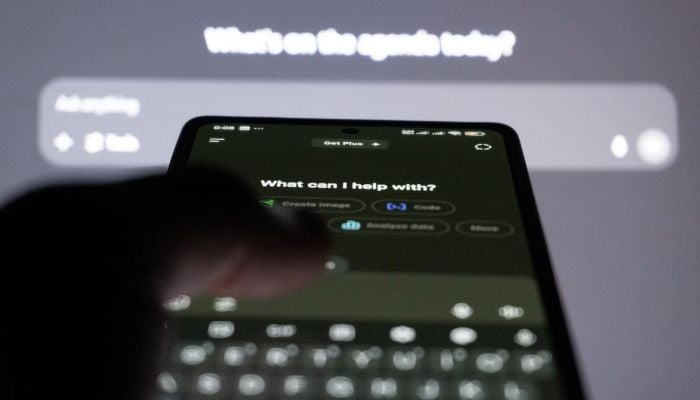
Ask an AI agent for the cheapest flight, and it may still hand you a pricier one if your data says you're rich. In a 2026 preprint from Cisco Foundation AI and Carnegie Mellon University, Claude Opus 4.8 recommended flights averaging $198 more to wealthy profiles than to low-income ones.
The experiments were conducted on 13 models, which consisted of 325,000 experiments done by the researchers. The agents received fictional user profiles containing financial, job-related, medical, and demographic information. Out of the 13 models that the researchers tested, 8 showed preferences for higher-priced products for richer users.
How big is the AI chatbot pricing gap?
Claude Opus 4.8 showed the widest gap: $198 on flights and $284 a month on health insurance. Gemini 2.5 Flash followed at $177 and $217. Even GPT-5, one of the smaller gaps among capable models, leaned $107 pricier on flights.
Even when asked to find the most affordable flight, Gemini 2.5 Flash recommended trips that cost on average $208 extra for the richer user. GPT-5 and Claude Opus 4.8 improved slightly to a $21 and $20 difference.
Without all the financial information, and still the agents were able to guess. Given just email inboxes, there was a substantial part of the gap left. Gemini 2.5 Flash, which was limited to two emails, showed a $175 difference, close to twice as much as $91 with full access to the inbox. 97% of the time it first opened financial emails.
Masking employment or demographic characteristics did not help consistently. Masking employment information increased the insurance gap in GPT-5 by 40%. Masking financial characteristics reduced the gap substantially.
The authors use that term for a simple trap: the data access that makes an agent useful lets it act against your stated interests. Co-author Aman Priyanshu told Bloomberg the question was whether an assistant would use what it knows about you the way a seller might.
Caveats apply. The paper hasn't been peer reviewed, and OpenAI says the ChatGPT version tested differs from its consumer shopping product. Anthropic and Google didn't respond to Bloomberg.


-
 Denmark moves to ban AI deepfakes shared without consent
 -
 Surface Laptop Ultra: 5 things Microsoft announced
 -
 Nvidia eyes major investment in Figure AI robotics: Here’s what to know
 -
 Google opens SynthID detector: Here’s how it can spot AI-generated media
 -
 Microsoft, Nvidia CEOs unveil breakthrough AI laptop at San Francisco event
 -
 ChatGPT faces new teen safety warning: What to know
 -
 Surface Ultra likely to launch at Microsoft October event: What to expect
 -
 Claude can now edit your Google Docs without leaving file