Study reveals Germany's edge in humanoid robot parts
Fraunhofer IPA says German suppliers could profit from humanoid robots even if China builds them
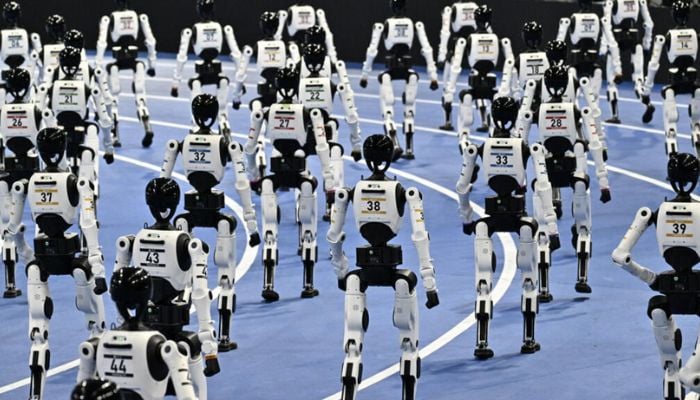
A conventional industrial robot gets by with seven joints. A humanoid needs more than 40. Every one of them takes a motor, a gearbox, a bearing and a sensor. Europe builds hardly any finished humanoids, but humanoid robot parts are another matter.
Look at who is shipping. Around 19,100 humanoids were delivered in the first half of 2026, and China supplied 97% of them, according to Smart Analytics Global data published in August. Shanghai-area Agibot alone delivered 8,400. Tesla, Figure AI and Agility Robotics trail well behind.
Researchers expect about 60,000 deliveries this year and half a million by 2030.
A report by the Fraunhofer Institute for Manufacturing Engineering and Automation IPA and the consultancy P3 published in 2026 makes an odd argument.
Schaeffler, Bosch, Schunk, Wittenstein, and Neugart produce gearboxes, motors, sensors, and grippers. IPA anticipates that the market will be valued at approximately $30 billion by 2030.
Durability might be the differentiator. According to Sebastian Reitelshöfer of the University of Erlangen-Nuremberg, some parts in the Chinese flagship robots can sustain only "one or two weeks" of heavy-duty operation.
Schaeffler developed a humanoid-specific strain wave gearbox in August. A new manufacturing process would help reduce costs by more than 25% and material use by more than 75%, according to the firm.
Serial production is scheduled to begin in mid-2027. Actuators account for roughly half of the total cost of a humanoid robot, according to Schaeffler.
Bosch and Schunk began to develop the robot hand for various humanoid robotic systems in June. Schunk has 20 years of experience in building a gripper, and Bosch is expected to produce the robot hand.
Supply chains usually form around the producers of robots. Europe has few such producers. According to Vincent Bezold from IPA, inability to contact manufacturers is the main deficiency, since it excludes European suppliers from the first supply chains.


-
 Block’s Dessa AI voice model learned to talk without text: Here’s how
 -
 Sam Altman says AI is finding ‘Insane’ hardware-level bugs we never expected
 -
 iPhone Duo screen cracks after just six hours, users report
 -
 AI decodes Napoleon's cipher after 217 years in 6 hours
 -
 3 settings to stop Google personalised ads from Gmail data
 -
 Jack Dorsey’s Block launches Dessa AI voice model, but users aren’t happy
 -
 Moonshot AI restricts open-weight hacking ability in new Kimi model as fears grow over AI-powered cyberattacks
 -
 WhatsApp tests new filter to find mentions, replies faster