Europe's largest carbon capture facility opens in Netherlands, setting new industrial milestone
Marking a major milestone for industrial decarbonization, Europe's largest carbon capture facility in the Netherlands, designed to trap 800,000 tons of carbon dioxide annually
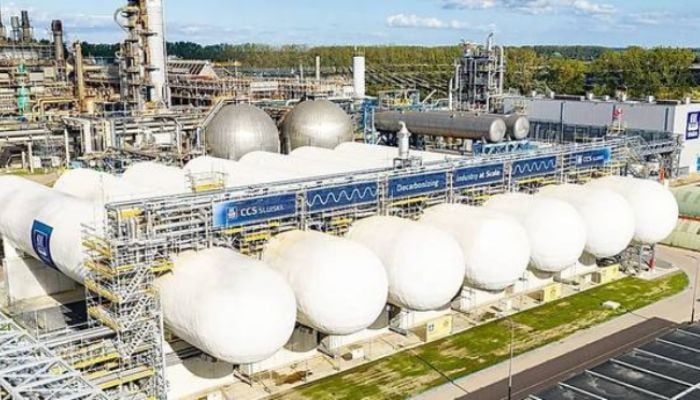
Europe's largest industrial carbon capture and storage facility has officially opened at the Yara Sluiskil fertilizer and ammonia plant in the southern Dutch province of Zeeland.
Developed by Norwegian fertilizer producer Yara International, the facility will capture, liquefy, and temporarily store up to 800,000 metric tons of carbon dioxide a year directly from industrial ammonia production.
From the Dutch site, specialized vessels managed by the Northern Lights joint venture will transport the liquefied CO2 across borders to Norway, where it will be permanently injected and stored 2,600 meters beneath the North Sea seabed.
The cross-border project is projected to remove approximately 12 million tons of CO2 over a 15-year operational window, helping heavy industry bypass steep carbon taxation while fulfilling regional climate compliance goals.
High-ranking European officials, including Norwegian Prime Minister Jonas Gahr Støre and EU climate leadership, attended the inauguration to hail the venture as a scalable blueprint for commercialized industrial decarbonization.
The carbon capture and storage (CCS) facility in Sluiskil, in the southern Dutch province of Zeeland, will cut emissions at one of Europe's largest fertilizer production sites and transport captured carbon to Norway, Yara said.
From 2026, Yara Sluiskil will capture and liquefy up to 800,000 metric tons of CO2 a year. The carbon will be transported and stored 2.6 km (1.6 miles) beneath the seabed on the Norwegian continental shelf by transport and storage operator Northern Lights.
Over 15 years, Yara expects to remove about 12 million tons of CO2 from the site.
Norwegian Prime Minister Jonas Gahr Stoere said the Sluiskil project offers a solution that is both scientifically advanced and commercially viable.
"Our climate challenge lies in industry because that's where we find the combination of labor, capital, and technology. And of course, energy is all around it. So being modern energy nations, the Netherlands is first among them, is the way to go," Stoere said.
The European Union plans to use carbon capture technology to help meet its 2050 net-zero emissions target, particularly for industrial processes such as chemical manufacturing, where low-carbon alternatives are not yet available.


-
 Ron Duguay, former New York Rangers forward, dies after cancer battle
 -
 Kathy Hochul gets campaign boost from NYC Mayor Zohran Mamdani ahead of midterms
 -
 Abdul El-Sayed and Mike Rogers clash over Trump, patriotism in Michigan Senate debate
 -
 Russia attacks Kyiv hours after peace talks announcement, killing two and injuring 22
 -
 Macron vows to ban non-union protests, blames ultra-left groups as unrest grips France
 -
 Trump's massive DC arch could begin construction days after US midterm elections
 -
 Putin-Witkoff meeting: 5 key takeaways on Ukraine peace talks
 -
 Sheriff Chris Nanos insists Nancy Guthrie was taken alive
-
 Yankees extend Brian Cashman's tenure after another disappointing playoff exit
 -
Poland's abortion ban faces new challenge as lawmakers vote to loosen restrictions
-
New York Democrat Brad Lander released after detention in West Bank
-
Ohio chemical tank explosion triggers mass evacuations and shelter-in-place orders in Toledo