Hasan Piker addresses Lindsay Clancy husband-killer conspiracy theory
Hasan Piker opens up about his thoughts on the high-profile trial of Lindsay Clancy
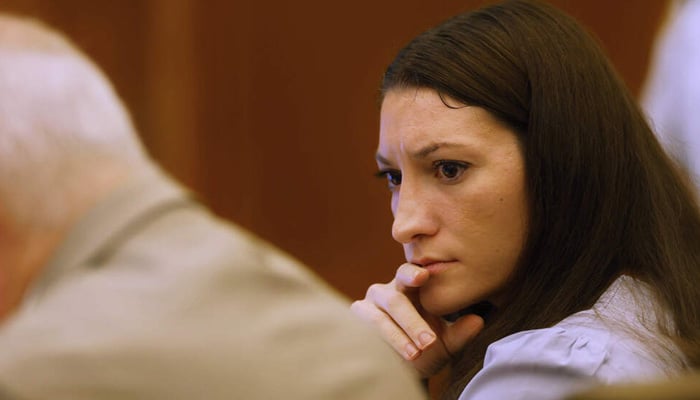
An unsubstantiated online theory states it was actually Patrick Clancy, the former husband of Lindsay, who is responsible for the killings and framed his ex-wife.
However, popular podcaster Hasan Piker did not buy the theory.
On his YouTube channel, he weighed in on the high-profile trial, dissecting various aspects of the case, but was particularly dismissive of the 'husband theory.'
The online influencer explained why the theory exploded on social media.
For starters, Patrick's quick remarriage. However, Piker pointed to the argument from Clancy's defense team.
He explained that if this theory has weight, the mom-of-three attorneys should have used it.
"No one actually involved with this case is saying the husband did it,” he said.
Instead, Clancy's legal team had been operating on the understanding that she did the act but was suffering from postpartum psychosis at the time.
But away from the internet, a real-life incident in Illinois bears a striking resemblance to Clancy's case.
A mom named Corie Walsh killed her two-year-old son, Barrett Walsh, allegedly believing he was a "devil."
But what is telling is that she has been fully "invested" in Clancy's trial, and hours before committing the alleged crime, she was discussing the case with her friends on social media.

Hasan Piker gets honest about Lindsay Clancy's husband-as-killer conspiracy theory
Hasan Piker opens up about his thoughts on the high-profile trial of Lindsay Clancy
An unsubstantiated online theory states it was actually Patrick Clancy, the former husband of Lindsay, who is responsible for the killings and framed his ex-wife.
However, popular podcaster Hasan Piker did not buy the theory.
On his Youtube channel, he weighed in on the high-profile trial, dissecting various aspect of the case, but in particular was dismissive of 'husband theory.'
Though the online influencer why the theory exploded on social media.
For starters, Patrick's quick re-marriage. However, Piker here pointed to Clancy's defense team argument.
He xplained if this theory have the weight, the mom-of-three attorneys should have used it.
"No one actually involved with this case is saying the husband did it,” he said.
Instead, Clancy's legal team had been operating on the understanding that she did the act but was suffering from postpartum psychosis at the time.
But away from the internet theory occurred a real-life incident in Illionois that has a striking resembling with Clancy case.
A mom named Corie Walsh killed her two-year-old son, Barett Walsh, allegedly belkieving to him a "devil."
But what is telling that she has been fully "invested" in the trial of Clancy and hours before comitted the alleged crime was discussing about the case with her friends on social media.
Lindsay Clancy's trial drew media attention, a similar incident took place over 1,000 miles away in Illinois.
A woman named Corie Walsh has been accused of killing her two-year-old son, Barett Walsh, because she allegedly believed he was a "demon".
Charged with first-degree murder, Walsh has regularly followed updates about the Clancy case.
According to CNN, prosecutors described the accused as fully tuned in to Clancy's trial.
However, there is currently no evidence to suggest a connection between Walsh's alleged actions and the coverage of the Clancy trial.
Hours before the reported murder, Barrett's mom had been discussing the Clancy case with her friends online.
Even so, here are the shocking details of the case.
Hasan Piker Says Lindsay Clancy Case “Isn’t What You Think” as Internet Theories Swirl
**The gruesome case has become an online firestorm — but Hasan Piker says the public may be missing the real issue.**
The Lindsay Clancy case has sparked a fierce online battle over what really happened when three children were killed — and political commentator Hasan Piker says the story being told across the internet isn't as straightforward as many people believe.
In a recent video titled **“The Lindsay Clancy Case Isn’t What You Think,”** Piker pushed back against several narratives surrounding the case, particularly the growing internet theory that Clancy's husband was responsible.
According to Piker, the courtroom battle was never really about whether Clancy committed the killings.
Instead, he said, the central question was **what was happening inside her mind when the killings occurred.**
## THREE THEORIES — BUT ONLY ONE WAS THE DEFENSE
Piker identified three broad narratives circulating around the case.
The first is the **premeditated-murder theory**: Clancy deliberately killed her children and knew exactly what she was doing.
The second is the **postpartum-psychosis theory**: Clancy committed the killings while suffering from a severe psychiatric condition that affected her perception and ability to control her actions.
## “SHE DID IT” DOESN'T END THE LEGAL ARGUMENT
Piker also took aim at people who appear to misunderstand what an insanity-based defense means.
His point: arguing that Clancy suffered from postpartum psychosis is not necessarily the same as arguing that she had nothing to do with the killings.
Instead, the crucial question is whether her mental state meant she **lacked the necessary criminal responsibility** at the time.
In Piker's telling, the prosecution was attempting to establish that Clancy's actions were deliberate and premeditated, while the defense sought to show that postpartum psychosis played a critical role.
That distinction, he argued, has been badly muddled in online discussions.
## THE POSTPARTUM PSYCHOSIS QUESTION
Piker strongly emphasized that postpartum depression and postpartum psychosis are real medical conditions.
He argued that the severity of postpartum psychosis is difficult for many people to understand because the idea of a mother killing her own children is so horrifying that people instinctively look for a simpler explanation.
But, he argued, the existence of such a horrific act doesn't automatically rule out serious mental illness.
Piker said he believed Clancy had received treatment but questioned whether the system responded adequately to the warning signs described by the defense.
He speculated that if she had begun experiencing symptoms such as hearing voices, she potentially should have received more intensive psychiatric intervention.
He stressed, however, that he was not claiming with certainty that the medical system could have prevented the tragedy.
## “NOT A GET-OUT-OF-JAIL-FREE CARD”
Another misconception Piker challenged was the idea that an insanity defense would simply allow Clancy to escape punishment.
He argued that being found not criminally responsible because of severe mental illness isn't equivalent to simply walking free.
Instead, someone could be committed to a psychiatric facility and remain there for an extended period, subject to legal and medical review.
Piker's broader point was that **an insanity finding doesn't erase the consequences of the crime.**
He also noted the devastating personal consequences Clancy would face regardless of the legal outcome, including the injuries she suffered after attempting to take her own life.
## RACE ENTERS THE DEBATE
Piker also raised a broader issue about race and the way society treats women accused of horrific crimes.
At one point, he argued that Black women would not necessarily receive the same degree of sympathy or consideration for postpartum mental illness.
He acknowledged that racial disparities are a legitimate issue, but also recognized that this broader question doesn't necessarily determine what happened in Clancy's individual case.
## THE JURY DEADLOCK ADDS ANOTHER TWIST
The controversy intensified after the jury reportedly struggled to reach a unanimous verdict.
Piker focused heavily on the question of reasonable doubt, arguing that the case contained enough disputed issues for jurors to seriously consider whether the prosecution had met its burden.
He was particularly interested in reports surrounding a juror who allegedly acknowledged reasonable doubt but nevertheless refused to join the majority — a situation Piker portrayed as different from simply being the lone juror who genuinely disagrees.
The judge ultimately instructed the jury to continue deliberating after it reported being deadlocked.
## HASAN'S BOTTOM LINE
For Piker, the biggest problem with the online conversation is that people appear determined to choose one simple explanation for an extraordinarily complicated case.
He rejects the idea that Clancy simply committed an incomprehensible act of cruelty with no underlying explanation.
But he also rejects the internet theory that her husband secretly murdered the children and framed her.
Instead, Piker's position is somewhere between the two extremes:
**Clancy was responsible for the killings, but the critical question is whether postpartum psychosis fundamentally altered her mental state and criminal responsibility.**
And that's why, in Piker's view, the Lindsay Clancy case **“isn't what you think.”**
-
Europe's largest carbon capture facility opens in Netherlands, setting new industrial milestone
-
UK chancellor John Healey warns of tough budget amid fiscal pressures
-
Russia signals possible return to Ukraine peace talks with US
-
UK minister condemns anti-migrant protests in Portsmouth and Dover
-
Princess Leonor takes another major step toward becoming future Queen
-
Iran plans ‘exclusion zone’ near Strait of Hormuz: What it means
-
North Korea, Russia deepen strategic ties with first road bridge amid regional tensions
-
5 killed, several injured after Amazon cargo jet overruns runway at Miami Airport
-
EU boosts Greenland funding as Trump pushes annexation: Why it matters
-
North Korea commissions 2nd destroyer as US, South Korea and Japan hold military drill
-
Wildfires and heat waves threaten global air quality, UN weather agency warns
-
Trump makes false claim about Bank of Canada while defending Canada tariffs