UN approves new world map showing Africa's true size: What changes now?
The resolution was passed with 164 members in favor of the resolution, however US opposed it
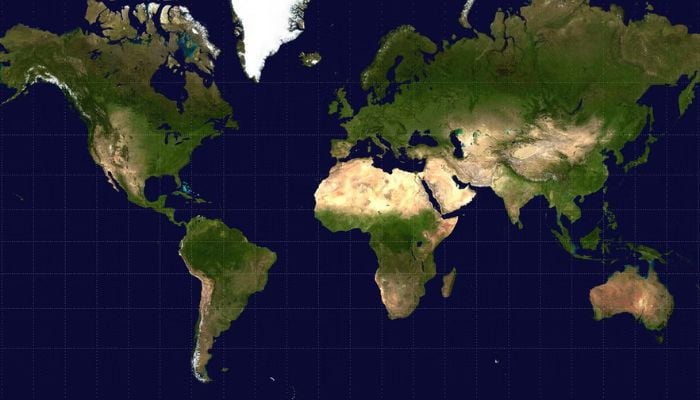
The United Nations General Assembly on Friday approved a new world map to rectify Africa’s distorted size while giving the continent a true representation on the map.
The Friday’s resolution was sponsored by Togo and supported by advocacy groups and members of the African Union. The resolution was passed with 164 members in favor of the resolution. Six countries including Serbia, Georgia, Lithuania, Moldova, Ukraine and Serbia were abstained. The United States rejected this resolution and voted against it.
Supporters argue that map distortion dampens the perceived development needs, economic potential and vast resources of equatorial regions, serving as a narrative issue that shapes global politics and economic perceptions.
What changes now?
The newly approved world map seeks to replace the traditional Mercator map, commonly used since the 16th Century, with the Equal Earth projection, showing locations more accurately.
As per advocates, this change will also reflect the true size of Africa which is 14 times larger than Greenland despite its similar size appearance on the Mercator projection.
However, the resolution does not ban the Mercator projection, it only encourages the use of the Equal Earth projection as per the UN report.
“Maps shape our understanding of the world,” the global body quoted Togo’s Foreign Minister Robert Dussey as saying before the vote. “They guide education, nourish the imagination, and influence collective perceptions.”
The Mercator map was designed by Flemish cartographer Gerardus Mercator to help Europeans navigate the sea. According to advocacy groups, the map did not reflect the true size of Africa by enlarging regions near North America and Greenland.
The international community also hailed the resolution. France and the UK supported the resolution, with France announcing it will stop using the Mercator map.
The United States criticized the debate as a distraction from genuine international problems. Yaryna Ferencevych, a US representative at the UN, said, “"Instead of focusing on genuine problems of international peace, prosperity, or good relations, this body is debating map projects from the 16th Century, and their role in promoting reparations and 'cognitive justice'.”


-
 Abdul El-Sayed heckler linked to Republican strategist that was paid $250K to oppose him
 -
 Flights to Europe could get more expensive in 2027 as fuel costs surge, Ryanair warns
 -
 CNN threatens to sue Trump administration again over Air Force One press ban
 -
 Attack on Australian MP Helen Haines highlights escalating threats to public figures
 -
 Ilhan Omar's sister questioned by investigators amid US citizenship fraud probe
 -
 Zelenskyy calls Rubio talks constructive after Trump eases Russia sanctions for 60 days
 -
 Milan on high alert as Italy deploys 500 troops following days of riots and looting
 -
 Ex-Toronto Blue Jays player Richard Butler and wife accused of defrauding baseball families