Russia-Germany tensions escalate as Moscow closes Goethe-Institut centers
Germany accused Russia of plotting drone attack at Leipzig Airport last month using military-grade material
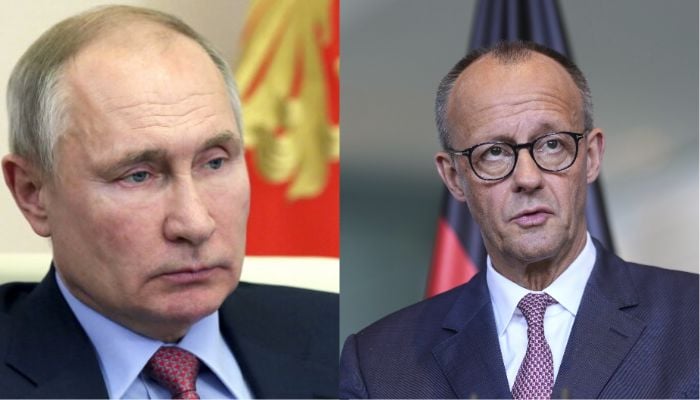
Russia and Germany relations hit a rock bottom after Moscow announced on Thursday to close German cultural centers across the country.
According to Foreign Minister Sergry Lavrov, Germany’s Goethe-Institut cultural centers would shut down in Russian cities of Moscow, St. Petersburg and Yekaterinburg on the grounds of escalating tensions.
Lavrov further added that “any other response would show a lack of self-respect on Russia’s part.
“Of course they will be closed after our cultural center was expelled from there [from Berlin]," Lavrov said, speaking at the Eastern Economic Forum in Vladivostok.
"They deliberately took this step, they could not have failed to understand — which means the end of their cultural presence in Russia," Lavrov said, as cited by state news agency TASS.
The Kremlin also slammed Germany for demonstrating “an inconsistent and absurd position” by choosing to close the Russian consulate in Bonn.
The remarks come after Berlin accused Russia of plotting a drone attack at Leipzig Airport last month using military-grade material and known hybrid-warfare components, while announcing the closure of both the Russian Consulate in Bonn and Russian House cultural center in the German capital.
The airport is a major international freight hub used for providing support to Ukraine.
Russia also threatened to take further stringent measures including the closure of Germany’s consulate general in St. Petersburg.
Suspected acts of sabotage have spiked across Europe, including recent attacks on electricity substations in Germany and factory fires/arson in Poland.
Nato Secretary General Mark Rutte and European Commission President Ursula von der Leyen condemned Russia's "recklessness" and promised a robust collective response.
EU foreign ministers are discussing tighter enforcement of existing sanctions, a bloc-wide visa entry ban on Russian ex-combatants, stricter tourist visa limits, and targeted actions against Russia's "shadow fleet" of oil tankers.
However, Russia has denied all accusations, calling it a campaign run by Western officials to smear the country and distract the attention of German voters from its own failings as cited by Putin.
On Tuesday, President Vladimir Putin accused Germany of planting evidence in order to blame Moscow for the incident.


-
 Pope Leo XIV rides popemobile for first time since lung cancer surgery
 -
 Russia frees 74-year-old US citizen Stephen Hubbard as Putin-Witkoff meeting continues
 -
 UK approved Jackdaw gas field: What it means for Britain climate goals
 -
 One dead, one missing after French Mirage 2000D fighter jet crashes in training flight
 -
 EU parliament approves sweeping passenger rights overhaul to guarantee 14-day travel refunds
 -
 Who ordered Starlink slowdown in Ukraine? New report reveals Elon Musk’s role
 -
 US envoy Witkoff heads to Russia for Putin meeting after ‘positive’ talks with Zelenskyy
 -
 Abdul El-Sayed heckler linked to Republican strategist that was paid $250K to oppose him
-
 Flights to Europe could get more expensive in 2027 as fuel costs surge, Ryanair warns
 -
CNN threatens to sue Trump administration again over Air Force One press ban
-
Attack on Australian MP Helen Haines highlights escalating threats to public figures
-
Ilhan Omar's sister questioned by investigators amid US citizenship fraud probe